Learn what every symbol on the card means.Full credits and sources at beakbrain.com/symbols
 ForestDomed nestTiny · 11 g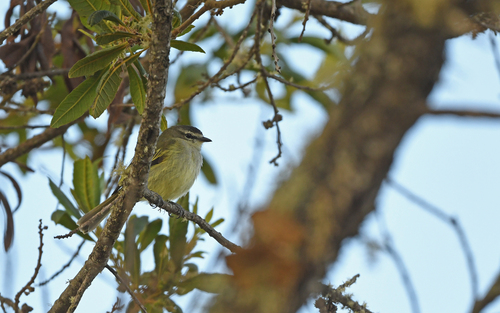
ID tip
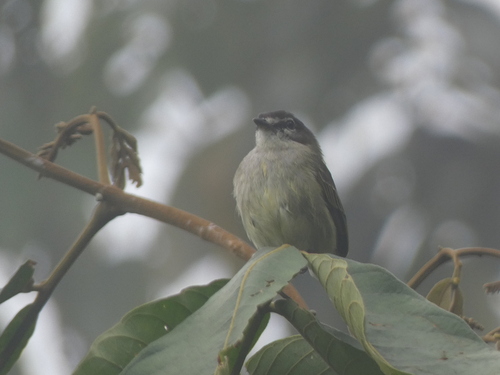
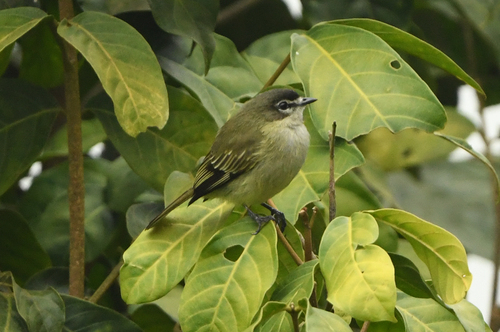
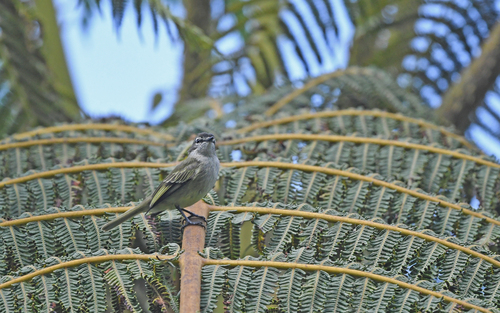
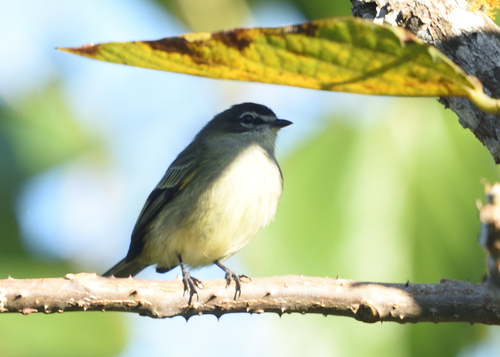
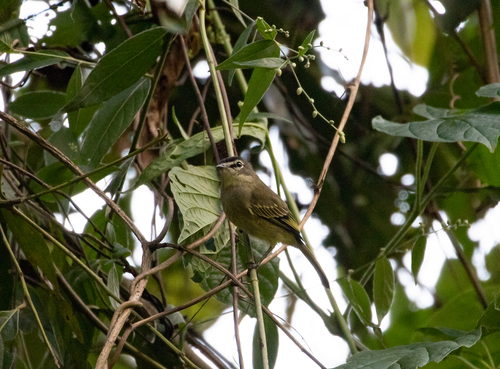
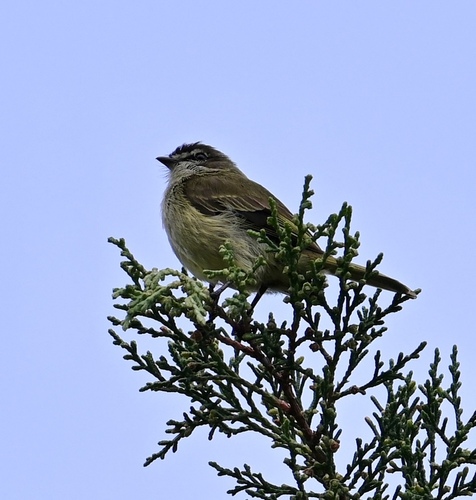
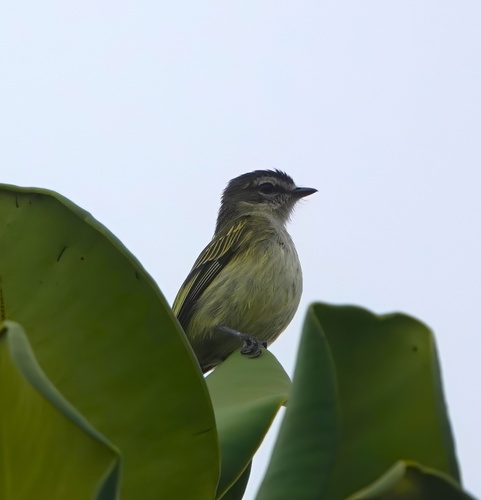
The spectacled tyrannulet is about 11.5 to 12.5 cm (4.5 to 4.9 in) long and weighs about 11 g (0.39 oz). The sexes have the same plumage. Adults of the nominate subspecies have a dark grayish green crown. They have a yellow-tinged white forehead, loral streak, and arcs above and below the eye that give it its common name. Their upperparts are green. Their wings are mostly dusky; the coverts and flight feathers have thin yellow edges. Their tail is rather long compared to those of other flycatchers; it is dark gray with yellow edges on the feathers. Voice: The spectacled tyrannulet is suspected to have vocal differences between the populations but details are lacking. In the Venezuelan Andes it makes "2-5 sad, halting, slightly descending whistles, each note fractionally lower than previous, wheeeeaa,. . . . wheeeeaa, .... etc., notes often hurried at end".
Text from Wikipedia, licensed CC BY-SA 4.0.
When to see the Spectacled Tyrannulet
One bar for each month. Filled bars are the 11 months with records; pale bars are months with none. The wide bar is February, the month with the most records.
Where to see the Spectacled Tyrannulet
The map shades 2 countries with regular records, and 1 more in a lighter tone where the bird turns up only as a stray. Everything unshaded has no records. Countries are listed below the map.
Recorded as a rare visitor in Mexico.
About the Spectacled Tyrannulet
The spectacled tyrannulet, also known as the specious tyrannulet, mountain tyrannulet, and Venezuelan tyrannulet, is a small passerine bird in the family Tyrannidae, the tyrant flycatchers. It is found in Colombia and Venezuela.
Text adapted from Wikipedia, licensed CC BY-SA 4.0.
Easily confused with
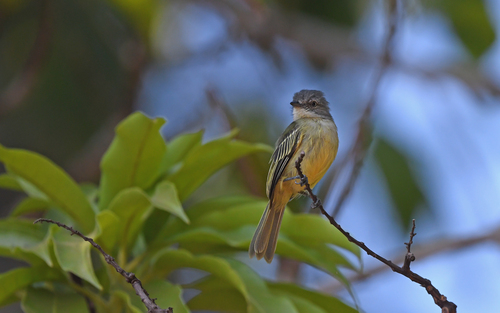 Guianan TyrannuletZimmerius acerThe Guianan tyrannulet is 9 to 12 cm (3.5 to 4.7 in) long and weighs 5.7 to 11 g (0.20 to 0.39 oz).
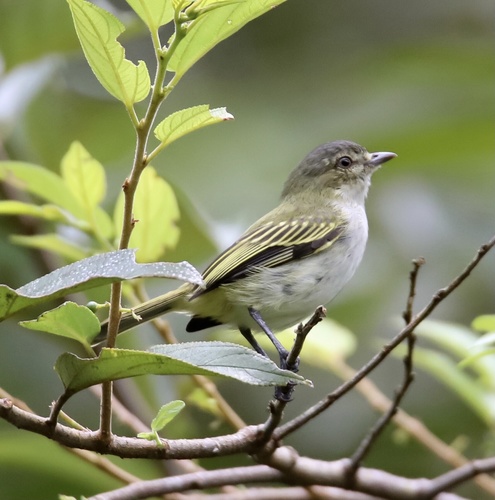 Mistletoe TyrannuletZimmerius parvusThe mistletoe tyrannulet is about 9.5 to 10 cm (3.7 to 3.9 in) long and weighs about 8.5 to 10 g (0.30 to 0.35 oz).
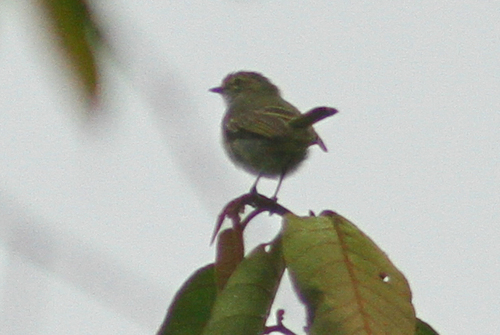 Choco TyrannuletZimmerius albigularisThe Choco tyrannulet is 10.5 to 11.5 cm (4.1 to 4.5 in) long and weighs 6.6 to 8.6 g (0.23 to 0.30 oz).
Learn the Spectacled Tyrannulet in the BeakBrain App
Photo and call practice. Coming soon to iPhone and Android.
Play today's Daily BirdEvery photo and recording on this page is credited to its author under the licence shown. Spotted a problem with this page, or have a better photo? Contribute.