Learn what every symbol on the card means.Full credits and sources at beakbrain.com/symbols
 WoodlandCavity nestMedium · 214 g


ID tip
It is 22–28 cm (8.7–11.0 in) long and weighs 185–220 g (6.5–7.8 oz). The upperparts are grey with dark streaks and there are white spots on the scapular feathers. The underparts are whitish with dark streaks. The face is white with a black border and black around the large orange eyes. The head has two short ear-tufts with black tips. Juvenile birds have a greyish face. The northern white-faced owl is usually paler and browner with reduced streaking below. Their call is a series of fast, bubbling hoots, uttered at night and frequently repeated.
Text from Wikipedia, licensed CC BY-SA 4.0.
When to see the Southern White-faced Owl
One bar for each month, and every month is filled: this bird is recorded here in all twelve. The wide bar is October, the month with the most records.
Where to see the Southern White-faced Owl
The map shades 13 countries with regular records, and 1 more in a lighter tone where the bird turns up only as a stray. Everything unshaded has no records. Countries are listed below the map.
Recorded as a rare visitor in Angola.
About the Southern White-faced Owl
The Southern white-faced owl is a fairly small owl in the family Strigidae. It is native to the southern half of Africa. It was formerly regarded as a subspecies of the northern white-faced owl but the two are now commonly treated as separate species.
Text adapted from Wikipedia, licensed CC BY-SA 4.0.
Easily confused with
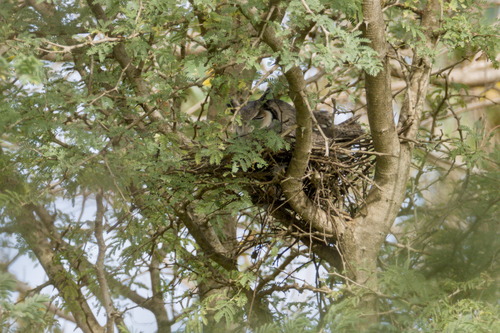
Learn the Southern White-faced Owl in the BeakBrain App
Photo and call practice. Coming soon to iPhone and Android.
Play today's Daily BirdEvery photo and recording on this page is credited to its author under the licence shown. Spotted a problem with this page, or have a better photo? Contribute.