Learn what every symbol on the card means.Full credits and sources at beakbrain.com/symbols
 ShrublandSmall · 23 g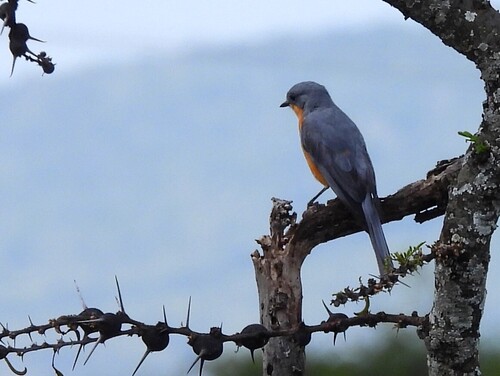
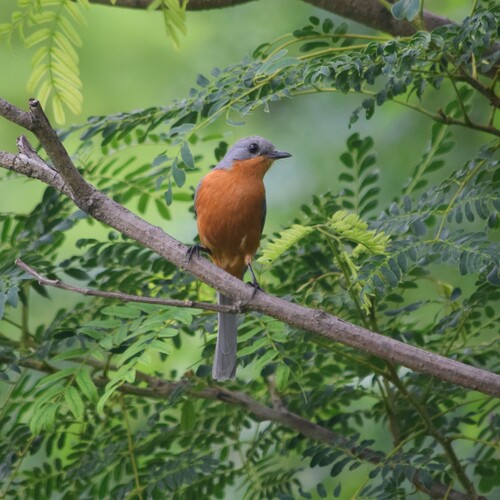
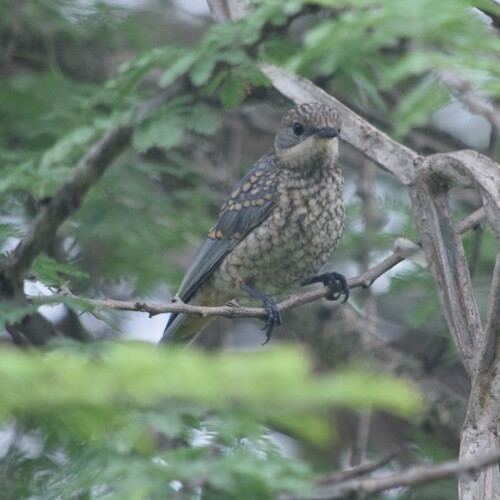
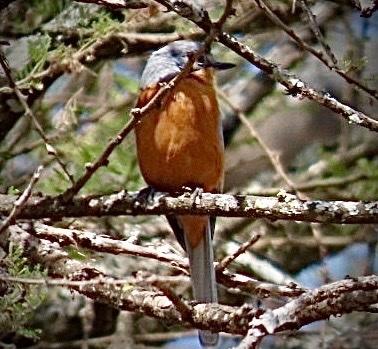


ID tip
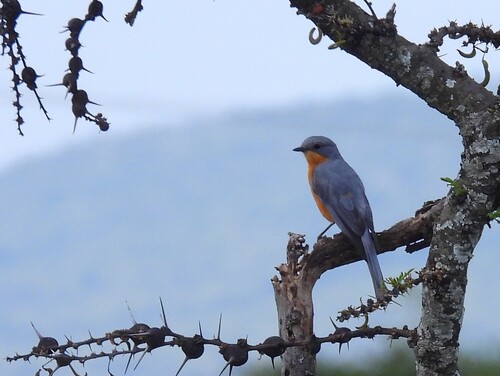
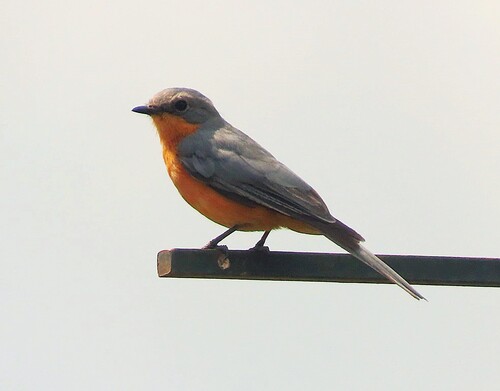
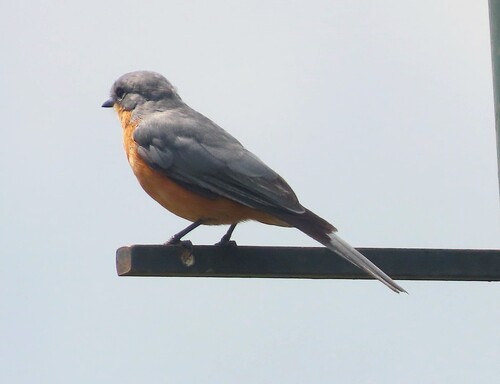
The silverbird is a stunning flycatcher of open areas west of the Rift Valley, silvery grey above and tawny orange below. Juveniles have black-bordered tawny spots on upperparts, mottled buff and black on throats and breasts. The species is 18 cm (7.1 in) long and weighs 22–23 g (0.78–0.81 oz). The call of the silverbird uses short phrases which are slightly thrush-like. Sometimes the terminal note is higher and thinner, eee-sleeur-eeee or sweet siursur-eet-seet; also a longer eep-eep churEErip, eep-eep cherip chch chchch eee, embellished with chattering and seep notes.
Text from Wikipedia, licensed CC BY-SA 4.0.
When to see the Silverbird
One bar for each month, and every month is filled: this bird is recorded here in all twelve. The wide bar is February, the month with the most records.
Where to see the Silverbird
The map shades 6 countries with regular records. Everything unshaded has no records. Countries are listed below the map.
About the Silverbird
The silverbird is an Old World flycatcher native to Eastern Africa, from Sudan to Tanzania. The species is the only member of the genus Empidornis, although it is sometimes placed in the genus Melaenornis .
Text adapted from Wikipedia, licensed CC BY-SA 4.0.
Easily confused with
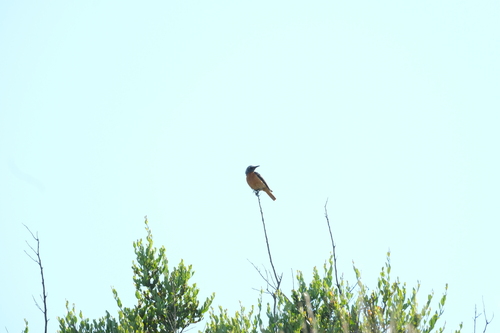 Short-toed Rock ThrushMonticola brevipesThe short-toed rock thrush is a species of bird in the family Muscicapidae.
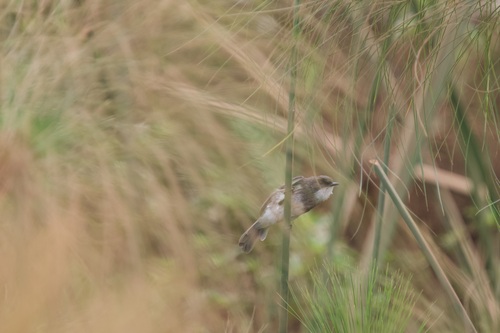 Swamp FlycatcherMuscicapa aquaticaThe swamp flycatcher or swamp alseonax is a species of bird in the family Muscicapidae.
 Finsch's WheatearOenanthe finschiiA medium-sized elegant wheatear with long wings and long legs.
Side by side: Finsch's Wheatear vs Silverbird
Learn the Silverbird in the BeakBrain App
Photo and call practice. Coming soon to iPhone and Android.
Play today's Daily BirdEvery photo and recording on this page is credited to its author under the licence shown. Spotted a problem with this page, or have a better photo? Contribute.