Learn what every symbol on the card means.Full credits and sources at beakbrain.com/symbols
 ShrublandCup nestTiny · 13 g


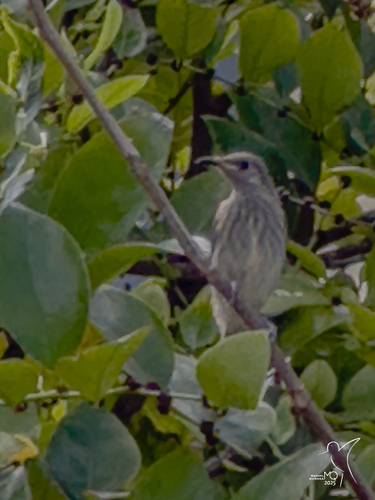
ID tip
The Silver-eared honeyeater is a sparrow-sized honeyeater with a downcurved bill, a prominent white ear mark, plain brown upperparts, and pale underparts with distinct dark mottling on the breast. Inhabits open coastal areas with canegrass and scattered trees, and also mangroves and coconut plantations. Generally occurs within vegetation close to watercourses. Combination of streaked chest, pale ear patch, and plain brown upperparts separate it from all other New Guinea honeyeaters. Vocalizations include harsh chattering and nasal "weet-weet-weet" calls, as well as a sharp "jit" note.
Text from Wikipedia, licensed CC BY-SA 4.0.
When to see the Silver-eared Honeyeater
One bar for each month. Filled bars are the 6 months with records; pale bars are months with none. The wide bar is July, the month with the most records.
Where to see the Silver-eared Honeyeater
The map shades 1 country with regular records. Everything unshaded has no records. Countries are listed below the map.
About the Silver-eared Honeyeater
The silver-eared honeyeater is a species of bird in the family Meliphagidae. It is found in New Guinea. Its natural habitat is subtropical or tropical mangrove forests.
Text adapted from Wikipedia, licensed CC BY-SA 4.0.
Easily confused with
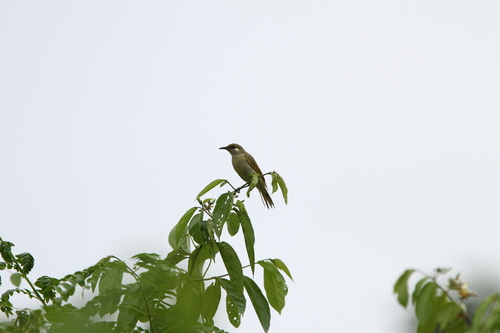 Olive HoneyeaterLichmera argentaurisThe olive honeyeater is a species of bird in the family Meliphagidae.
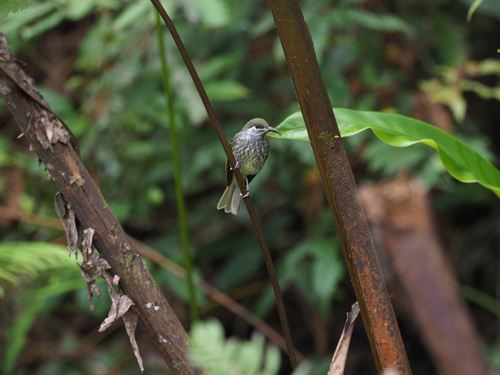 Seram HoneyeaterLichmera monticolaThe Seram honeyeater is a species of bird in the family Meliphagidae.
 Black-necklaced HoneyeaterLichmera notabilisThe black-necklaced honeyeater or black-chested honeyeater is a species of bird in the family Meliphagidae.
Learn the Silver-eared Honeyeater in the BeakBrain App
Photo and call practice. Coming soon to iPhone and Android.
Play today's Daily BirdEvery photo and recording on this page is credited to its author under the licence shown. Spotted a problem with this page, or have a better photo? Contribute.