Learn what every symbol on the card means.Full credits and sources at beakbrain.com/symbols
 WoodlandScrapeSmall · 44 g
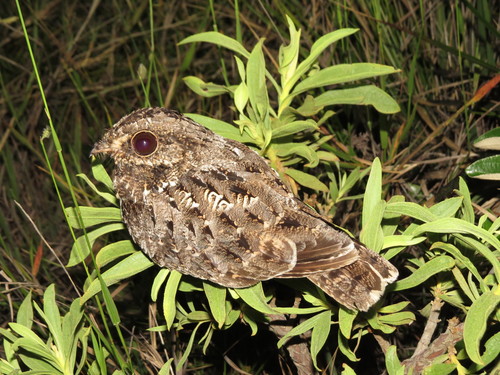
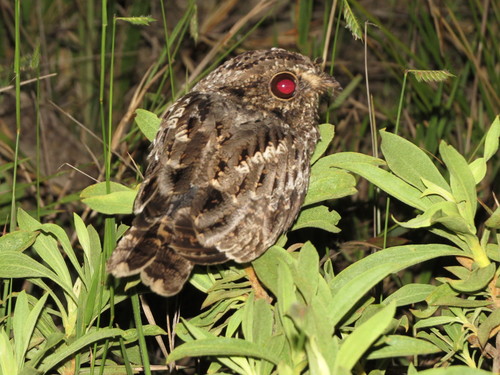
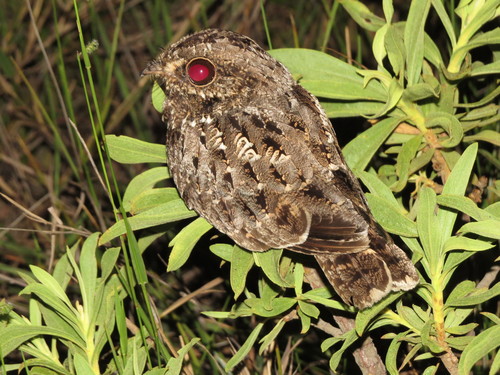
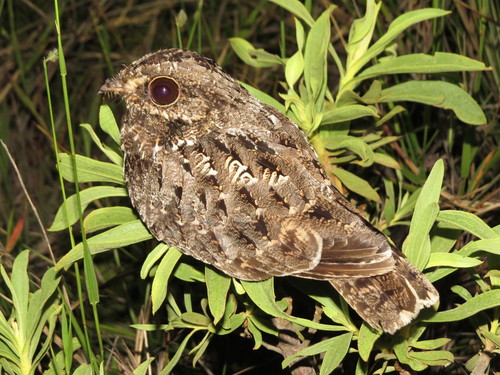
ID tip
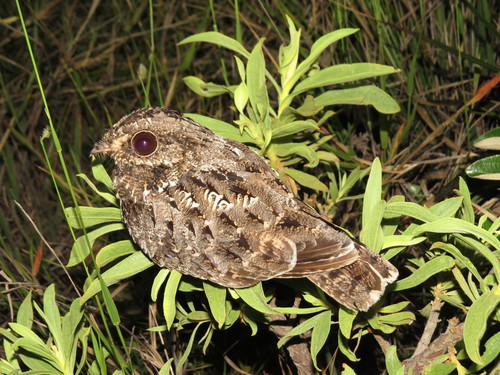
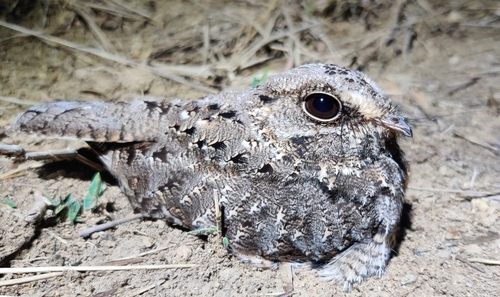
The sickle-winged nightjar is 18 to 20 cm (7.1 to 7.9 in) long; one male weighed 43.7 g (1.5 oz). The adult male's upperparts are grayish brown spotted with dark shades of brown. The wings have a hooked "sickle" appearance due to the shape of the primary flight feathers. They are generally grayish brown, with blackish brown, cinnamon, and white markings. The chin is buffish white with brown bars; the throat brown with a cinnamon tinge, brown bars, and buffy streaks; the breast brown with buff spots and streaks; and the belly and flanks pale buff with brown bars. Voice: One description of the sickle-winged nightjar's song is "a series of soft chip, tchup, or tchut notes"; another is "some chirping, cricket-like sounds" and a third is "a soft, single tick". A reported flight call is "a harsh, nasal gzee gzee".
Text from Wikipedia, licensed CC BY-SA 4.0.
When to see the Sickle-winged Nightjar
One bar for each month. Filled bars are the 11 months with records; pale bars are months with none. The wide bar is October, the month with the most records.
Where to see the Sickle-winged Nightjar
The map shades 3 countries with regular records. Everything unshaded has no records. Countries are listed below the map.
About the Sickle-winged Nightjar
The sickle-winged nightjar is a species of nightjar in the family Caprimulgidae. It is found in Argentina, Brazil, Paraguay and possibly Uruguay.
Text adapted from Wikipedia, licensed CC BY-SA 4.0.
Easily confused with
Learn the Sickle-winged Nightjar in the BeakBrain App
Photo and call practice. Coming soon to iPhone and Android.
Play today's Daily BirdEvery photo and recording on this page is credited to its author under the licence shown. Spotted a problem with this page, or have a better photo? Contribute.