Learn what every symbol on the card means.Full credits and sources at beakbrain.com/symbols
 ShrublandCup nestSmall · 18 g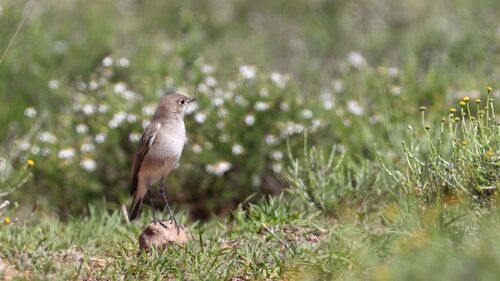
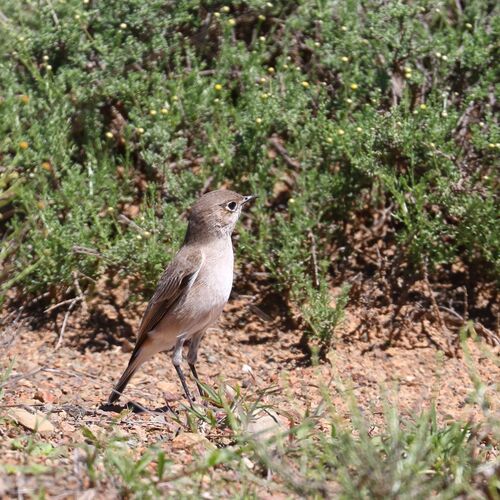
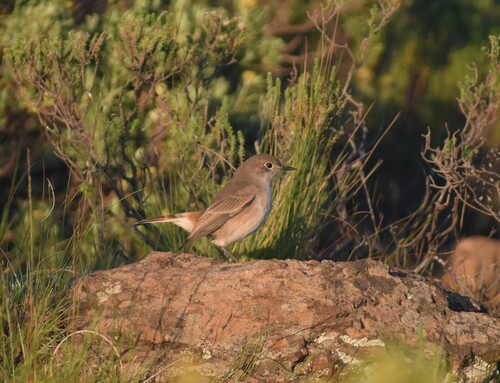
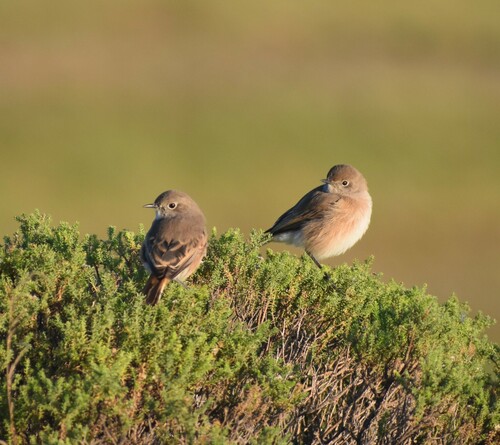


ID tip
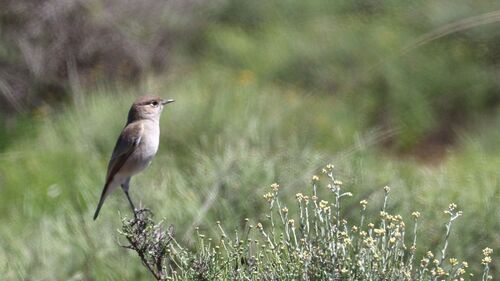
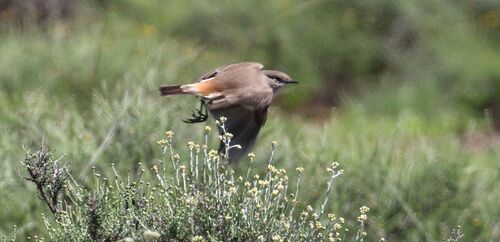
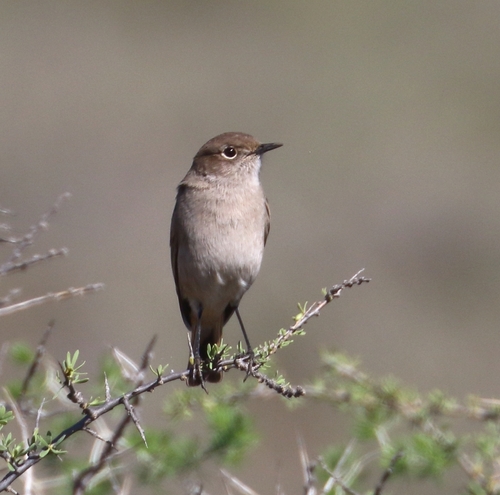
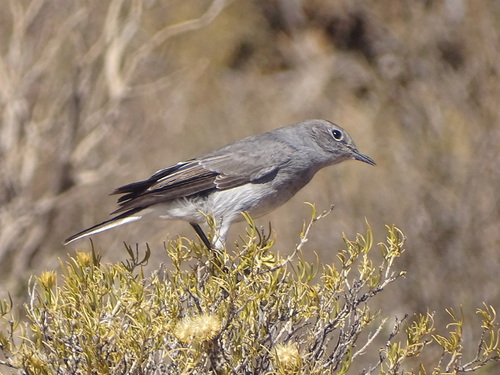
The sickle-winged chat is around 15 cm (5.9 in) in length and weighs 17–20 g (0.60–0.71 oz). Its upperparts are dark grey, but it has brown wings and a rufous patch behind the eye. The tail and rump are buff-pink, with an inverted wedge of black at the end of the tail. Its underparts are off-white, the short straight bill, legs and feet are black and the eye is brown. The sexes are similar, but the juvenile has buff tips to its feathers. The contrast between the dark upperparts and the much paler underparts distinguish this species from the more uniformly coloured familiar chat.
Text from Wikipedia, licensed CC BY-SA 4.0.
When to see the Sickle-winged Chat
One bar for each month, and every month is filled: this bird is recorded here in all twelve. The wide bar is October, the month with the most records.
Where to see the Sickle-winged Chat
The map shades 3 countries with regular records. Everything unshaded has no records. Countries are listed below the map.
About the Sickle-winged Chat
The sickle-winged chat or sicklewing chat is a small passerine bird of the Old World flycatcher family Muscicapidae endemic to southern Africa. It is a common resident breeder in South Africa and Lesotho, and is also found in southernmost areas of Botswana and Namibia. Its habitat is Karoo scrub, short grassland, and barren sandy or stony areas. In western coastal areas, it also occurs on agricultural land.
Text adapted from Wikipedia, licensed CC BY-SA 4.0.
Easily confused with
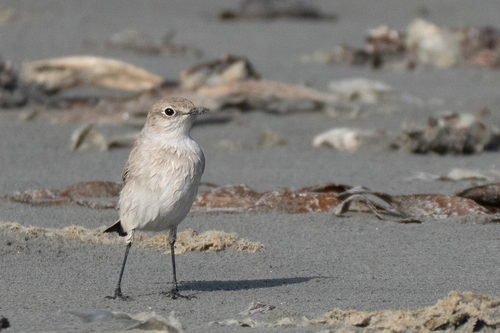 Tractrac ChatEmarginata tractracThe tractrac chat is 14–15 cm long with a weight of 20 g.
 Karoo ChatEmarginata schlegeliiThe Karoo chat is 16–18 cm long and weighs around 32 gm.
Side by side: Karoo Chat vs Sickle-winged Chat
Learn the Sickle-winged Chat in the BeakBrain App
Photo and call practice. Coming soon to iPhone and Android.
Play today's Daily BirdEvery photo and recording on this page is credited to its author under the licence shown. Spotted a problem with this page, or have a better photo? Contribute.