Learn what every symbol on the card means.Full credits and sources at beakbrain.com/symbols
 WoodlandCup nestMedium · 111 g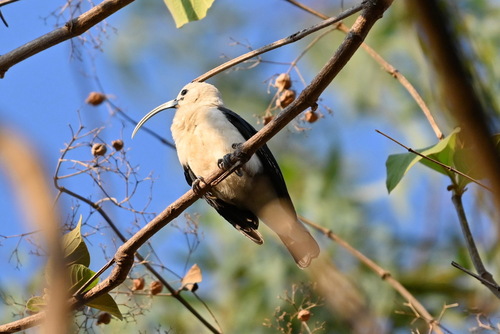
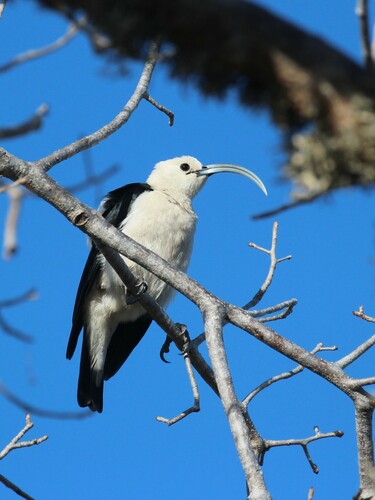
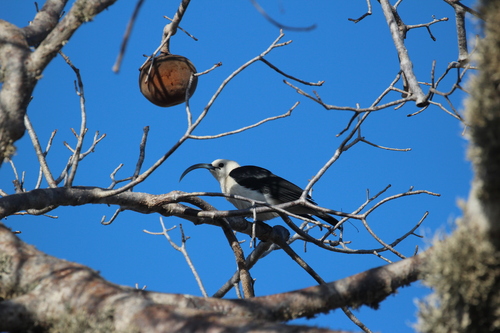


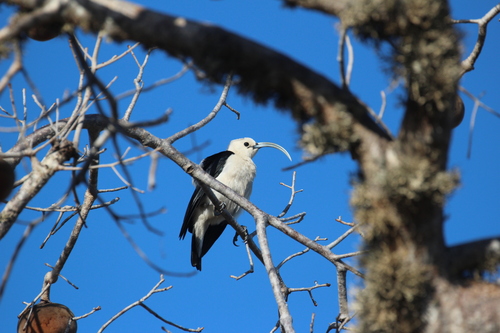
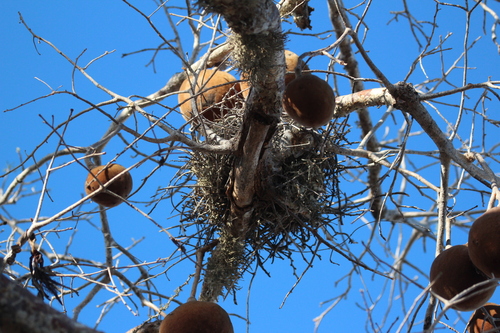
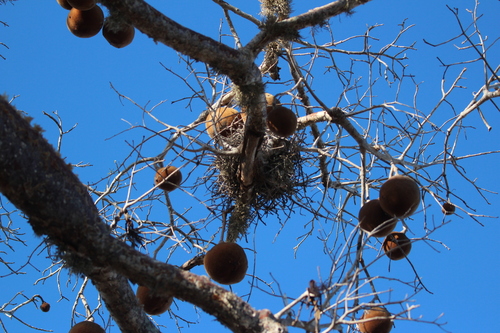
ID tip
The sickle-billed vanga is the largest of the vangas, measuring 32 cm (13 in) in length and weighing 106 to 119 g (3.7–4.2 oz). The most striking feature is the bill, which is strongly decurved and measures 77 mm (3.0 in) and is blue-grey fading to ivory at the tip. The plumage is striking, with a white head, breast and belly and the back, wings and tail being black with a blue sheen. The iris is brown and the orbital ring around the eye is black. The legs are strong and coloured dark grey to pale blue. There is no sexual dimorphism.
Text from Wikipedia, licensed CC BY-SA 4.0.
When to see the Sickle-billed Vanga
One bar for each month. Filled bars are the 3 months with records; pale bars are months with none. The wide bar is November, the month with the most records.
Where to see the Sickle-billed Vanga
The map shades 1 country with regular records. Everything unshaded has no records. Countries are listed below the map.
About the Sickle-billed Vanga
The sickle-billed vanga is a species of bird in the vanga family Vangidae. It is monotypic within the genus Falculea. It is endemic to Madagascar. Its natural habitats are tropical dry forests and tropical dry shrubland.
Text adapted from Wikipedia, licensed CC BY-SA 4.0.
Easily confused with
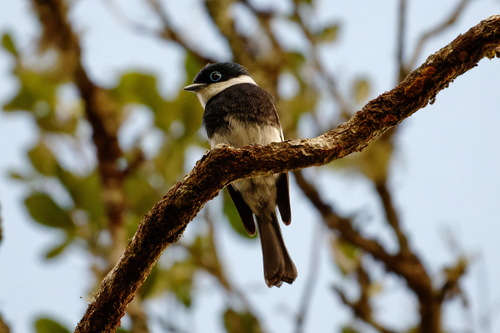 Ward's VangaPseudobias wardiWard's vanga, also known as Ward's flycatcher, is a species of bird in the family Vangidae.
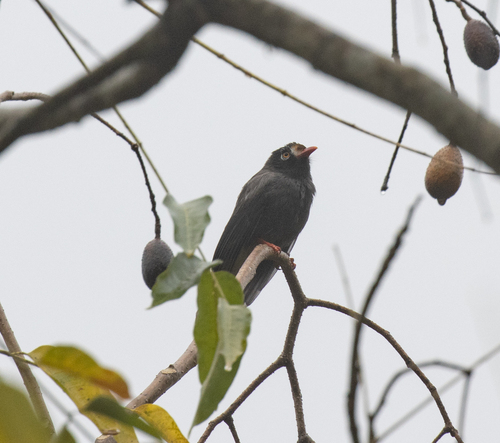 Chestnut-fronted HelmetshrikePrionops scopifronsThe chestnut-fronted helmetshrike is a species of bird in the Vanga family Vangidae, formerly usually included in the Malaconotidae.
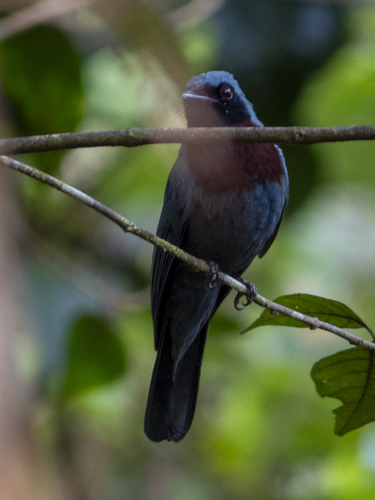 Maroon-breasted PhilentomaPhilentoma velataThe maroon-breasted philentoma is a bird species.
Learn the Sickle-billed Vanga in the BeakBrain App
Photo and call practice. Coming soon to iPhone and Android.
Play today's Daily BirdEvery photo and recording on this page is credited to its author under the licence shown. Spotted a problem with this page, or have a better photo? Contribute.