Learn what every symbol on the card means.Full credits and sources at beakbrain.com/symbols
 WetlandPlatform nestHuge · 5.9 kg



ID tip
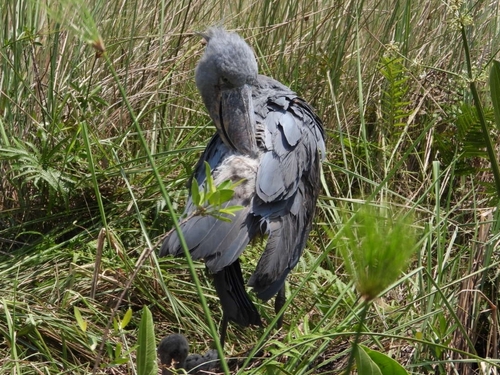
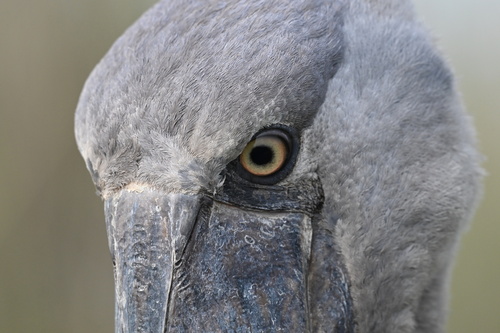
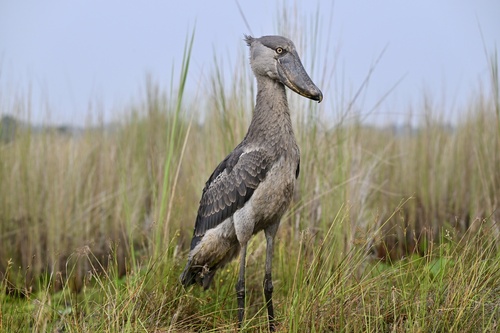
The shoebill is a tall bird, with a typical height range of 110 to 140 cm (43 to 55 in), with some specimens reaching as much as 152 cm (60 in). Length from tail to beak can range from 100 to 140 cm (39 to 55 in), and wingspan is 230 to 260 cm (7 ft 7 in to 8 ft 6 in). Weight has reportedly ranged from 4 to 7 kg (8.8 to 15.4 lb). A male typically weighs around 5.6 kg (12 lb) and is larger than a typical female of 4.9 kg (11 lb). The signature feature of the species is its huge, bulbous bill, which is pinkish in color with erratic greyish markings. Voice: Shoebills are normally silent, but perform bill-clattering displays at the nest. When engaging in these displays, adult birds have also been noted to utter a cattle-like moo, as well as high-pitched whines. Both nestlings and adults engage in bill-clattering during the nesting season as a means of communication.
Text from Wikipedia, licensed CC BY-SA 4.0.
When to see the Shoebill
One bar for each month. Filled bars are the 11 months with records; pale bars are months with none. The wide bar is July, the month with the most records.
Where to see the Shoebill
The map shades 6 countries with regular records, and 1 more in a lighter tone where the bird turns up only as a stray. Everything unshaded has no records. Countries are listed below the map.
Recorded as a rare visitor in Kenya.
About the Shoebill
The shoebill, also known as the whale-headed stork, whalebill, and shoe-billed stork, is a large long-legged wading bird. It is named for its enormous, shoe-shaped bill. It has a somewhat stork-like overall form and was previously classified as a stork in the order Ciconiiformes, but genetic evidence has now placed it along with pelicans, herons, and its closest relative, the hamerkop, all in the order Pelecaniformes. Adults are mainly grey, while juveniles are browner. It lives in tropical East Africa in large swamps from South Sudan down to Zambia.
Text adapted from Wikipedia, licensed CC BY-SA 4.0.
Learn the Shoebill in the BeakBrain App
Photo and call practice. Coming soon to iPhone and Android.
Play today's Daily BirdEvery photo and recording on this page is credited to its author under the licence shown. Spotted a problem with this page, or have a better photo? Contribute.