Learn what every symbol on the card means.Full credits and sources at beakbrain.com/symbols
 GrasslandScrapeLarge · 882 g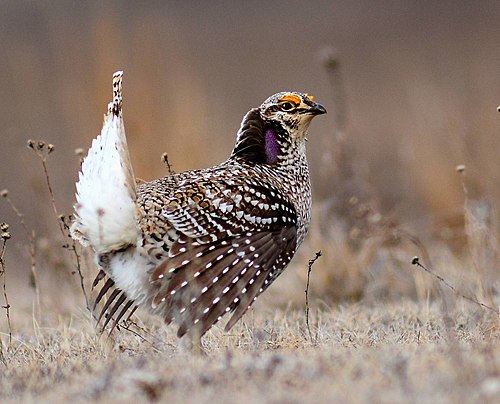


ID tip
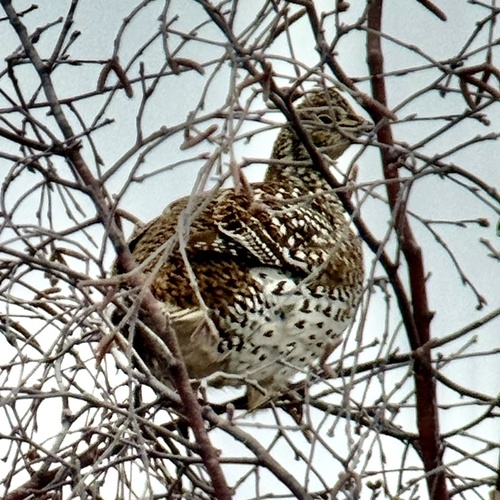
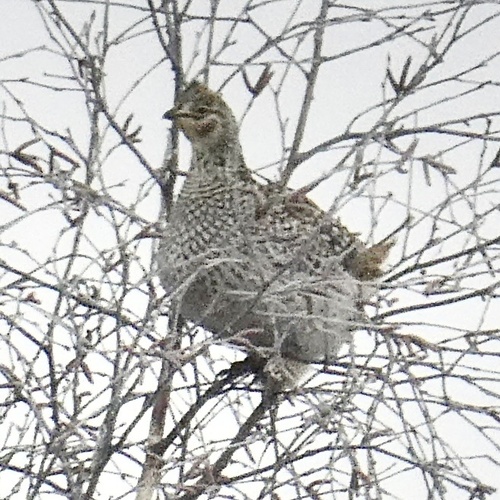
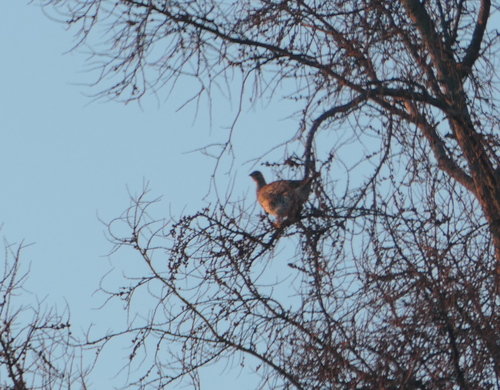
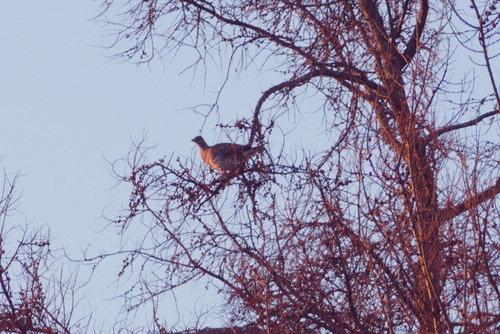
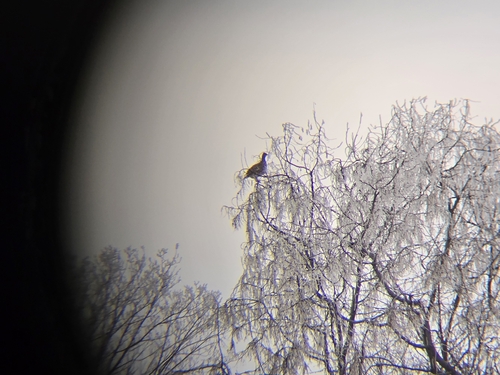
Adults have a relatively short tail with the two central (deck) feathers being square-tipped and somewhat longer than their lighter, outer tail feathers giving the bird its distinctive name. The plumage is mottled dark and light browns against a white background, they are lighter on the underparts with a white belly uniformly covered in faint V-shaped markings. These markings distinguish sharp-tailed grouse from lesser and greater prairie chickens which are heavily barred on their underparts. Adult males have a yellow comb over their eyes and a violet display patch on their neck.
Text from Wikipedia, licensed CC BY-SA 4.0.
When to see the Sharp-tailed Grouse
One bar for each month. Filled bars are the 11 months with records; pale bars are months with none. The wide bar is April, the month with the most records.
Where to see the Sharp-tailed Grouse
The map shades 2 countries with regular records. Everything unshaded has no records. Countries are listed below the map.
About the Sharp-tailed Grouse
The sharp-tailed grouse, also known as the sharptail or fire grouse, is a medium-sized prairie grouse. One of three species in the genus Tympanuchus, the sharp-tailed grouse is found throughout Alaska, much of Northern and Western Canada, and parts of the Western and Midwestern United States. The sharp-tailed grouse is the provincial bird of the Canadian province of Saskatchewan.
Text adapted from Wikipedia, licensed CC BY-SA 4.0.
Easily confused with
 Greater Prairie ChickenTympanuchus cupidoAdults of both sexes are medium to large chicken-like birds, stocky with round wings.
 Lesser Prairie ChickenTympanuchus pallidicinctusAdult individuals are medium to large birds, striped white and brown like its near relative, the Greater prairie-chicken (T. cupido), though it is smaller and paler.
Side by side: Greater Prairie Chicken vs Sharp-tailed Grouse
Learn the Sharp-tailed Grouse in the BeakBrain App
Photo and call practice. Coming soon to iPhone and Android.
Play today's Daily BirdEvery photo and recording on this page is credited to its author under the licence shown. Spotted a problem with this page, or have a better photo? Contribute.