Learn what every symbol on the card means.Full credits and sources at beakbrain.com/symbols
 WoodlandCup nestTiny · 13 g

ID tip
This ten-to-eleven-centimetre (3.9 to 4.3 in) long bird has a plumage of olive-grey upper-parts and dull-coloured underparts. It is further characterized by a narrow, white eye-ring, a rather long dark-grey tail and a small sharp bill. Its diet consists of insect larvae, locusts, and grasshoppers as well as berries and seeds. The Seychelles white-eye's breeding season is from September to April, in which a clutch of two to seven eggs is laid into a cup-shaped nest. The incubation time is thirteen to fifteen days and the young are fully fledged after eleven to sixteen days.
Text from Wikipedia, licensed CC BY-SA 4.0.
When to see the Seychelles White-eye
One bar for each month. Filled bars are the 8 months with records; pale bars are months with none. The wide bar is August, the month with the most records.
Where to see the Seychelles White-eye
The map shades 1 country with regular records. Everything unshaded has no records. Countries are listed below the map.
About the Seychelles White-eye
The Seychelles white-eye is a rare warbler-like perching bird from the family of white-eyes (Zosteropidae). It is endemic to the Seychelles. At one time thought to be extinct, it was rediscovered and is now listed as Vulnerable by the IUCN.
Text adapted from Wikipedia, licensed CC BY-SA 4.0.
Easily confused with
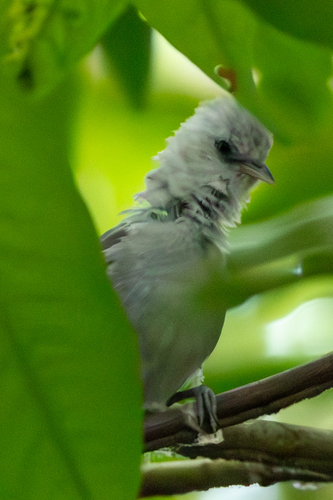 Principe SpeiropsZosterops leucophaeusThe Príncipe speirops is a species of bird in the family Zosteropidae.
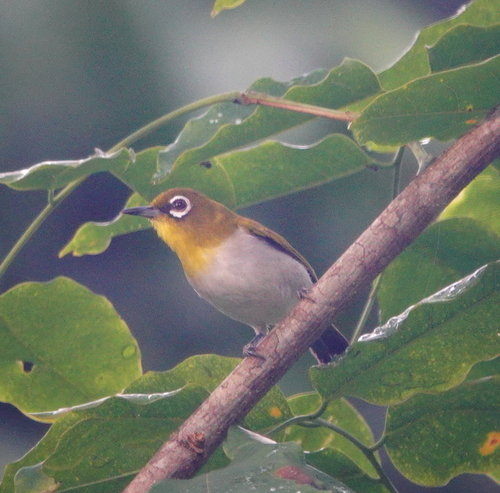 Ambon White-eyeZosterops kuehniThe Ambon white-eye is a small bird measuring about 12 cm long.
Learn the Seychelles White-eye in the BeakBrain App
Photo and call practice. Coming soon to iPhone and Android.
Play today's Daily BirdEvery photo and recording on this page is credited to its author under the licence shown. Spotted a problem with this page, or have a better photo? Contribute.