Learn what every symbol on the card means.Full credits and sources at beakbrain.com/symbols
 ForestDomed nestTiny · 11 g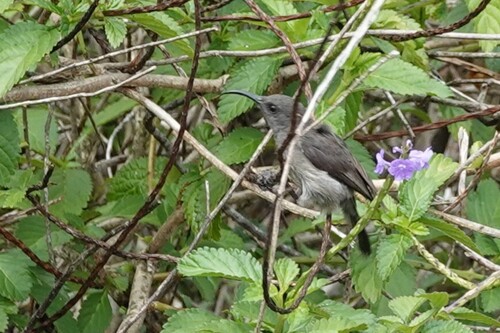
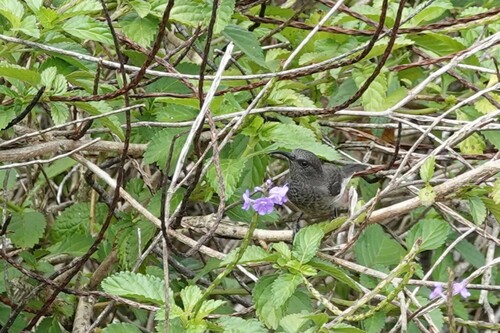
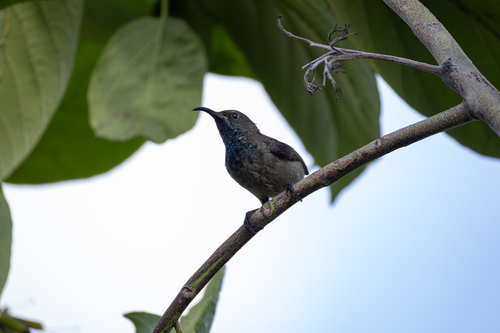
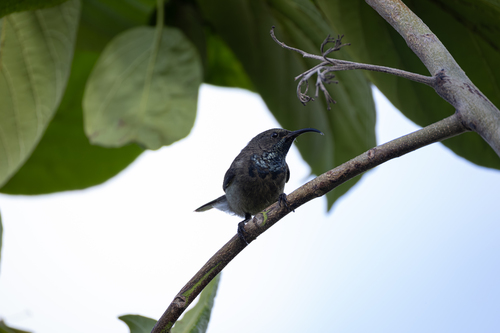
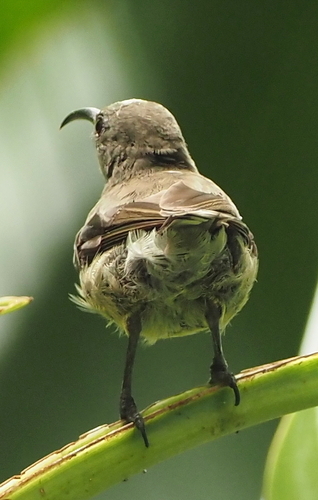


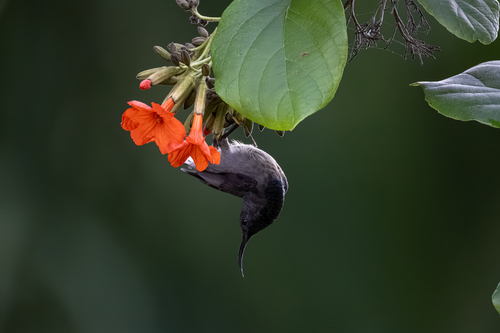
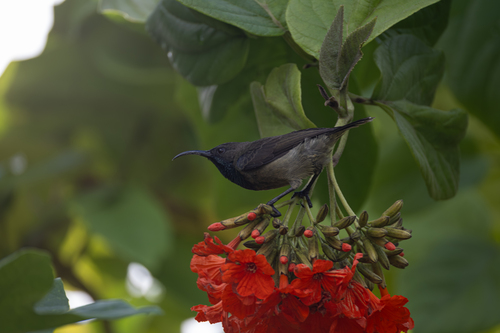
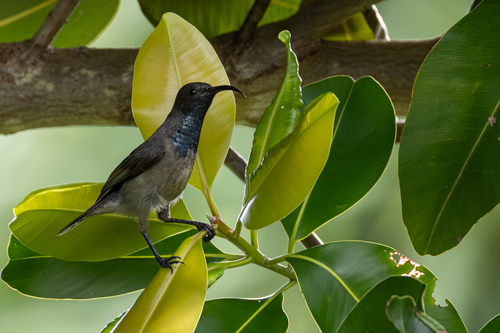
ID tip
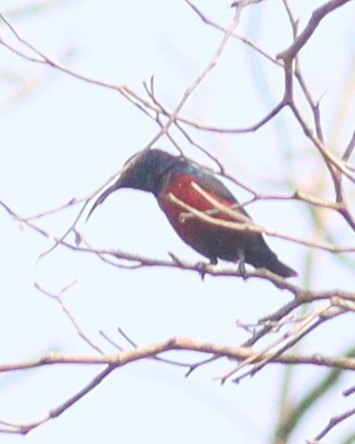
It can reach a length from eleven to twelve centimetres. The plumage is dull grey. The male exhibits an iridescent violet-green sheen on its head and throat, brown underparts and yellow or orange tufts under its wings, which are more noticeable in flight. The long slender bill is downcurved. The legs are black. The female is an altogether duller-looking bird with pale grey underparts, and lacks the yellow pectoral tufts. The song of the males is high pitched, noisy and harsh, interspersed with various rasping calls. The female also sings.
Text from Wikipedia, licensed CC BY-SA 4.0.
When to see the Seychelles Sunbird
One bar for each month, and every month is filled: this bird is recorded here in all twelve. The wide bar is August, the month with the most records.
Where to see the Seychelles Sunbird
The map shades 1 country with regular records. Everything unshaded has no records. Countries are listed below the map.
About the Seychelles Sunbird
The Seychelles sunbird is a small passerine from the sunbird family. It is named after the French explorer Jean-Jacques Dussumier. It is native to the Seychelles, where it is known as kolibri in Seychellois Creole. This bird is placed in the genus Cinnyris by some authorities and in Nectarinia by others. Although this bird has a limited range, it is described as common and has a stable population, so the International Union for Conservation of Nature has rated its conservation status as being of "least concern".
Text adapted from Wikipedia, licensed CC BY-SA 4.0.
Easily confused with

Learn the Seychelles Sunbird in the BeakBrain App
Photo and call practice. Coming soon to iPhone and Android.
Play today's Daily BirdEvery photo and recording on this page is credited to its author under the licence shown. Spotted a problem with this page, or have a better photo? Contribute.