Learn what every symbol on the card means.Full credits and sources at beakbrain.com/symbols
 ForestCavity nestMedium · 80 g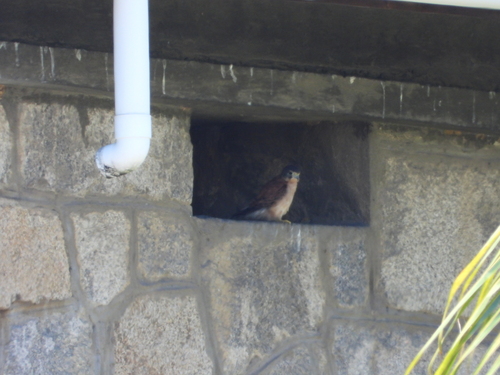


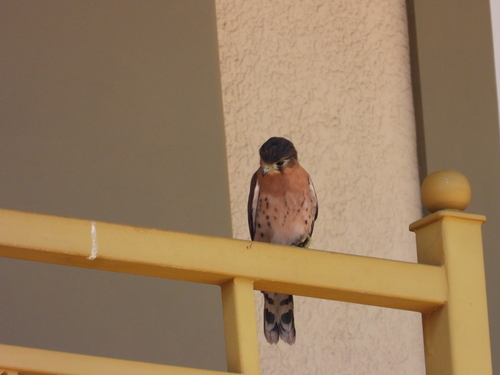
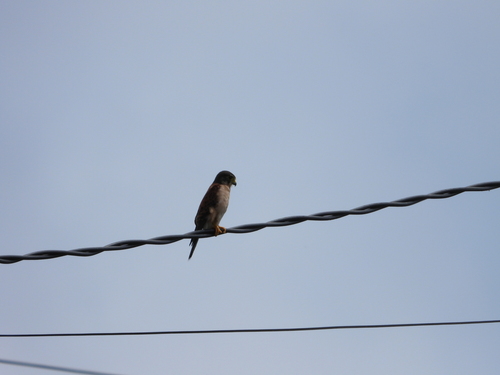
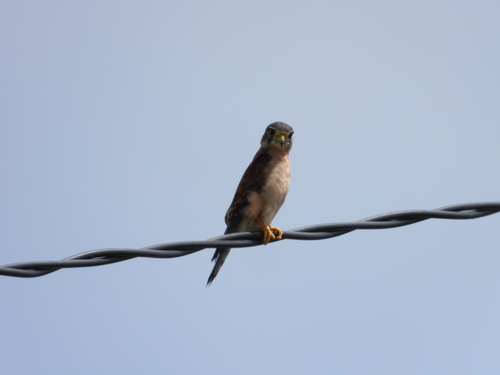
ID tip
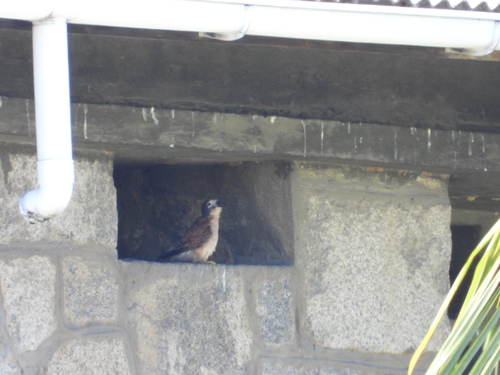
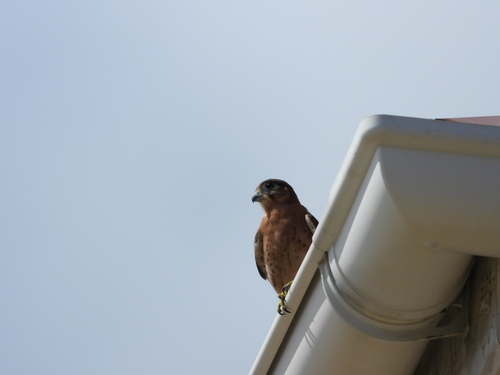
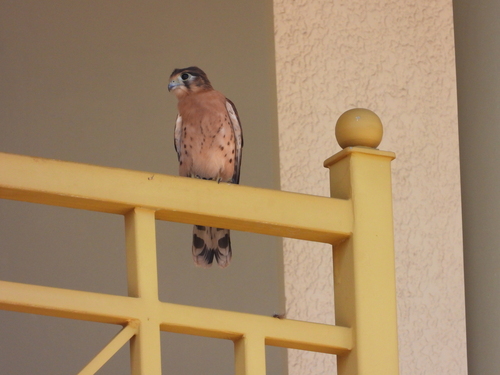
It is the smallest of the kestrels, 18–23 cm long with a wingspan of 40–45 cm. The wings are fairly short and rounded. The adult male's upperparts are reddish brown with black spots while the underparts are unspotted and buff. The head and rump are dark blue-grey. The tail is blue-grey with black bars. The bill is dark and the feet and cere are yellow. Females are similar to the males in appearance but are a little larger and paler. Immature birds have a brown, streaked head, spots on the breast and a buff tip to the tail.
Text from Wikipedia, licensed CC BY-SA 4.0.
When to see the Seychelles Kestrel
One bar for each month. Filled bars are the 11 months with records; pale bars are months with none. The wide bar is October, the month with the most records.
Where to see the Seychelles Kestrel
The map shades 1 country with regular records. Everything unshaded has no records. Countries are listed below the map.
About the Seychelles Kestrel
The Seychelles kestrel is a small bird of prey belonging to the genus Falco in the falcon family, Falconidae. It is endemic to the Seychelles Islands where it is the only breeding bird of prey. It is known in Seychellois Creole as the katiti after its loud, shrill call.
Text adapted from Wikipedia, licensed CC BY-SA 4.0.
Easily confused with
 Banded KestrelFalco zoniventrisThe banded kestrel is a bird of prey belonging to the falcon family Falconidae.
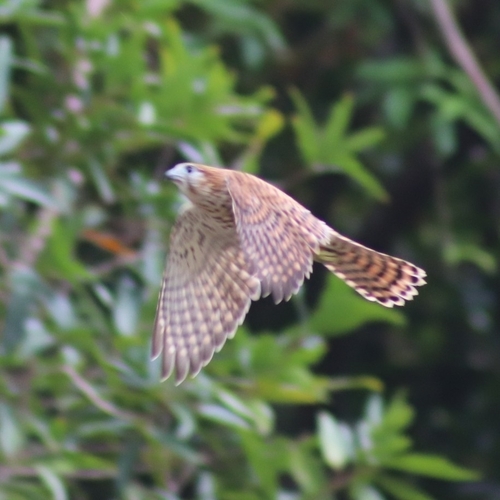 Mauritius KestrelFalco punctatusIt can reach a size between 26 and 30.5 cm (10.2 and 12.0 in).
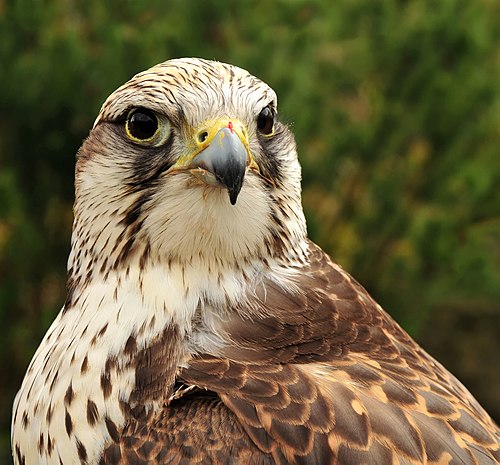 Saker FalconFalco cherrugThe saker falcon is a large hierofalcon, larger than the lanner falcon and almost as large as gyrfalcon at 45–57 cm (18–22 in) length with a wingspan of 97–126 cm (38–50 in).
Learn the Seychelles Kestrel in the BeakBrain App
Photo and call practice. Coming soon to iPhone and Android.
Play today's Daily BirdEvery photo and recording on this page is credited to its author under the licence shown. Spotted a problem with this page, or have a better photo? Contribute.