Learn what every symbol on the card means.Full credits and sources at beakbrain.com/symbols
 ShrublandScrapeLarge · 712 g
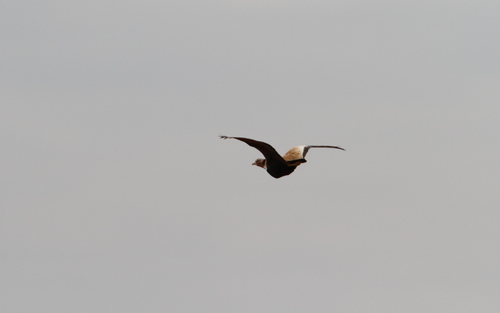

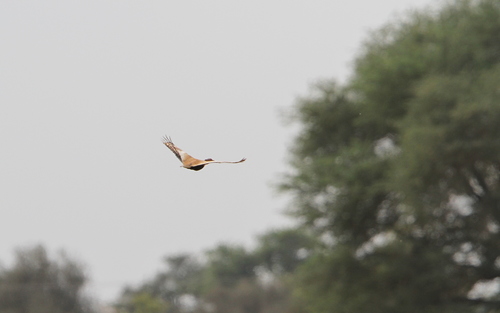
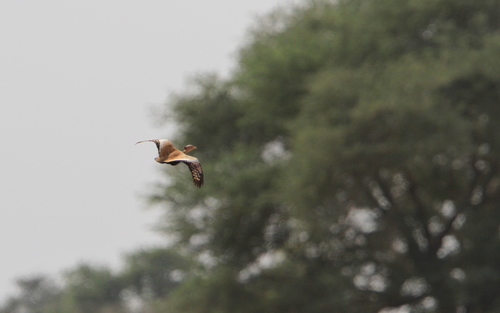
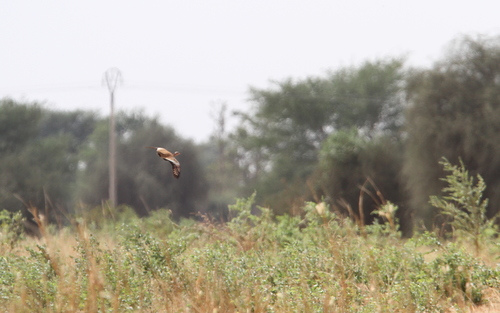
ID tip
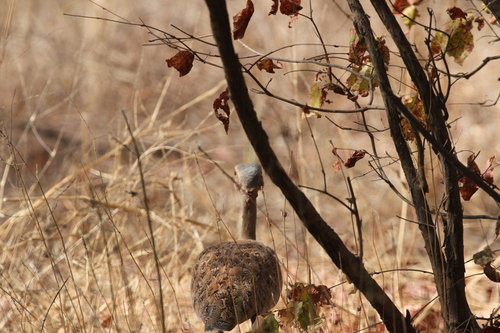
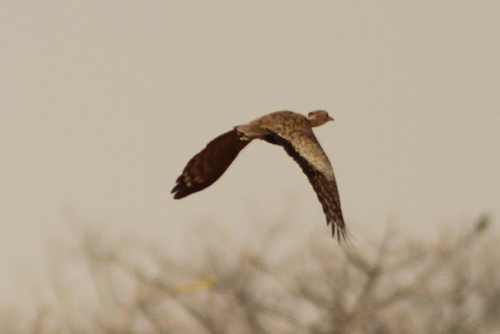
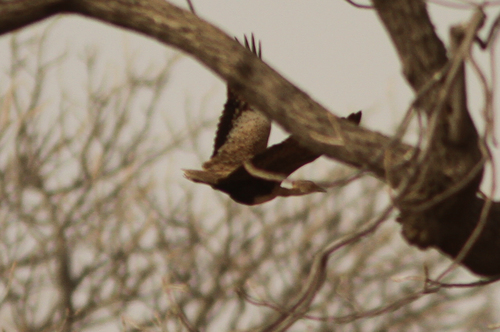
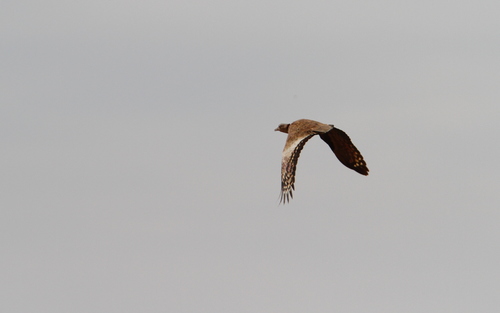
Adults have short thin necks and legs, with a large head. The top of head and lower fore-neck are grey with a black streak centrally located on the chin and a small white shoulder strap on each side of the base neck. The upper parts of the bird are pale with black streaks and arrowhead markings. Bill is yellowish, the culmen brownish, the iris pale clayey specked with feet a yellowish clayey colour. Wings are 10 inches 10 inches (25 cm) and tail approximately 5 inches (13 cm). Voice: Savile's bustard has a clear and distinctive call, sounding like a whistled 'tuit thit'. Males during display produce a short whistled note followed by a series of short whistles, which often accelerate, tuit! tutututututututut or thut thut-thut-thut-thutututututut. They can also produce a series of frog-like notes in the same rhythm.
Text from Wikipedia, licensed CC BY-SA 4.0.
When to see the Savile's Bustard
One bar for each month. Filled bars are the 11 months with records; pale bars are months with none. The wide bar is January, the month with the most records.
Where to see the Savile's Bustard
The map shades 7 countries with regular records. Everything unshaded has no records. Countries are listed below the map.
About the Savile's Bustard
Savile's bustard is a species of bird in the family Otididae. Otididae are an Old-World and understudied family of birds mostly found in Afro-Tropical regions. It is found in Burkina Faso, Cameroon, Chad, Ivory Coast, Gambia, Mali, Mauritania, Niger, Nigeria, Senegal, and Sudan.
Text adapted from Wikipedia, licensed CC BY-SA 4.0.
Easily confused with


Learn the Savile's Bustard in the BeakBrain App
Photo and call practice. Coming soon to iPhone and Android.
Play today's Daily BirdEvery photo and recording on this page is credited to its author under the licence shown. Spotted a problem with this page, or have a better photo? Contribute.