Learn what every symbol on the card means.Full credits and sources at beakbrain.com/symbols
 DesertCup nestSmall · 18 g


ID tip
The sand lark is about 12 or 13 cm (4.7 or 5.1 in) long. There is considerable geographic variation and three subspecies are recognized. All subspecies are dull brownish grey with faintly streaked upperparts and appears distinctly short-tailed with a fine bill. The bill length varies geographically short and stubby in the western part and long and fine tipped in the eastern part of its range. Subspecies krishnakumarsinhji found around Bhavnagar in Gujarat is greyer above with broad dark streaks on the upper plumage and breast.
Text from Wikipedia, licensed CC BY-SA 4.0.
When to see the Sand Lark
One bar for each month. Filled bars are the 8 months with records; pale bars are months with none. The wide bar is January, the month with the most records.
Where to see the Sand Lark
The map shades 7 countries with regular records. Everything unshaded has no records. Countries are listed below the map.
About the Sand Lark
The sand lark is a small passerine bird in the lark family, Alaudidae, found in southern Asia. It is somewhat similar to, but smaller than the short-toed larks.
Text adapted from Wikipedia, licensed CC BY-SA 4.0.
Easily confused with
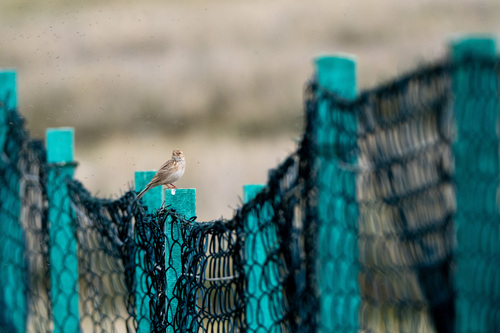 Asian Short-toed LarkAlaudala cheleensisThe Asian short-toed lark is a lark in the family Alaudidae.
 Somali Short-toed LarkAlaudala somalicaThe Somali short-toed lark is a small passerine bird of the lark family found in eastern and north-eastern Africa.
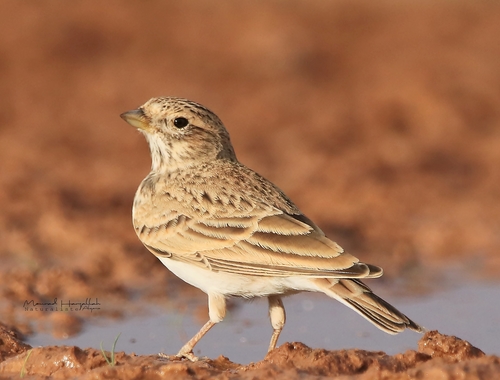 Mediterranean Short-toed LarkAlaudala rufescensThe Mediterranean short-toed lark is similar in size and appearance to the greater short-toed lark but is generally a duller-looking bird with a more streaked breast.
Learn the Sand Lark in the BeakBrain App
Photo and call practice. Coming soon to iPhone and Android.
Play today's Daily BirdEvery photo and recording on this page is credited to its author under the licence shown. Spotted a problem with this page, or have a better photo? Contribute.