Learn what every symbol on the card means.Full credits and sources at beakbrain.com/symbols
 ForestCup nestSmall · 60 g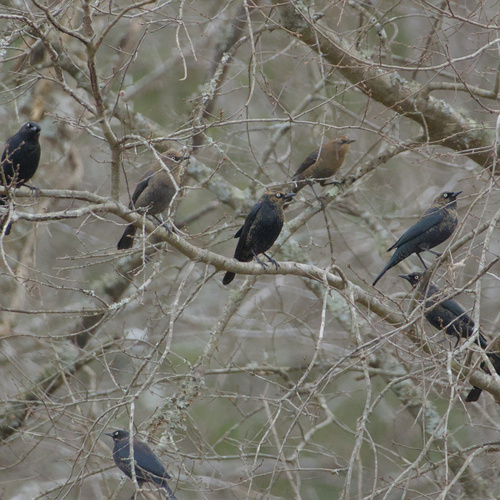


ID tip
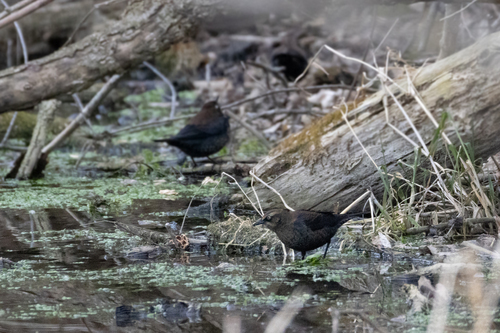
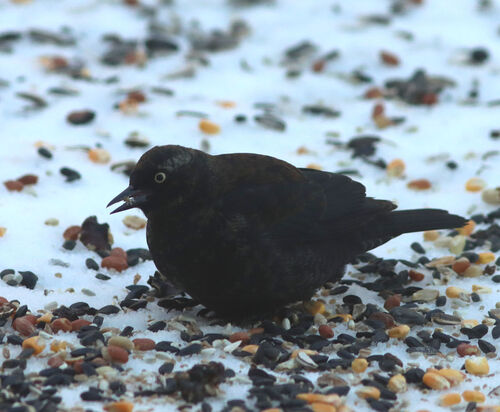
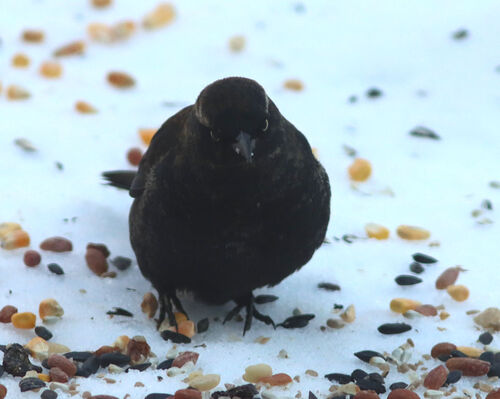
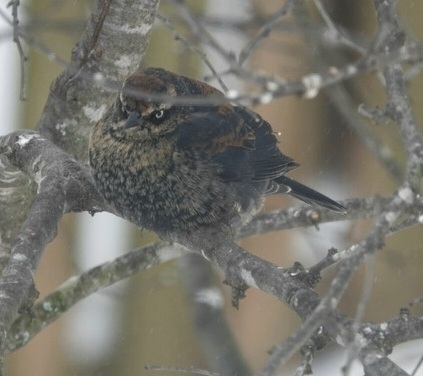
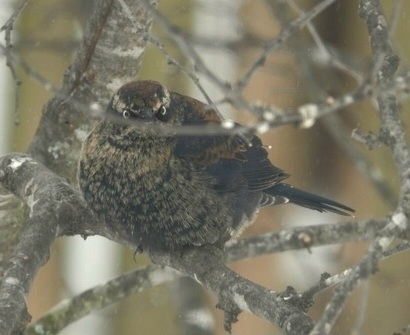
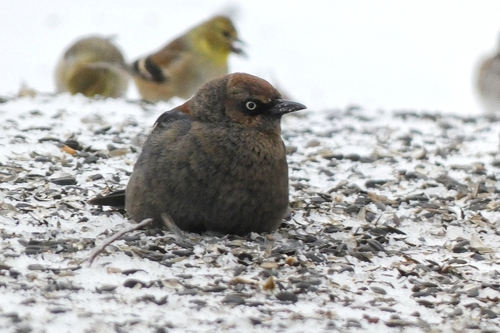
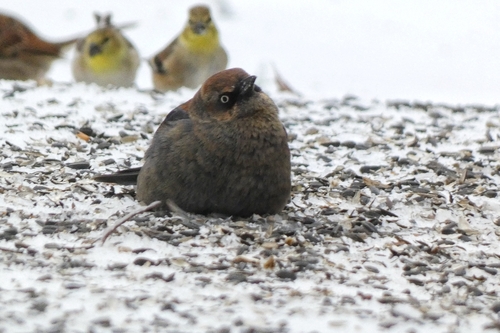
Adults have a pointed bill and a pale yellow eye. They have black plumage with faint green and purple gloss; the female is greyer. "Rusty" refers to the brownish winter plumage. They resemble the western member of the same genus, the Brewer's blackbird; however, Brewer's has a longer bill and the male's head is iridescent green.
Text from Wikipedia, licensed CC BY-SA 4.0.
When to see the Rusty Blackbird
One bar for each month. Filled bars are the 9 months with records; pale bars are months with none. The wide bar is April, the month with the most records.
Where to see the Rusty Blackbird
The map shades 4 countries with regular records, and 1 more in a lighter tone where the bird turns up only as a stray. Everything unshaded has no records. Countries are listed below the map.
Recorded as a rare visitor in Mexico.
About the Rusty Blackbird
The rusty blackbird is a medium-sized New World blackbird, closely related to grackles. It is a bird that prefers wet forested areas, breeding in the boreal forest and muskeg across northern Canada, and migrating southeast to the United States during winter.
Text adapted from Wikipedia, licensed CC BY-SA 4.0.
Easily confused with
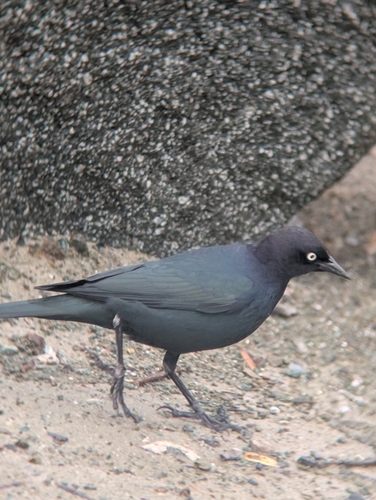
Side by side: Brewer's Blackbird vs Rusty Blackbird
Learn the Rusty Blackbird in the BeakBrain App
Photo and call practice. Coming soon to iPhone and Android.
Play today's Daily BirdEvery photo and recording on this page is credited to its author under the licence shown. Spotted a problem with this page, or have a better photo? Contribute.