Learn what every symbol on the card means.Full credits and sources at beakbrain.com/symbols
 Shrubland36 g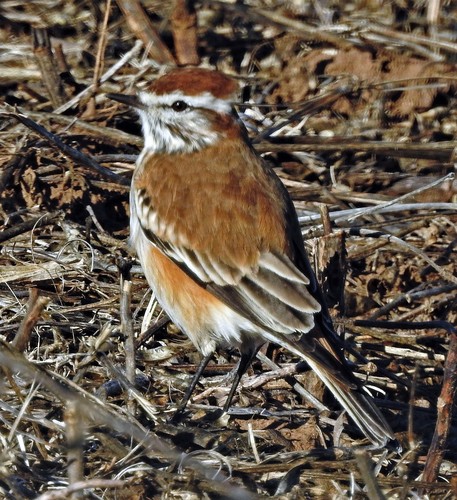
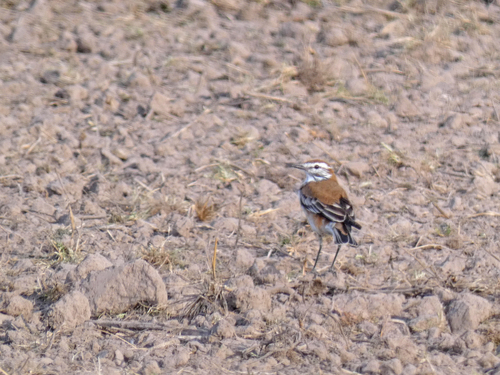
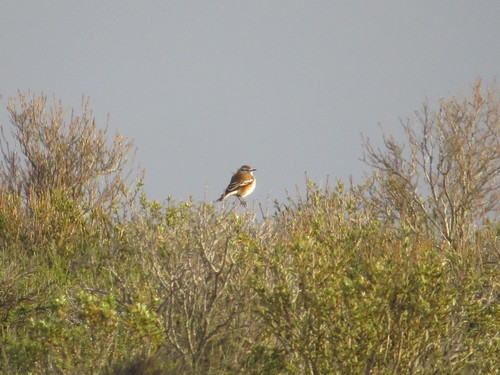
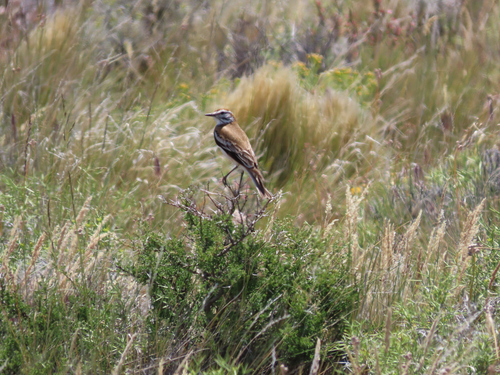
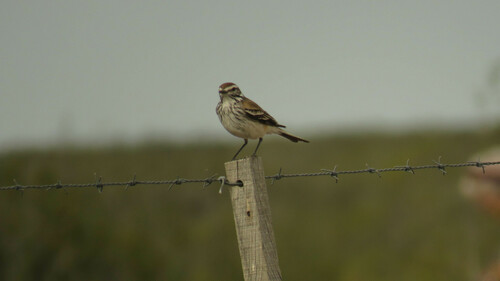
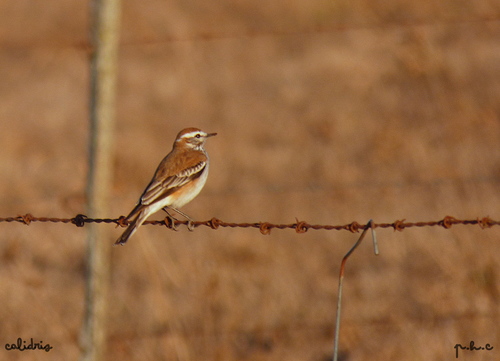
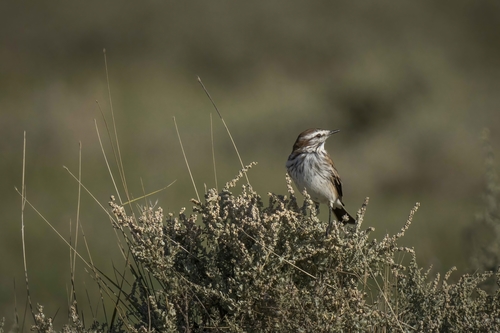
ID tip
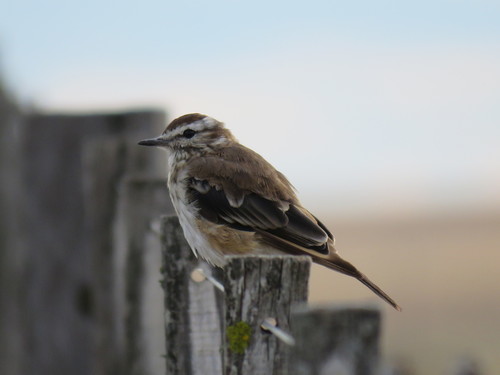
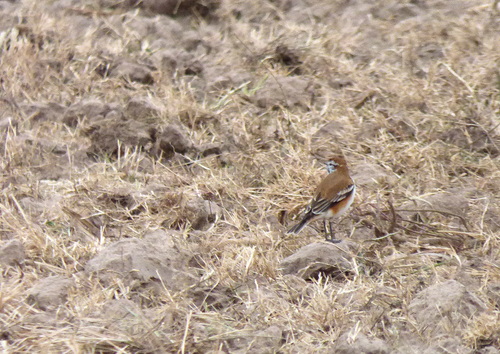
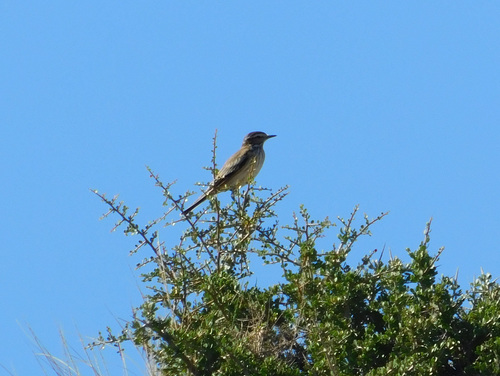
The rusty-backed monjita is 18 to 19 cm (7.1 to 7.5 in) long. Adult males have a rufescent crown and a long white supercilium on an otherwise black-streaked white face. Their upperparts are mostly rufescent or rufous-brown with a grayish white rump. Their wings are mostly black. Their wing's greater and median coverts have grayish white edges and tips, the lesser coverts are rufescent, and the tertials have white edges. Their tail is mostly black with white outer webs on the three outer pairs of feathers. Voice: As of May 2025 xeno-canto had a single recording of a rusty-backed monjita vocalization; the Cornell Lab of Ornithology's Macaulay Library had it and one other. The species' song has not been described.
Text from Wikipedia, licensed CC BY-SA 4.0.
When to see the Rusty-backed Monjita
One bar for each month. Filled bars are the 9 months with records; pale bars are months with none. The wide bar is October, the month with the most records.
Where to see the Rusty-backed Monjita
The map shades 1 country with regular records, and 1 more in a lighter tone where the bird turns up only as a stray. Everything unshaded has no records. Countries are listed below the map.
Recorded as a rare visitor in Chile.
About the Rusty-backed Monjita
The rusty-backed monjita is a species of bird in the family Tyrannidae, the tyrant flycatchers. It is endemic to Argentina but has been recorded as a vagrant in Brazil and Chile.
Text adapted from Wikipedia, licensed CC BY-SA 4.0.
Easily confused with
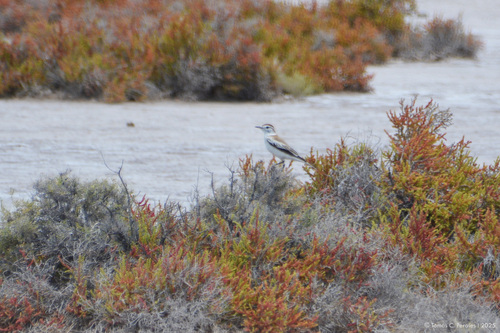 Salinas MonjitaNeoxolmis salinarumThe salinas monjita is about 16.5 cm (6.5 in) long.
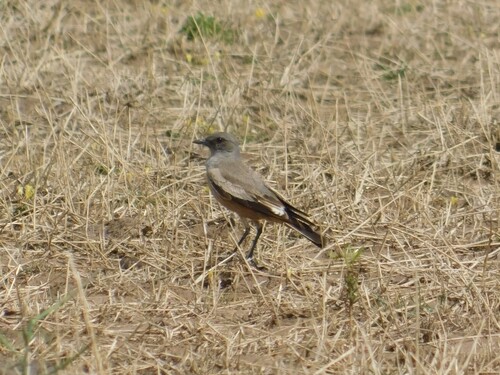 Chocolate-vented TyrantNeoxolmis rufiventrisThe chocolate-vented tyrant is 20 to 23 cm (7.9 to 9.1 in) long and weighs about 77 g (2.7 oz).
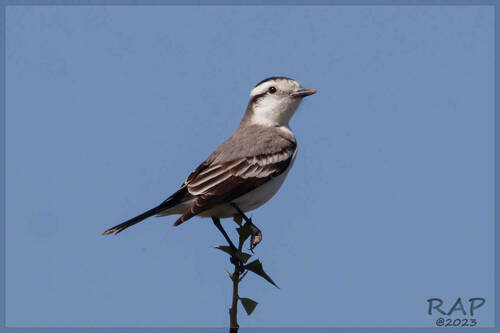 Black-crowned MonjitaNeoxolmis coronatusThe black-crowned monjita is 20 to 22 cm (7.9 to 8.7 in) long and weighs 40 to 53 g (1.4 to 1.9 oz).
Learn the Rusty-backed Monjita in the BeakBrain App
Photo and call practice. Coming soon to iPhone and Android.
Play today's Daily BirdEvery photo and recording on this page is credited to its author under the licence shown. Spotted a problem with this page, or have a better photo? Contribute.