Learn what every symbol on the card means.Full credits and sources at beakbrain.com/symbols
 GrasslandCavity nestSmall · 23 g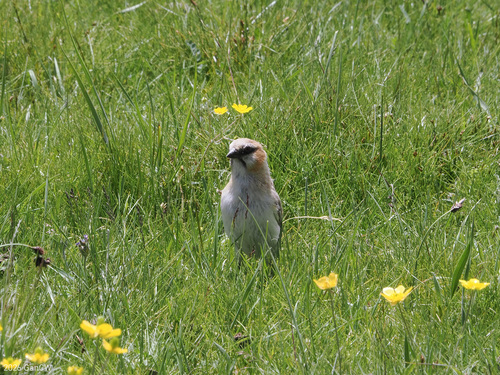
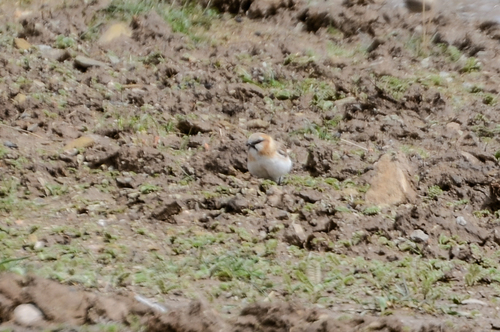
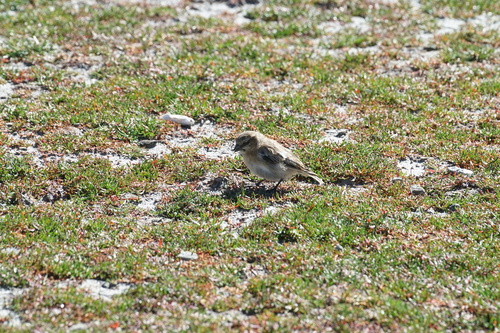
ID tip
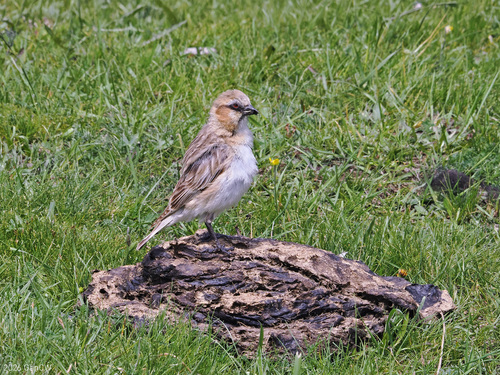
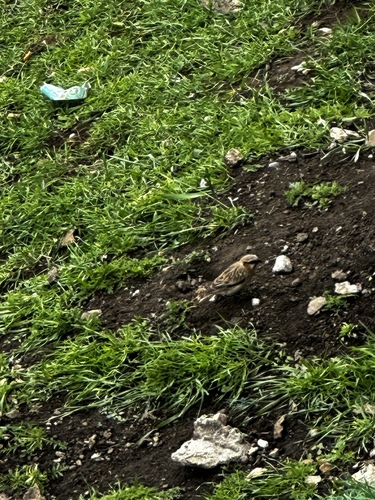
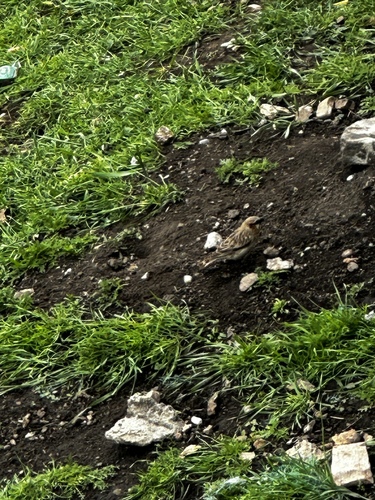
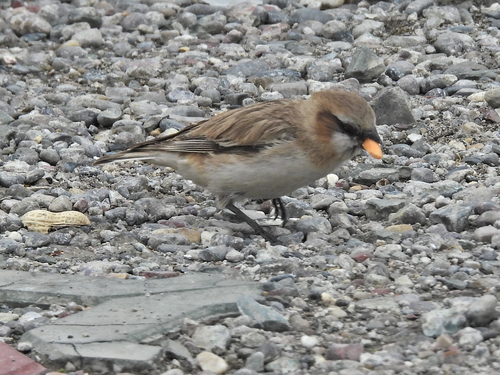
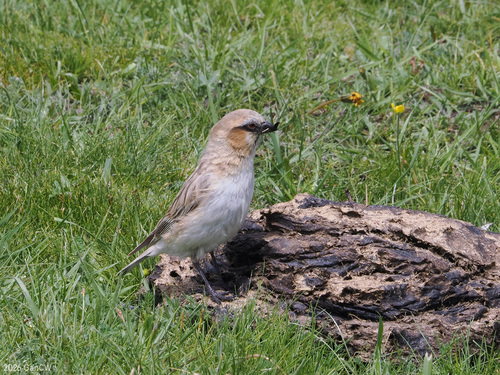
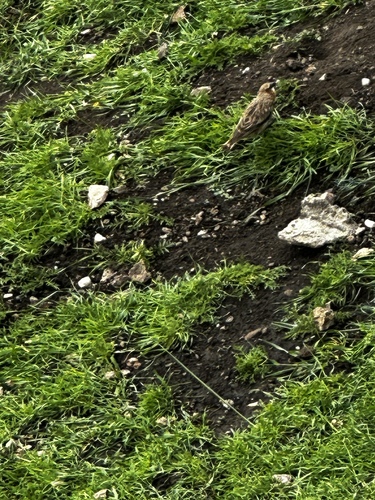
These birds are around 15cm and are very distinctive in their zone. Quite brightly colored for a snowfinch, adults and juveniles are distinguished because of their appearance. Adults have black lores and whitish faces except for their chestnut or reddish-brown rear ear-coverts and sides of neck. The rest of the plumage is light brown, straked darker on mantle and scapulars. The wings have two white wingbars formed by the tips of the coverts. Juveniles are paler than adults, without a well-defined face pattern. Voice: Pyrgilauda ruficollis has a soft voice and a chattering alarm call. It also emits buzzing noises while flying.
Text from Wikipedia, licensed CC BY-SA 4.0.
When to see the Rufous-necked Snowfinch
One bar for each month. Filled bars are the 8 months with records; pale bars are months with none. The wide bar is July, the month with the most records.
Where to see the Rufous-necked Snowfinch
The map shades 3 countries with regular records. Everything unshaded has no records. Countries are listed below the map.
About the Rufous-necked Snowfinch
The rufous-necked snowfinch is a species of bird in the sparrow family.
Text adapted from Wikipedia, licensed CC BY-SA 4.0.
Easily confused with
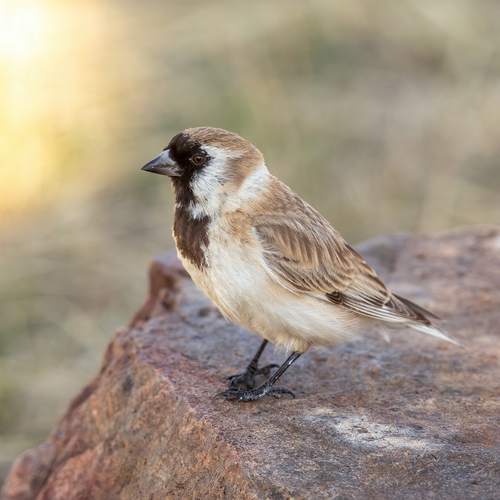 Pere David's SnowfinchPyrgilauda davidianaPère David's snowfinch, also known as the small snowfinch, is a species of bird in the sparrow family.
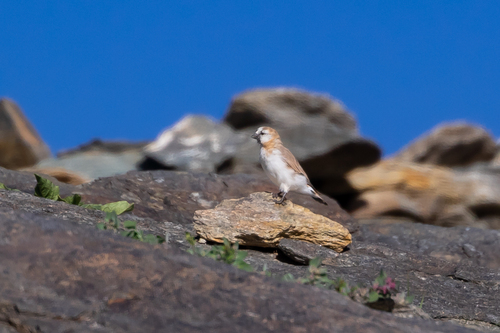 Blanford's SnowfinchPyrgilauda blanfordiBlanford's snowfinch or the plain-backed snowfinch, is a species of bird in the sparrow family.
 Afghan SnowfinchPyrgilauda theresaeIt is 13.5–15 centimetres (5.3–5.9 in) long, weighing 23–35 grams (0.81–1.23 oz).
Learn the Rufous-necked Snowfinch in the BeakBrain App
Photo and call practice. Coming soon to iPhone and Android.
Play today's Daily BirdEvery photo and recording on this page is credited to its author under the licence shown. Spotted a problem with this page, or have a better photo? Contribute.