Learn what every symbol on the card means.Full credits and sources at beakbrain.com/symbols
 ShrublandDomed nestTiny · 14 g



ID tip
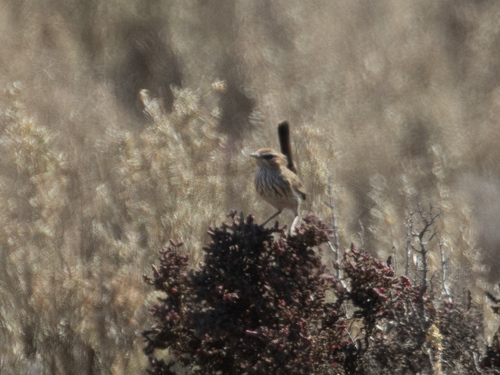
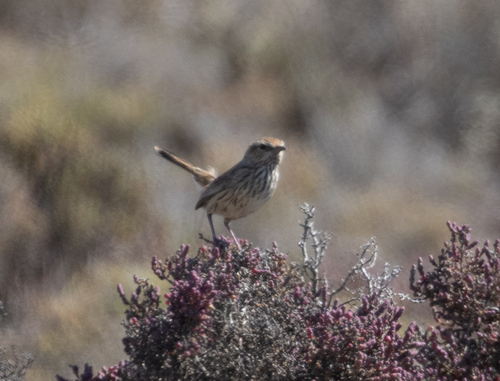
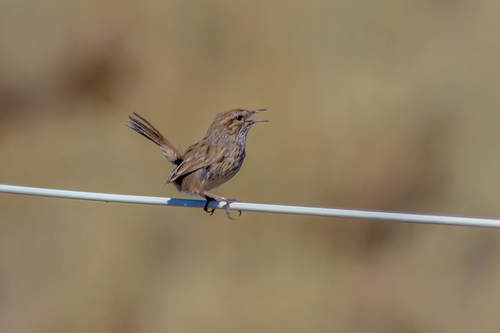
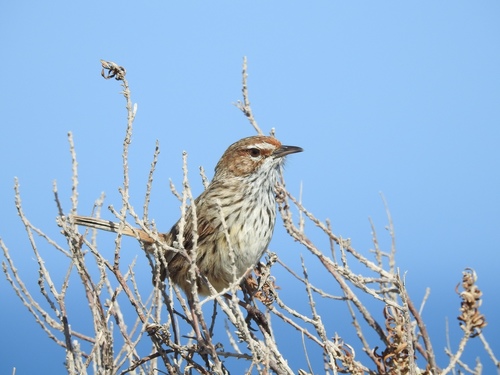
The rufous fieldwren is a small terrestrial bird, measuring 11.5–13.5 cm (4.5–5.3 in) long, 15.5–19.5 cm (6.1–7.6 in) wingspan, 11–16 g (0.38–0.56 oz) weight. The eight subspecies are divisible into five groups by their physical traits, characterised by the prominent colour of their mantle, back, scapulars, underbody and degree of striation throughout their plumage. Subspecies C.c. campestris and C.c. rubiginosus is predominantly grey backed with a slight rufous wash, a cream toned underbody with dark striations. Subspecies C.c. winiam features a grey back, thick streaking on the underside.
Text from Wikipedia, licensed CC BY-SA 4.0.
When to see the Rufous Fieldwren
One bar for each month. Filled bars are the 10 months with records; pale bars are months with none. The wide bar is October, the month with the most records.
Where to see the Rufous Fieldwren
The map shades 1 country with regular records. Everything unshaded has no records. Countries are listed below the map.
About the Rufous Fieldwren
The rufous fieldwren also known as the desert wren or sandplain wren is a species of insectivorous bird in the family Acanthizidae, endemic to Australia.
Text adapted from Wikipedia, licensed CC BY-SA 4.0.
Easily confused with
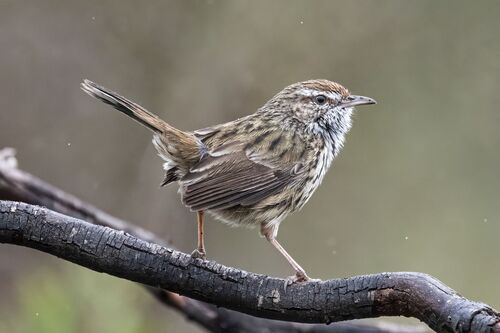 Western FieldwrenCalamanthus montanellusThe western fieldwren is a species of bird in the family Acanthizidae, endemic to southwestern Australia.
 Striated FieldwrenCalamanthus fuliginosusThe striated fieldwren is a small bird, 140mm in size.
Side by side: Rufous Fieldwren vs Striated Fieldwren
Learn the Rufous Fieldwren in the BeakBrain App
Photo and call practice. Coming soon to iPhone and Android.
Play today's Daily BirdEvery photo and recording on this page is credited to its author under the licence shown. Spotted a problem with this page, or have a better photo? Contribute.