Learn what every symbol on the card means.Full credits and sources at beakbrain.com/symbols
 ForestCup nestMedium · 74 g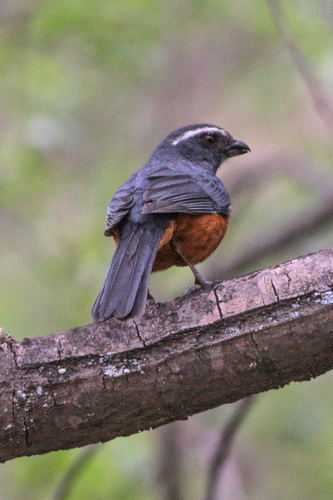
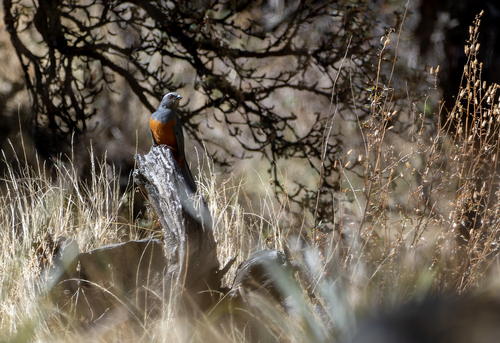
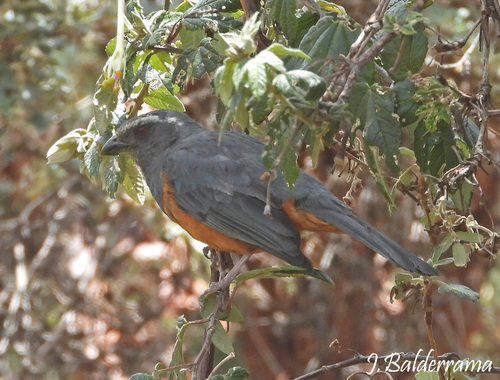
What the Rufous-bellied Mountain Tanager sounds like

ID tip
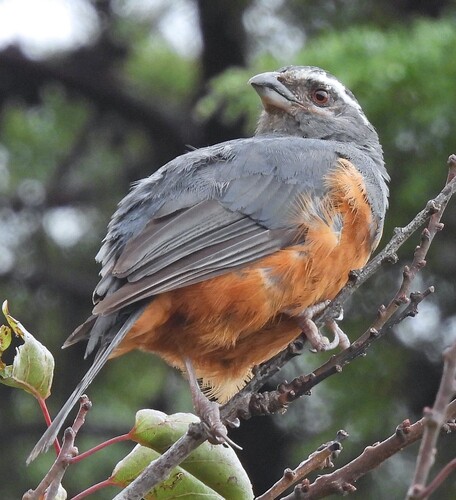
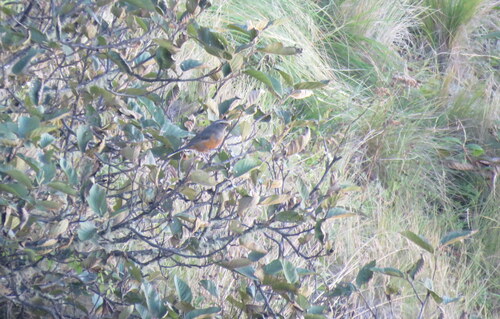
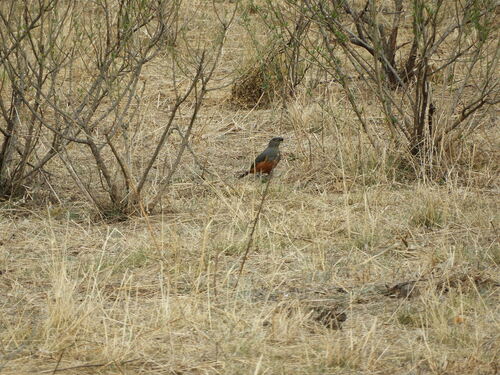
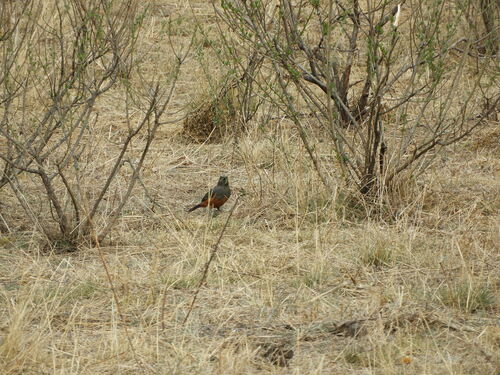
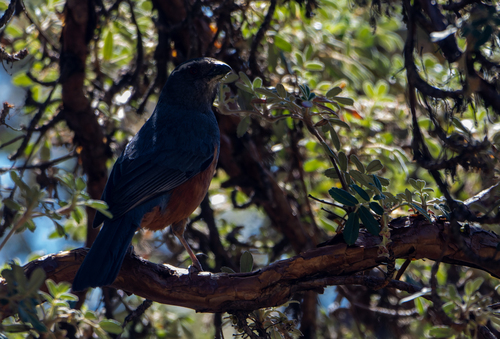
The plumage is mostly blue-gray with orange underparts from the lower breast to the undertail coverts. There is a long white stripe over the eye. The bill is gray except that the base of the lower mandible is flesh-colored.
Text from Wikipedia, licensed CC BY-SA 4.0.
When to see the Rufous-bellied Mountain Tanager
One bar for each month. Filled bars are the 11 months with records; pale bars are months with none. The wide bar is October, the month with the most records.
Where to see the Rufous-bellied Mountain Tanager
The map shades 2 countries with regular records. Everything unshaded has no records. Countries are listed below the map.
About the Rufous-bellied Mountain Tanager
The rufous-bellied mountain tanager or rufous-bellied saltator is a species of songbird in the tanager family Thraupidae and is the only member of the genus Pseudosaltator. It is found in the eastern Andes of southern Bolivia and extreme northern Argentina. It occurs mostly at altitudes from 3000 m to 4000 m. Its habitat is open land, including cultivated land, that has patches of scrub, alder trees, or Polylepis trees. It is threatened by habitat loss.
Text adapted from Wikipedia, licensed CC BY-SA 4.0.
Easily confused with
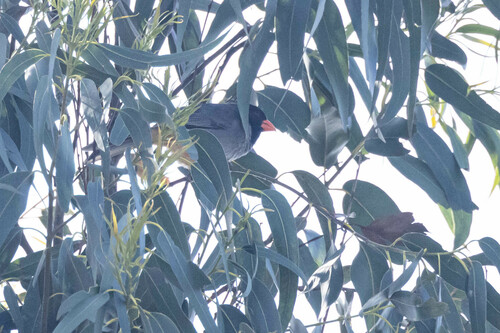 Black-cowled SaltatorSaltator nigricepsThe black-cowled saltator is a seed-eating passerine bird in the tanager family Thraupidae.
 Chestnut SeedeaterSporophila cinnamomeaThe chestnut seedeater is a species of bird in the family Thraupidae.
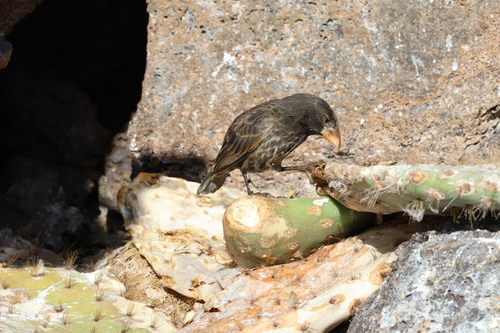 Genovesa Cactus FinchGeospiza propinquaThe Genovesa cactus finch is a species of bird in the tanager family Thraupidae.
Learn the Rufous-bellied Mountain Tanager in the BeakBrain App
Photo and call practice. Coming soon to iPhone and Android.
Play today's Daily BirdEvery photo and recording on this page is credited to its author under the licence shown. Spotted a problem with this page, or have a better photo? Contribute.