Learn what every symbol on the card means.Full credits and sources at beakbrain.com/symbols
 GrasslandCavity nestSmall · 32 g

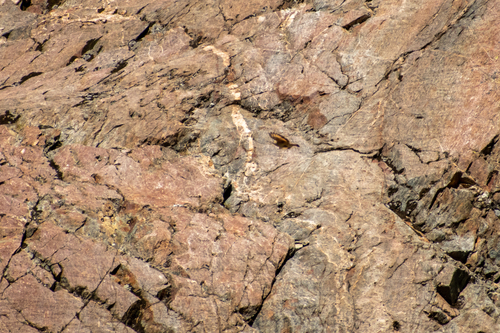
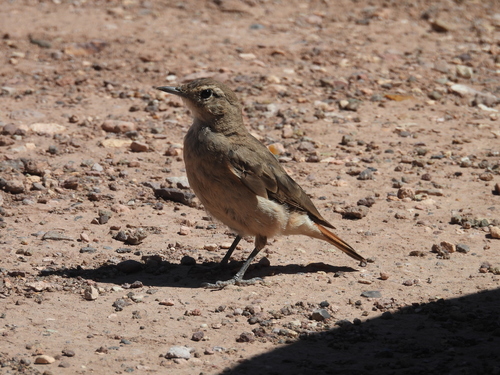
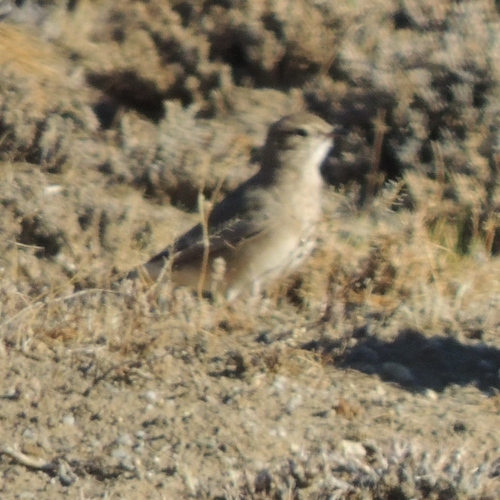
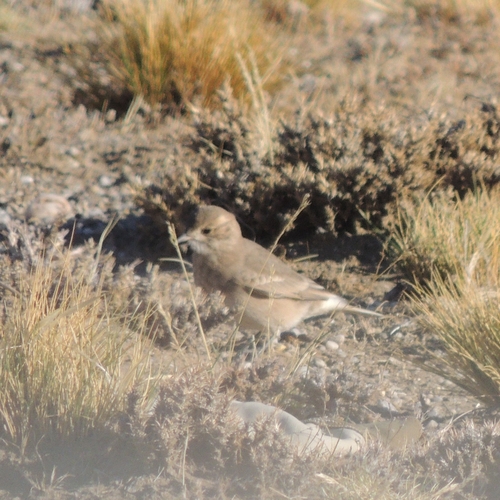
ID tip
The rufous-banded miner is a medium to large member of its genus. It is 14 to 17 cm (5.5 to 6.7 in) long and weighs 25 to 54 g (0.88 to 1.9 oz). The sexes are alike. The nominate subspecies G. r. rufipennis has a brownish gray face with a pale supercilium and a dark gray-brown line behind the eye. It is dull sandy olive from its crown to its uppertail coverts. Its central tail feathers have dull tawny bases, grayish brown middles, a wide blackish band near the end, and dull tawny tips. The rest have progressively redder bases and smaller black bands to the outermost. Voice: The rufous-banded miner's song is "a fast series...of buzzy, trilled notes on the same pitch" that may include "bursts of faster notes". It is sung from a perch on a rock and during display flight.
Text from Wikipedia, licensed CC BY-SA 4.0.
When to see the Rufous-banded Miner
One bar for each month. Filled bars are the 9 months with records; pale bars are months with none. The wide bar is November, the month with the most records.
Where to see the Rufous-banded Miner
The map shades 3 countries with regular records. Everything unshaded has no records. Countries are listed below the map.
About the Rufous-banded Miner
The rufous-banded miner is a species of bird in the subfamily Sclerurinae, the leaftossers and miners, of the ovenbird family Furnariidae. It is found in Argentina, Bolivia, and Chile.
Text adapted from Wikipedia, licensed CC BY-SA 4.0.
Easily confused with
 Common MinerGeositta cuniculariaThe common miner is a medium-size member of its genus.
 Puna MinerGeositta punensisThe puna miner is a medium-size member of its genus.
 Coastal MinerGeositta peruvianaThe coastal miner is a small member of its genus.
Side by side: Common Miner vs Rufous-banded Miner · Puna Miner vs Rufous-banded Miner · Coastal Miner vs Rufous-banded Miner
Learn the Rufous-banded Miner in the BeakBrain App
Photo and call practice. Coming soon to iPhone and Android.
Play today's Daily BirdEvery photo and recording on this page is credited to its author under the licence shown. Spotted a problem with this page, or have a better photo? Contribute.