Learn what every symbol on the card means.Full credits and sources at beakbrain.com/symbols
 ForestCup nestSmall · 20 g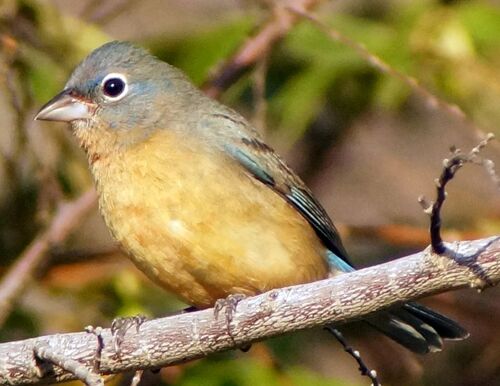


ID tip
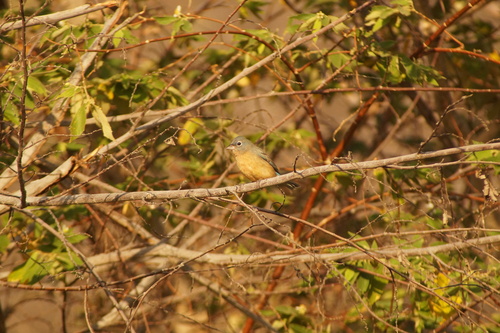
The rose-bellied bunting is 13.5 to 14.5 cm (5.3 to 5.7 in) long and weighs 19.5 to 20.5 g (0.69 to 0.72 oz). The adult male's crown is purplish-blue, and it is electric blue on the rest of its upperparts that fades from darker to lighter towards the tail. Its chin is grayish, the throat and chest blue, and the belly and vent area salmon pink. The adult female's head and upperparts are gray-brown with a bluish tinge at the rump. Its undersides are pinkish buff, warmer on the throat becoming paler towards the lower belly. Voice: The rose-bellied bunting's song is "a sweet, slightly burry warble" . Its call is "a wet 'plik' or 'plek'" .
Text from Wikipedia, licensed CC BY-SA 4.0.
When to see the Rose-bellied Bunting
One bar for each month. Filled bars are the 9 months with records; pale bars are months with none. The wide bar is November, the month with the most records.
Where to see the Rose-bellied Bunting
The map shades 1 country with regular records. Everything unshaded has no records. Countries are listed below the map.
About the Rose-bellied Bunting
The rose-bellied bunting or Rosita's bunting is a species of bird in the family Cardinalidae, the cardinals or cardinal grosbeaks. It is endemic to a very small area of southern Mexico.
Text adapted from Wikipedia, licensed CC BY-SA 4.0.
Easily confused with
 Orange-breasted BuntingPasserina leclancheriiThe orange-breasted bunting grows to a length of about 12.5 cm (5 in) and is slightly smaller than the rose-bellied bunting (Passerina rositae), which shares its range.
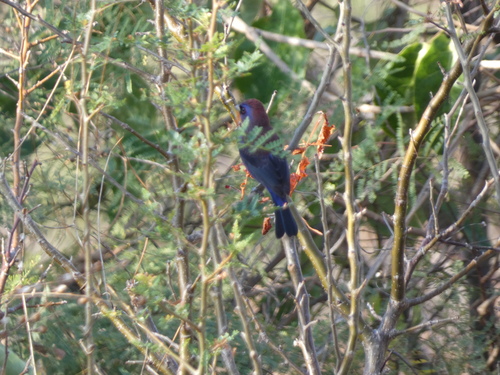 Varied BuntingPasserina versicolorThe varied bunting is a species of songbird in the cardinal family, Cardinalidae.
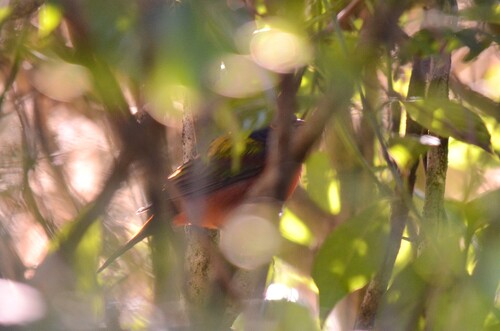 Painted BuntingPasserina cirisThe male painted bunting is often described as the most beautiful bird in North America and as such has been nicknamed nonpareil, or "without equal".
Learn the Rose-bellied Bunting in the BeakBrain App
Photo and call practice. Coming soon to iPhone and Android.
Play today's Daily BirdEvery photo and recording on this page is credited to its author under the licence shown. Spotted a problem with this page, or have a better photo? Contribute.