Learn what every symbol on the card means.Full credits and sources at beakbrain.com/symbols
 Wetland490 g
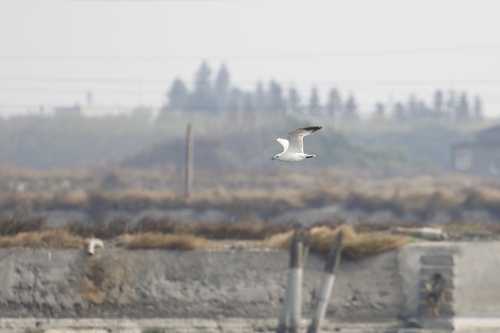
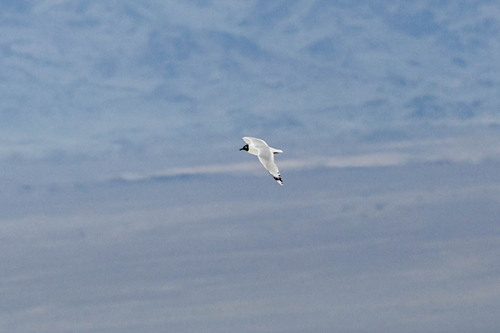
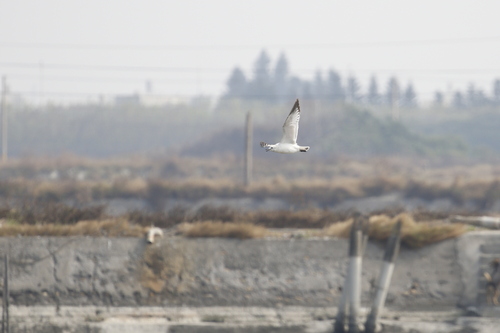
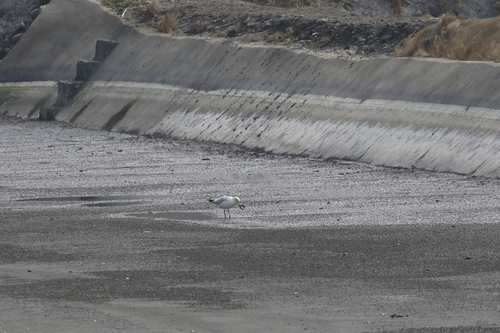
ID tip
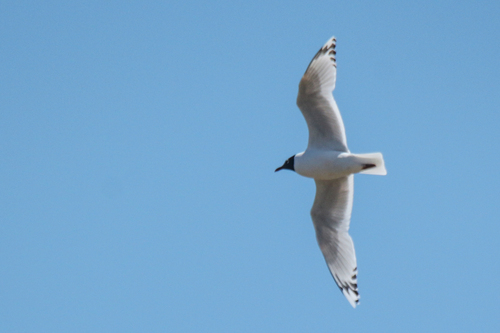
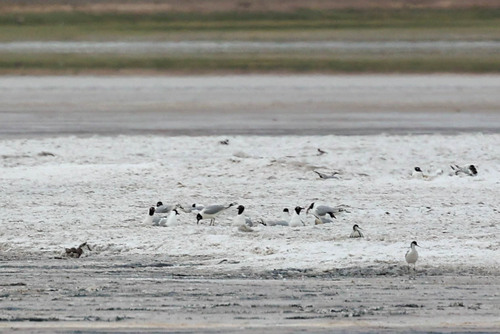
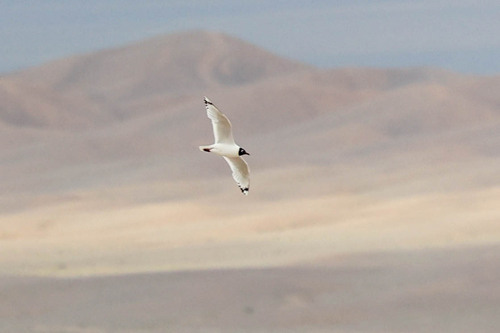
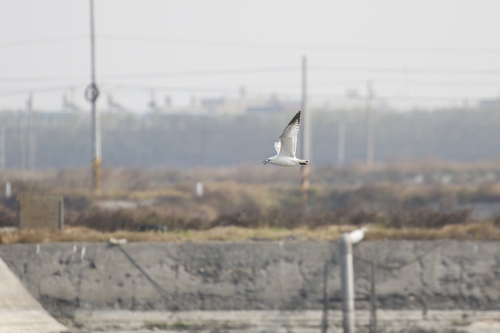
The gull is 44 to 45 cm long with a stocky, thick body. Non-breeding adults feature uniformly dark-smudged ear-coverts and hind crown, white-tipped wings, prominent, isolated black subterminal markings on outer primaries, and no white leading edge to outer wing. Breeding birds have black hoods (including napes) with grey-brown foreheads, and broad, white, half-moon colouring behind, below, and above their eyes. Their legs are orange and their bills scarlet. The name comes from its status as a relict species.
Text from Wikipedia, licensed CC BY-SA 4.0.
When to see the Relict Gull
One bar for each month. Filled bars are the 9 months with records; pale bars are months with none. The wide bar is May, the month with the most records.
Where to see the Relict Gull
The map shades 5 countries with regular records, and 2 more in a lighter tone where the bird turns up only as a stray. Everything unshaded has no records. Countries are listed below the map.
Recorded as a rare visitor in Taiwan, Macao SAR China.
About the Relict Gull
The relict gull or Central Asian gull is a medium-sized gull. It was believed to be an eastern race of the Mediterranean gull until 1971 and was traditionally placed in the genus Larus.
Text adapted from Wikipedia, licensed CC BY-SA 4.0.
Easily confused with
 White-eyed GullIchthyaetus leucophthalmusThe white-eyed gull is a small gull that is endemic to the Red Sea.
 Sooty GullIchthyaetus hemprichiiThe sooty gull is a species of gull in the family Laridae, also known as the Aden gull or Hemprich's gull.
 Pallas's GullIchthyaetus ichthyaetusThis is a very large gull, being easily the world's largest black-headed gull and the third largest species of gull in the world, after the great black-backed gull and the glaucous gull.
Learn the Relict Gull in the BeakBrain App
Photo and call practice. Coming soon to iPhone and Android.
Play today's Daily BirdEvery photo and recording on this page is credited to its author under the licence shown. Spotted a problem with this page, or have a better photo? Contribute.