Learn what every symbol on the card means.Full credits and sources at beakbrain.com/symbols
 WetlandCup nestSmall · 21 g

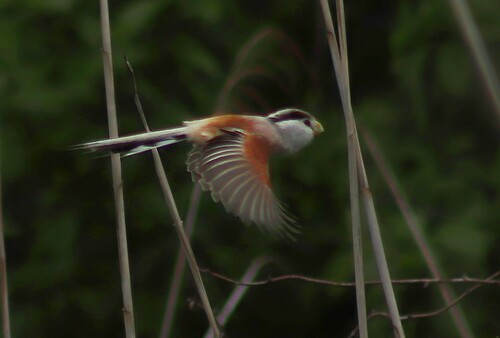
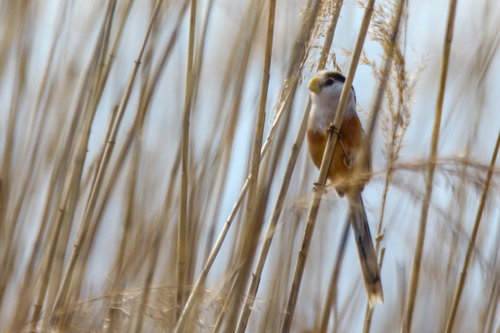
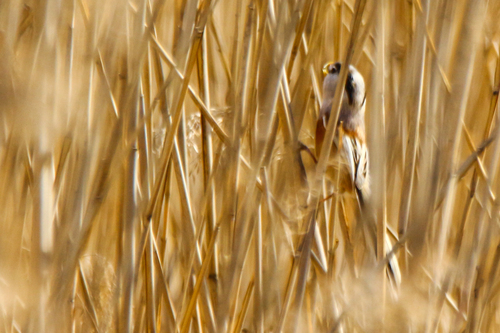
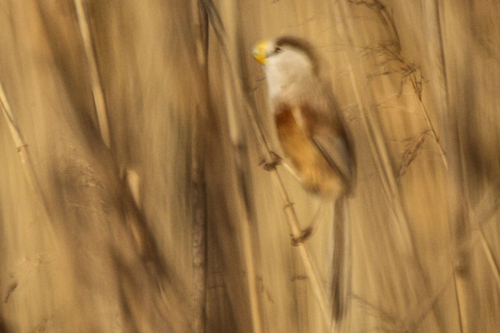
ID tip
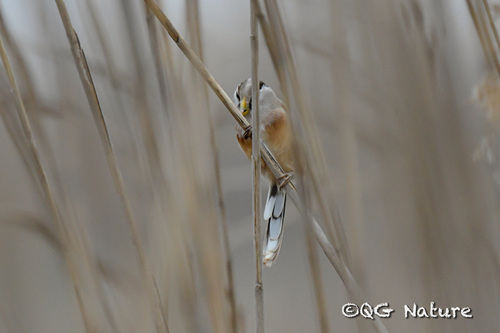
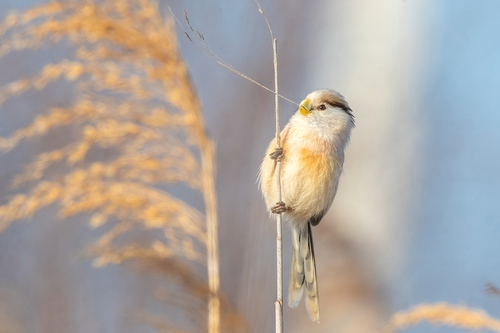
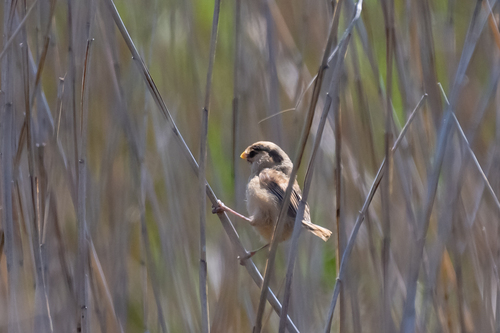
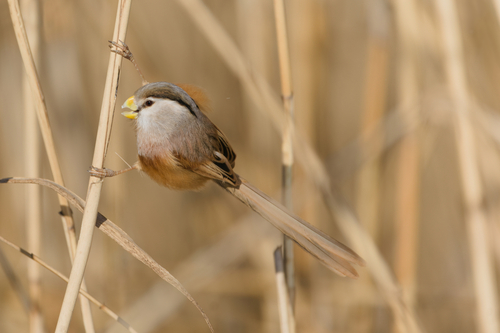
The reed parrotbill species is known to have significantly short, wide, and deep bills. The reed parrotbill is the only parrotbill to change its appearance based on whether it's in breeding season. In winter, non-breeding season, the reed parrotbill has a pinkish-cream and ash-gray forehead and neck. This species has streaks of black and warm brown from above its eyes to the tip of its head. The region between its eyes and bill is a little whiter than its forehead.
Text from Wikipedia, licensed CC BY-SA 4.0.
When to see the Reed Parrotbill
One bar for each month. Filled bars are the 11 months with records; pale bars are months with none. The wide bar is May, the month with the most records.
Where to see the Reed Parrotbill
The map shades 3 countries with regular records. Everything unshaded has no records. Countries are listed below the map.
About the Reed Parrotbill
The reed parrotbill is a species of bird in the family Paradoxornithidae. It is found in Manchuria and eastern China and the Russian Far East. It is threatened by habitat loss.
Text adapted from Wikipedia, licensed CC BY-SA 4.0.
Easily confused with
 Grey-headed ParrotbillParadoxornis gularisThe grey-headed parrotbill is a parrotbill in the family Sylviidae and is found in eastern Asia from the Himalayas to Indochina and Hainan.
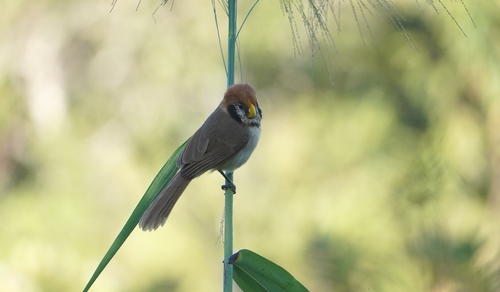 Spot-breasted ParrotbillParadoxornis guttaticollisThe spot-breasted parrotbill is a species of bird in the family Paradoxornithidae.
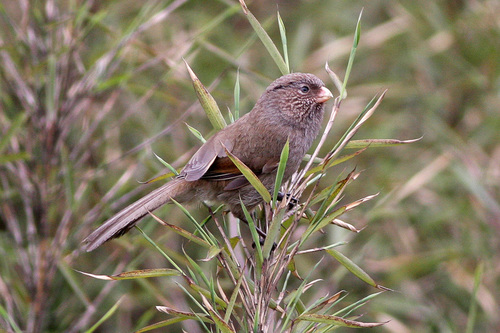 Brown ParrotbillParadoxornis unicolorThe brown parrotbill is a parrotbill found in the central and eastern Himalayas.
Side by side: Golden-breasted Fulvetta vs Reed Parrotbill
Learn the Reed Parrotbill in the BeakBrain App
Photo and call practice. Coming soon to iPhone and Android.
Play today's Daily BirdEvery photo and recording on this page is credited to its author under the licence shown. Spotted a problem with this page, or have a better photo? Contribute.