Learn what every symbol on the card means.Full credits and sources at beakbrain.com/symbols
 ShrublandCup nestSmall · 17 g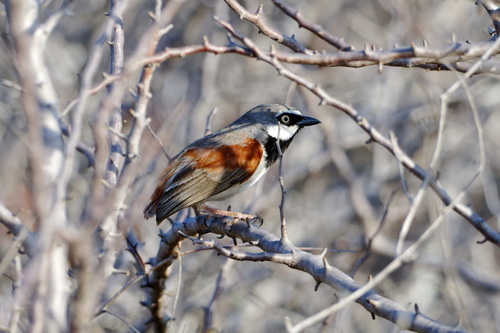

ID tip
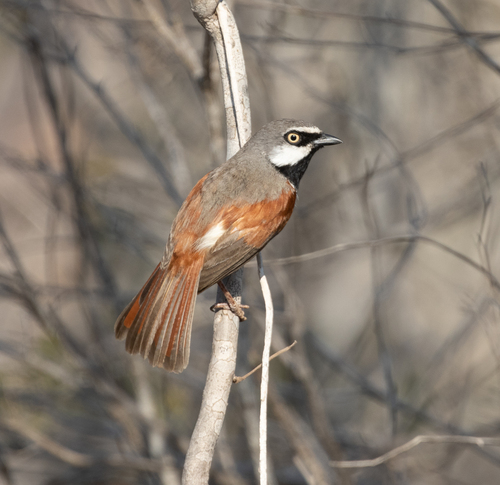
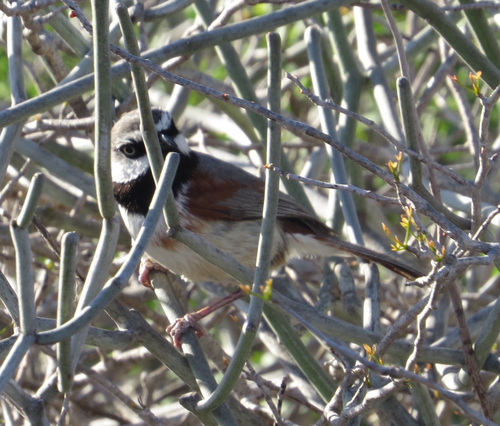
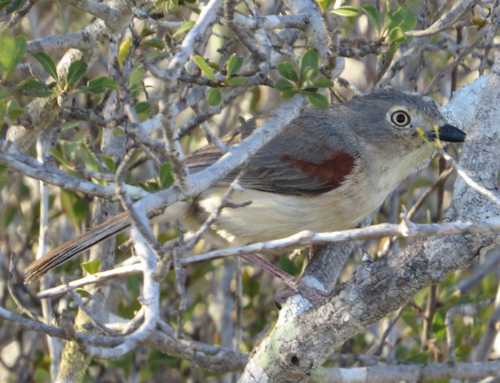
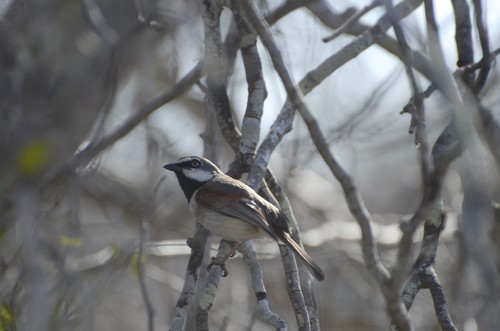
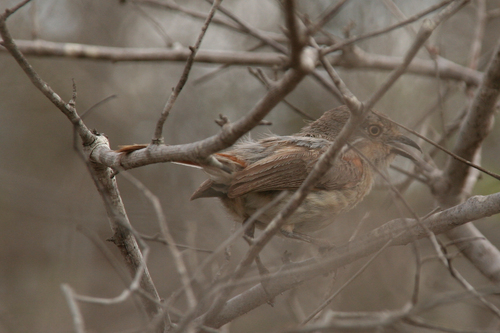
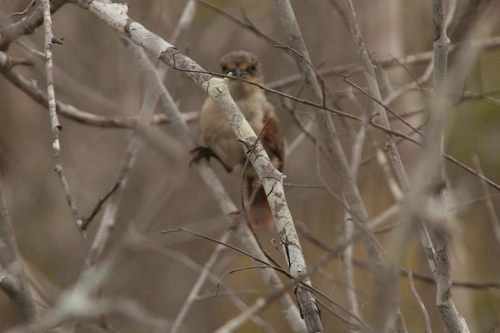
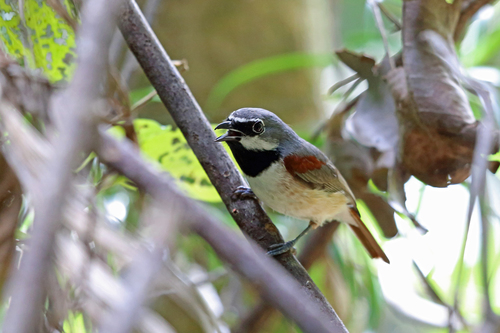
Like many of the vangas, this species is sexually dimorphic; the male is the more colorful of the two. He has a pale gray crown, nape and mantle, with white on the ear coverts and forehead. Other than a black bib, which extends from the beak partway down the breast and up the sides of his neck, his underparts are principally whitish, tinged with pink on the breast and flanks. His flight feathers are brown, his wing coverts are brick-red, and his tail is a pale brick-red. His beak is black, his irides are yellow, and his legs and feet are pinkish-gray.
Text from Wikipedia, licensed CC BY-SA 4.0.
When to see the Red-shouldered Vanga
One bar for each month. Filled bars are the 4 months with records; pale bars are months with none. The wide bar is November, the month with the most records.
Where to see the Red-shouldered Vanga
The map shades 1 country with regular records. Everything unshaded has no records. Countries are listed below the map.
About the Red-shouldered Vanga
The red-shouldered vanga is a member of the vanga family endemic to south-west Madagascar.
Text adapted from Wikipedia, licensed CC BY-SA 4.0.
Easily confused with
Learn the Red-shouldered Vanga in the BeakBrain App
Photo and call practice. Coming soon to iPhone and Android.
Play today's Daily BirdEvery photo and recording on this page is credited to its author under the licence shown. Spotted a problem with this page, or have a better photo? Contribute.