Learn what every symbol on the card means.Full credits and sources at beakbrain.com/symbols
 ForestCup nestSmall · 18 g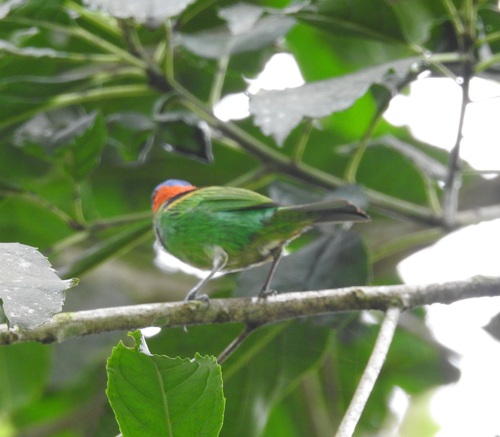
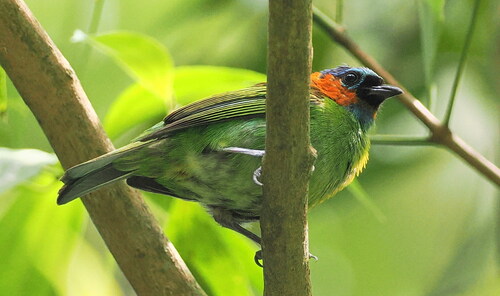
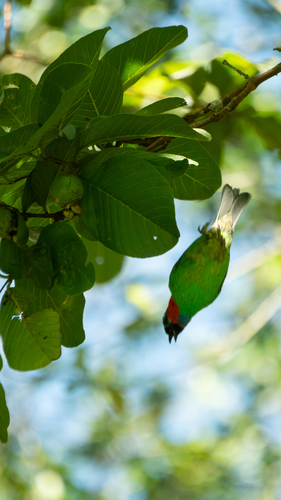
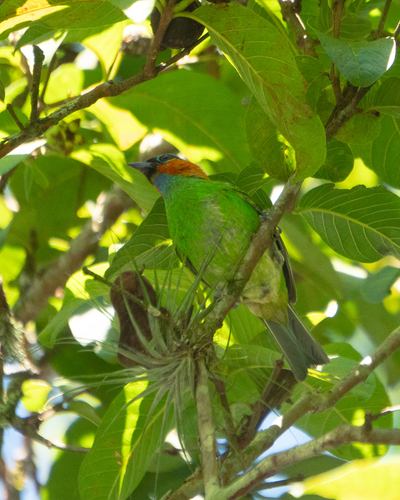
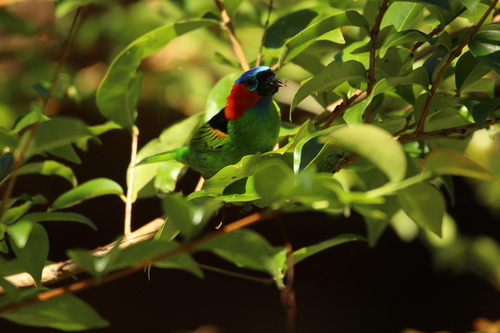
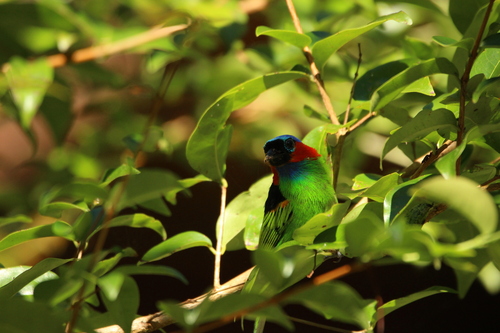


ID tip
It is mostly green with a black back and a blue head and throat. Plumage is described as "brilliant and varied, including areas of bright red, bright green, blue, and black." They can be observed in mixed-species flocks along with green-headed tanagers.
Text from Wikipedia, licensed CC BY-SA 4.0.
When to see the Red-necked Tanager
One bar for each month, and every month is filled: this bird is recorded here in all twelve. The wide bar is October, the month with the most records.
Where to see the Red-necked Tanager
The map shades 1 country with regular records, and 1 more in a lighter tone where the bird turns up only as a stray. Everything unshaded has no records. Countries are listed below the map.
Recorded as a rare visitor in Ecuador.
About the Red-necked Tanager
The red-necked tanager is a species of bird in the family Thraupidae.
Text adapted from Wikipedia, licensed CC BY-SA 4.0.
Easily confused with
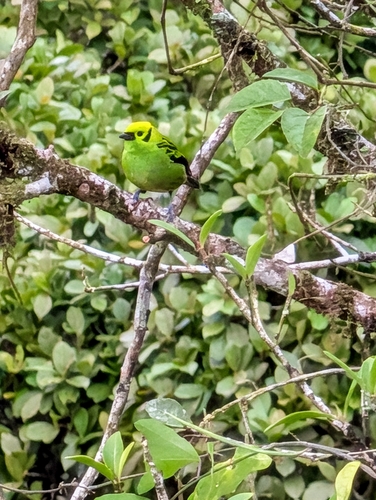 Emerald TanagerTangara floridaThe emerald tanager is a medium-sized tanager with a length of 10.6–13 cm (4.2–5.1 in) and a mass of 18–20.5 g (0.63–0.72 oz).
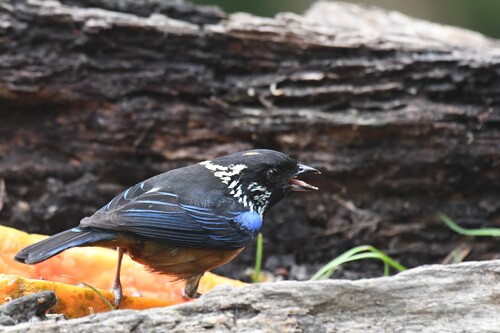 Spangle-cheeked TanagerTangara dowiiThe spangle-cheeked tanager is a medium-sized passerine bird.
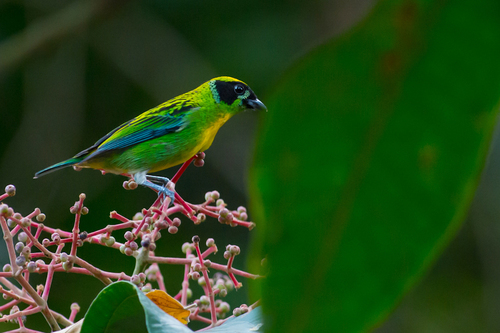 Green-and-gold TanagerTangara schrankiiThe green-and-gold tanager is a species of bird in the family Thraupidae, the tanagers.
Side by side: Emerald Tanager vs Red-necked Tanager
Learn the Red-necked Tanager in the BeakBrain App
Photo and call practice. Coming soon to iPhone and Android.
Play today's Daily BirdEvery photo and recording on this page is credited to its author under the licence shown. Spotted a problem with this page, or have a better photo? Contribute.