Learn what every symbol on the card means.Full credits and sources at beakbrain.com/symbols
 WoodlandDomed nestTiny · 11 g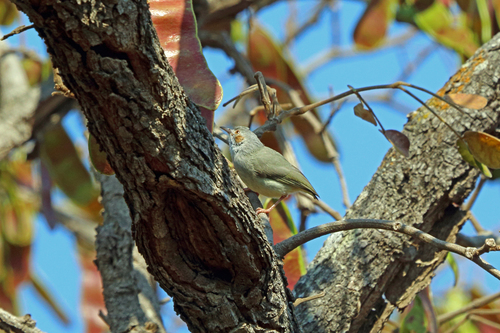
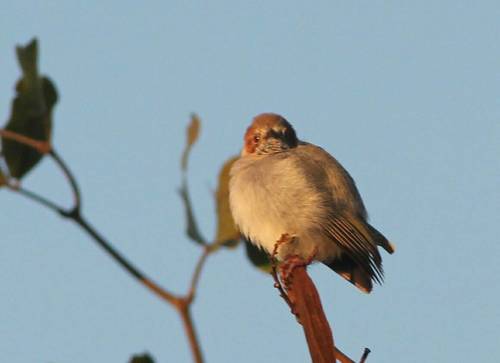
ID tip
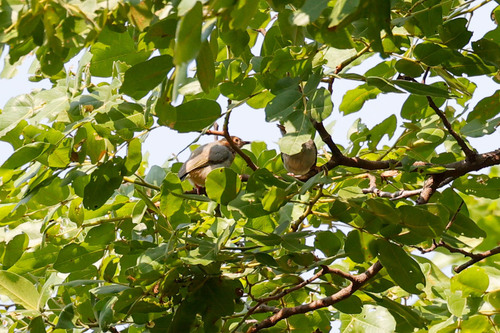
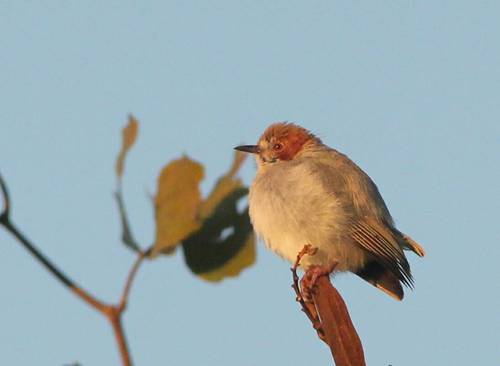
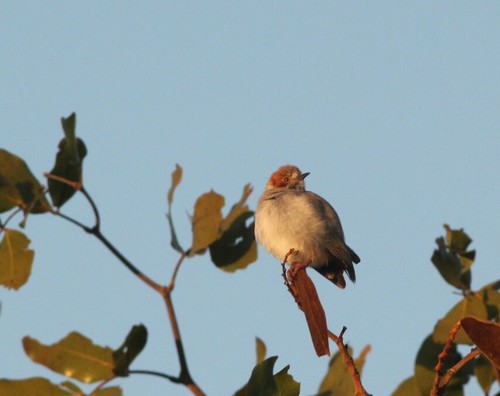
The red-capped crombec is a small bird recorded to be ranging around 11 to 12 cm (4.3 to 4.7 in) in size. It has a red almost burnt orange cap on its head, with the body being an olive-brown plumage. The wings and tail are often found to be darker with the under parts lighter being a pale yellow hue. The red-capped crombec has a slim, sharp bill used for catching insects.
Text from Wikipedia, licensed CC BY-SA 4.0.
When to see the Red-capped Crombec
One bar for each month. Filled bars are the 11 months with records; pale bars are months with none. The wide bar is October, the month with the most records.
Where to see the Red-capped Crombec
The map shades 5 countries with regular records, and 1 more in a lighter tone where the bird turns up only as a stray. Everything unshaded has no records. Countries are listed below the map.
Recorded as a rare visitor in Tanzania.
About the Red-capped Crombec
The red-capped crombec is a species of African warbler, formerly placed in the family Sylviidae.
Text adapted from Wikipedia, licensed CC BY-SA 4.0.
Easily confused with
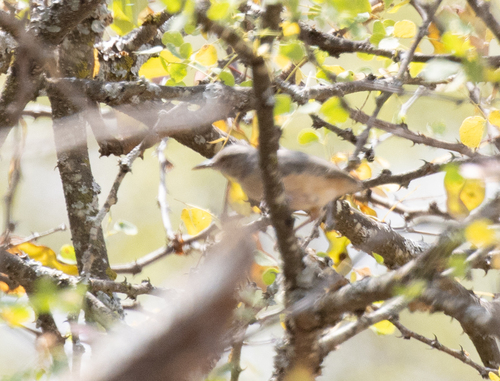 Somali CrombecSylvietta isabellinaThe Somali crombec is a species of African warbler, formerly placed in the family Sylviidae.
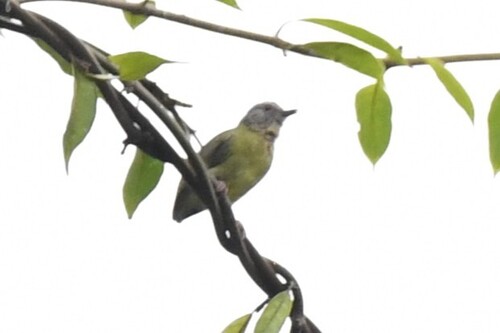 Lemon-bellied CrombecSylvietta dentiThe lemon-bellied crombec is a species of African warbler, formerly placed in the family Sylviidae.
Philippa's CrombecSylvietta philippaeThe species is about 8 cm, weighing 9-10 g.
Lemon-bellied CrombecSylvietta dentiThe lemon-bellied crombec is a species of African warbler, formerly placed in the family Sylviidae.
Philippa's CrombecSylvietta philippaeThe species is about 8 cm, weighing 9-10 g.
Learn the Red-capped Crombec in the BeakBrain App
Photo and call practice. Coming soon to iPhone and Android.
Play today's Daily BirdEvery photo and recording on this page is credited to its author under the licence shown. Spotted a problem with this page, or have a better photo? Contribute.