Learn what every symbol on the card means.Full credits and sources at beakbrain.com/symbols
 ShrublandCup nestSmall · 21 g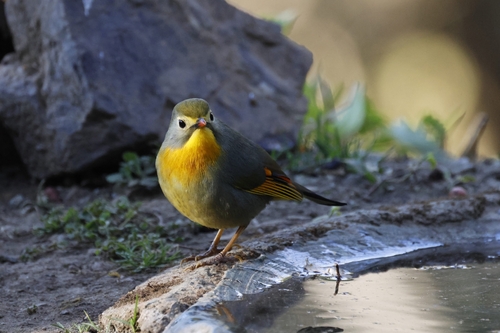

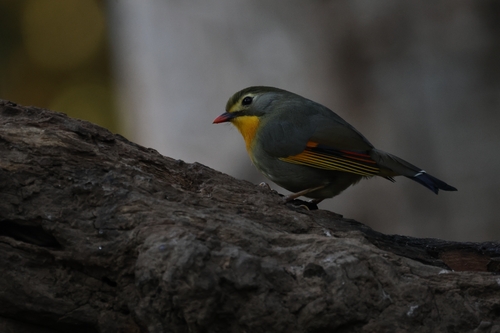
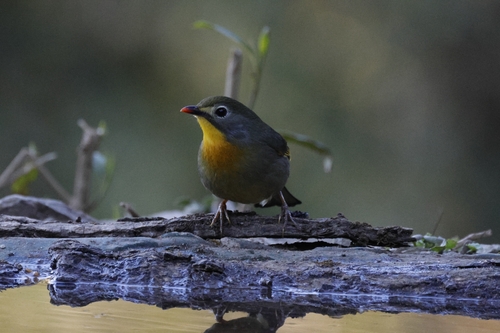
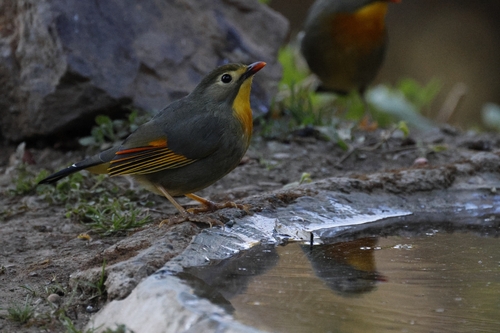
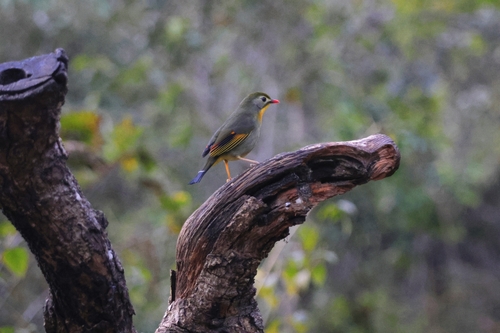
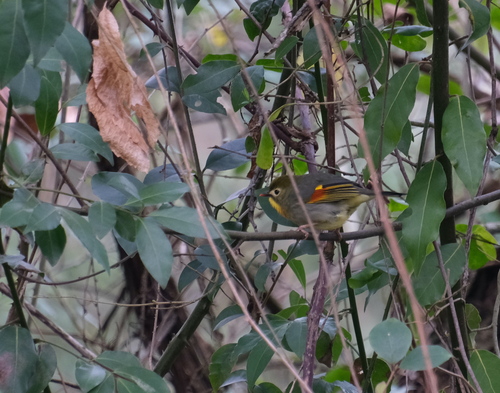
ID tip
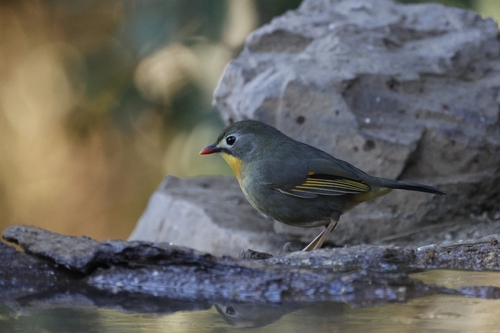
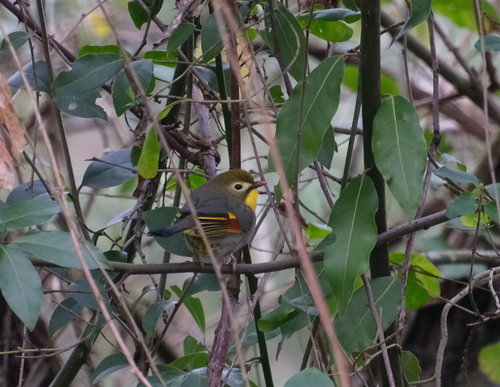
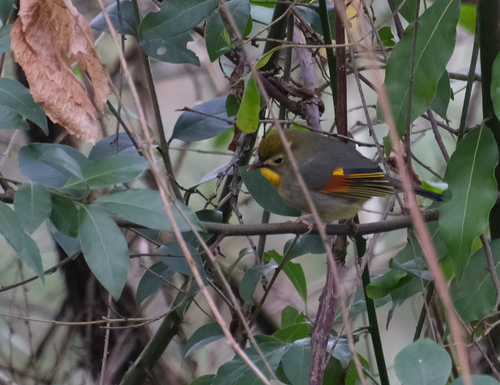
The leiothrix is 14–15.5 cm long, generally olive green, and has a yellow throat with orange shading on the breast. It also has a yellowish-white ring around the eye that extends to the beak. The edges of the wing feathers are brightly coloured with yellow, orange, red and black and the forked tail is olive brown and blackish at the tip. The cheeks and side of the neck are a bluish grey colour. The eye is brown, the bill red, and the legs and feet pinkish. The sexes are similar, though the females are slightly smaller and duller, with less red on the wing; juveniles even duller.
Text from Wikipedia, licensed CC BY-SA 4.0.
When to see the Red-billed Leiothrix
One bar for each month, and every month is filled: this bird is recorded here in all twelve. The wide bar is April, the month with the most records.
Where to see the Red-billed Leiothrix
The map shades 16 countries with regular records, and 7 more in a lighter tone where the bird turns up only as a stray. Everything unshaded has no records. Countries are listed below the map.
Recorded as a rare visitor in Germany, Malaysia, Myanmar (Burma), Belgium, Thailand, United Kingdom, Netherlands.
About the Red-billed Leiothrix
The red-billed leiothrix is a member of the family Leiothrichidae, native to southern China and the Himalayas. Adults have bright red bills and a yellowish-white ring around their eyes. Their backs are dull olive green, and they have a bright yellow-orange throat with a yellow chin; females are somewhat duller than males, and juveniles have black bills. It has also been introduced in various parts of the world, with small populations of escapees having existed in Japan since the 1980s.
Text adapted from Wikipedia, licensed CC BY-SA 4.0.
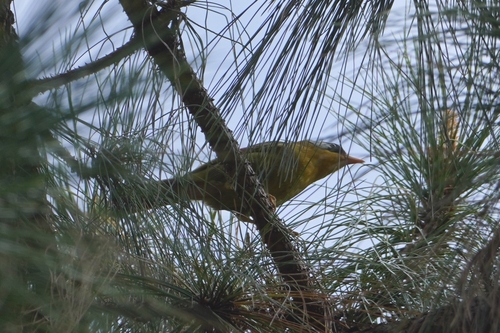
Easily confused with
Learn the Red-billed Leiothrix in the BeakBrain App
Photo and call practice. Coming soon to iPhone and Android.
Play today's Daily BirdEvery photo and recording on this page is credited to its author under the licence shown. Spotted a problem with this page, or have a better photo? Contribute.