Learn what every symbol on the card means.Full credits and sources at beakbrain.com/symbols
 GrasslandScrapeSmall · 18 g
ID tip
The quail-plover is a small, short-tailed cursorial bird which slightly resembles a miniature courser when on the ground. The upperparts are a sandy-rufous colour and the underparts mainly whitish. They show a distinctive wing pattern in flight when the contrast between the white primary coverts and the black with white-tipped remiges to form a distinct diagonal band on the upperwing. Its fluttering flight style is rather lark-like. The females are slightly darker than the males while the juveniles are paler.
Text from Wikipedia, licensed CC BY-SA 4.0.
When to see the Quail-plover
One bar for each month. Filled bars are the 9 months with records; pale bars are months with none. The wide bar is January, the month with the most records.
Where to see the Quail-plover
The map shades 5 countries with regular records. Everything unshaded has no records. Countries are listed below the map.
About the Quail-plover
The quail-plover, lark buttonquail or lark-plover is a small ground-living bird in the buttonquail family Turnicidae that is found in the Sahel region of Africa and in a disjunct region of East Africa. It is the only species placed in the genus Ortyxelos.
Text adapted from Wikipedia, licensed CC BY-SA 4.0.
Easily confused with
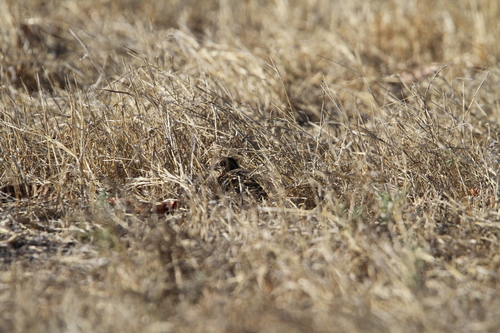 Sumba ButtonquailTurnix everettiThe Sumba buttonquail is a species of bird in the family Turnicidae.
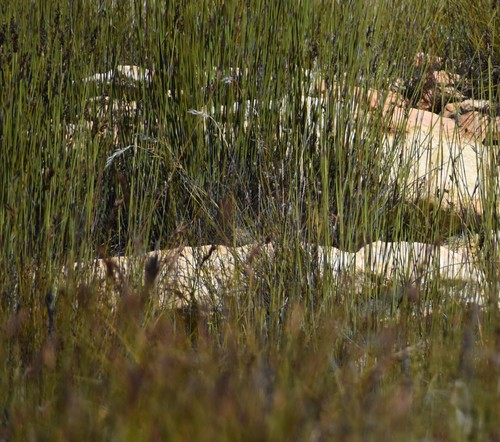 Fynbos ButtonquailTurnix hottentottusThe Fynbos buttonquail is a bird in the family Turnicidae formerly considered conspecific with the black-rumped buttonquail.
Luzon ButtonquailTurnix worcesteriThe Luzon buttonquail or Worcester's buttonquail, is a species of bird in the family Turnicidae.
Fynbos ButtonquailTurnix hottentottusThe Fynbos buttonquail is a bird in the family Turnicidae formerly considered conspecific with the black-rumped buttonquail.
Luzon ButtonquailTurnix worcesteriThe Luzon buttonquail or Worcester's buttonquail, is a species of bird in the family Turnicidae.
Learn the Quail-plover in the BeakBrain App
Photo and call practice. Coming soon to iPhone and Android.
Play today's Daily BirdEvery photo and recording on this page is credited to its author under the licence shown. Spotted a problem with this page, or have a better photo? Contribute.