Learn what every symbol on the card means.Full credits and sources at beakbrain.com/symbols
 ForestCup nestSmall · 35 g


ID tip
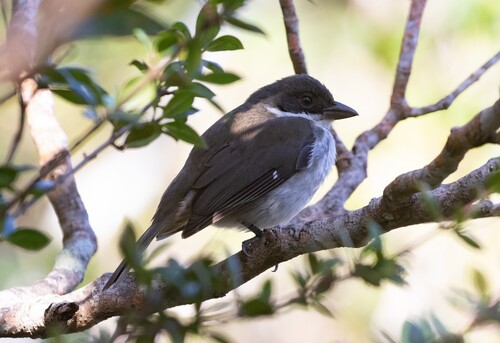
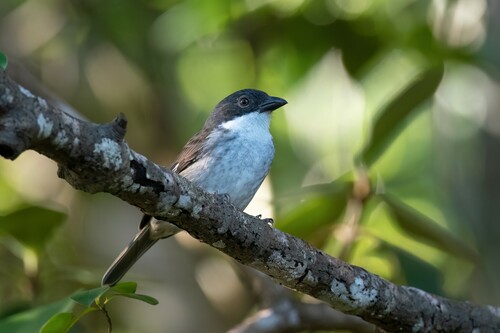
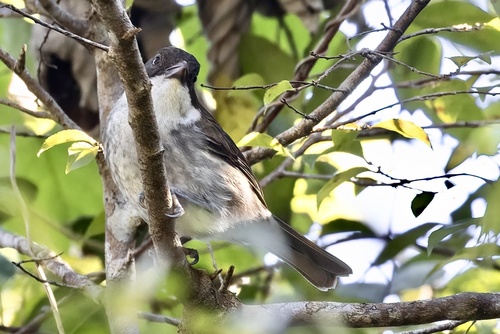
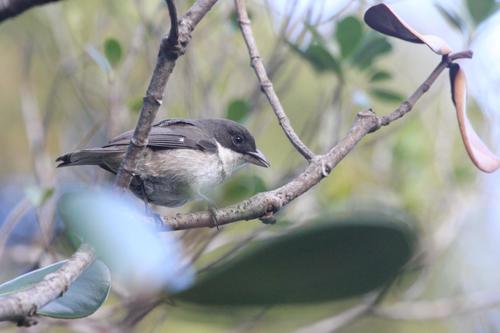
The Puerto Rican tanager is a small passerine, typically measuring between 18 and 20 cm (7 and 8 in) in length and weighing around 36 g (1.3 oz). Both males and females are olive-brown above with pale grey to white underparts. Adults typically have faint dusky striping on the breast and pure white throats. Adults also have a conspicuous white spot on the wing and a dark crown and face which obscures the eye. Undertail coverts are pale fulvous. Males have a brown-black maxilla and white mandible and females have entirely black bills. Voice: The most frequently heard noise emitted by the Puerto Rican tanager is a harsh call note often described as a chewp or chuck. This is often heard while feeding in flocks and may be extended into a longer chi-chi-chit of varying lengths. The breeding song of the species is light, sweet rapidly sung tswet-tswet-tswet-tswet.
Text from Wikipedia, licensed CC BY-SA 4.0.
When to see the Puerto Rican Tanager
One bar for each month. Filled bars are the 10 months with records; pale bars are months with none. The wide bar is March, the month with the most records.
Where to see the Puerto Rican Tanager
The map shades 1 country with regular records. Everything unshaded has no records. Countries are listed below the map.
About the Puerto Rican Tanager
The Puerto Rican tanager is a small passerine bird endemic to the archipelago of Puerto Rico. It is the only member of the genus Nesospingus and has historically been placed in the tanager family, but recent studies indicate it as either belonging in its own family Nesospingidae or as being a member of Phaenicophilidae. Its closest relatives are likely the spindalises. The Puerto Rican tanager is known to locals as llorosa, which means 'cryer'.
Text adapted from Wikipedia, licensed CC BY-SA 4.0.
Learn the Puerto Rican Tanager in the BeakBrain App
Photo and call practice. Coming soon to iPhone and Android.
Play today's Daily BirdEvery photo and recording on this page is credited to its author under the licence shown. Spotted a problem with this page, or have a better photo? Contribute.