Learn what every symbol on the card means.Full credits and sources at beakbrain.com/symbols
 ForestCavity nestSmall · 40 g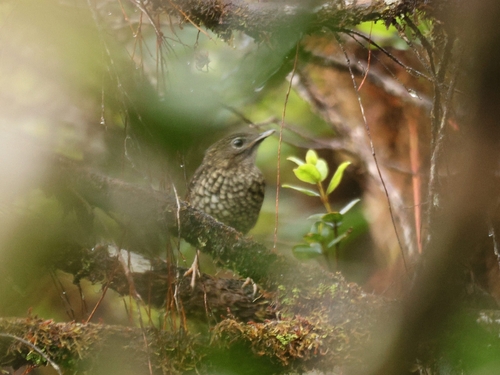

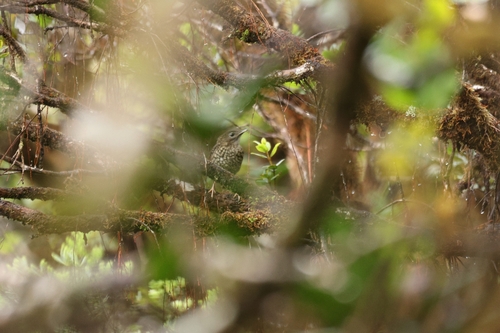
ID tip
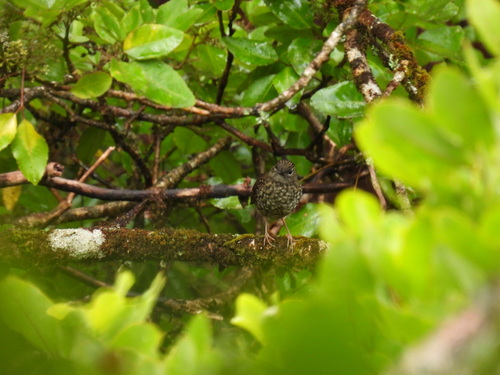
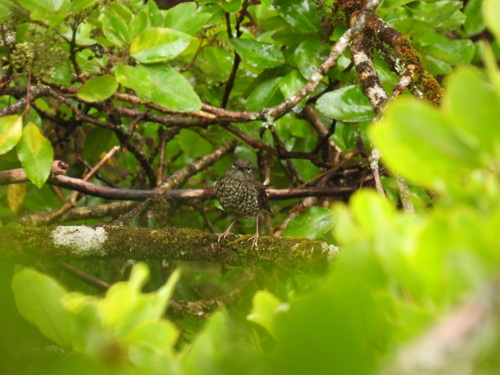
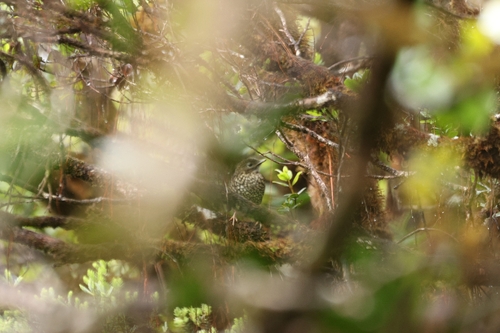
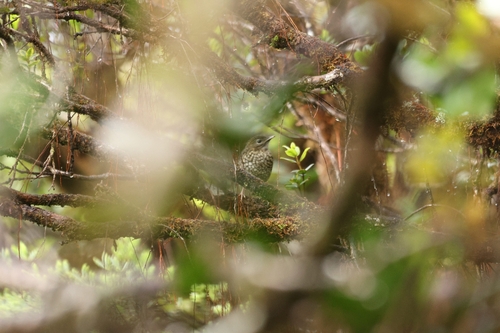
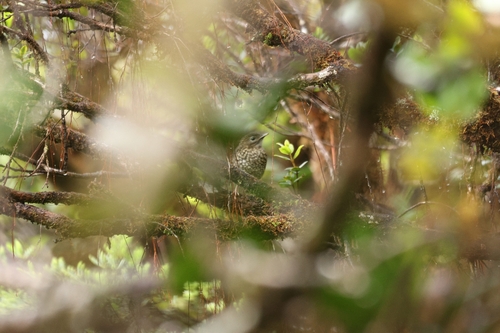
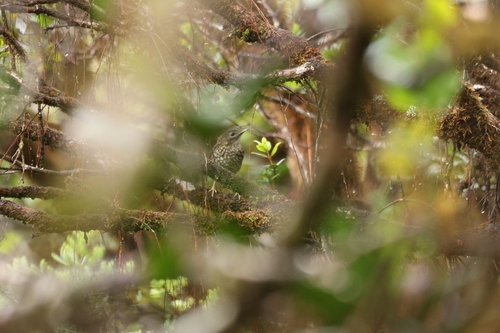
The plumage is mostly nondescript, with slaty-brown upperparts and a light gray breast and belly below. Birds have a black bill and pinkish feet. A white eye ring is also fairly prominent and helps distinguish this bird from the other Hawaiian thrushes. Males and females are highly similar in appearance. Juveniles show a pattern transitioning from a spotted whitish-buff above to a scalloped gray-brown below.
Text from Wikipedia, licensed CC BY-SA 4.0.
When to see the Puaiohi
One bar for each month. Filled bars are the 4 months with records; pale bars are months with none. The wide bar is April, the month with the most records.
About the Puaiohi
The puaiohi or small Kauaʻi thrush is a rare species of songbird in the thrush family, Turdidae, that is endemic to the Hawaiian island of Kauaʻi. It is closely related to the other three endemic Hawaiian thrushes, the kāmaʻo, olomaʻo, and ʻōmaʻo. It was first collected by Henry Palmer in 1891 at Halemanu around the entrance to the Kōkeʻe State Park.
Text adapted from Wikipedia, licensed CC BY-SA 4.0.
Easily confused with
 Varied SolitaireMyadestes coloratusThe varied solitaire is 16 to 18 cm (6.3 to 7.1 in) long and weighs 24 to 34 g (0.85 to 1.2 oz).
 Cuban SolitaireMyadestes elisabethThe Cuban solitaire is 19 to 20.5 cm (7.5 to 8.1 in) long and weighs 21.5 to 33 g (0.76 to 1.2 oz).
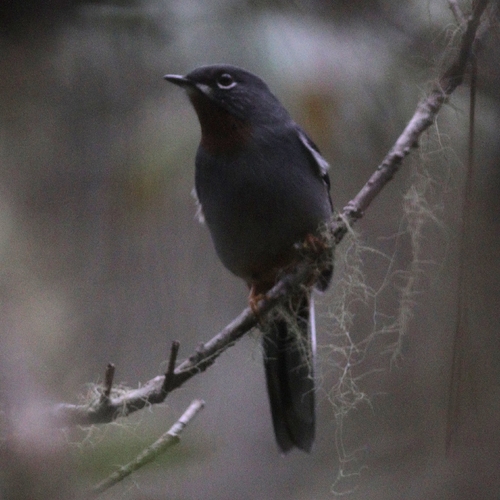 Rufous-throated SolitaireMyadestes genibarbisThe rufous-throated solitaire is 19 to 20.5 cm (7.5 to 8.1 in) long and weighs 24 to 30 g (0.85 to 1.1 oz).
Learn the Puaiohi in the BeakBrain App
Photo and call practice. Coming soon to iPhone and Android.
Play today's Daily BirdEvery photo and recording on this page is credited to its author under the licence shown. Spotted a problem with this page, or have a better photo? Contribute.