Learn what every symbol on the card means.Full credits and sources at beakbrain.com/symbols
 ShrublandCup nestSmall · 22 g


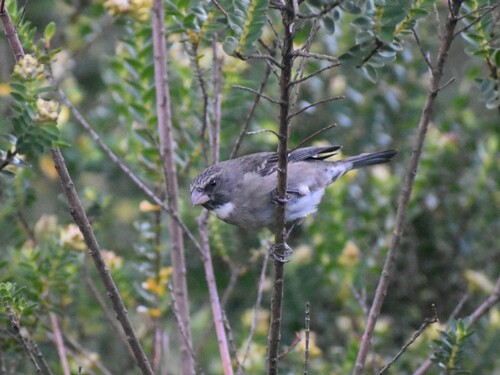
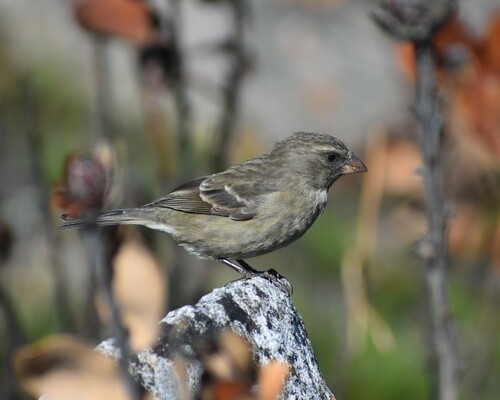
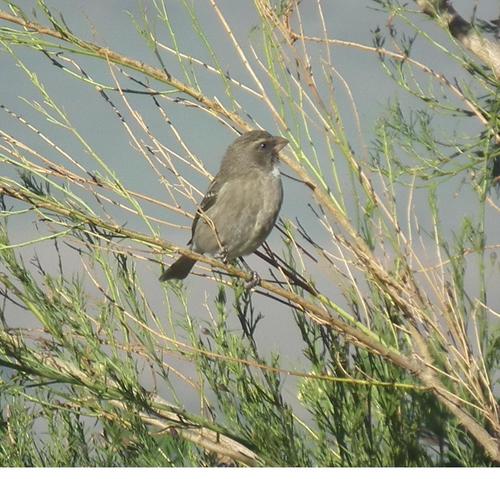
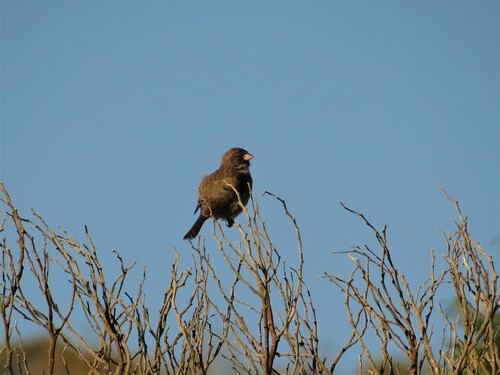
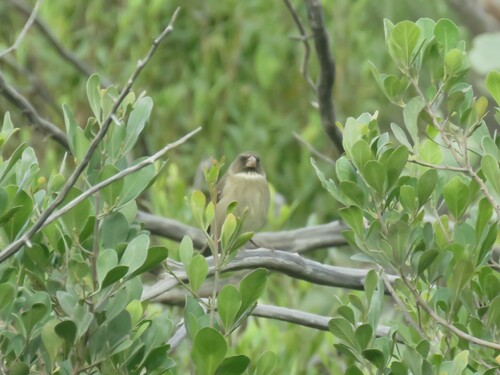
ID tip
The protea canary is 15–16 cm in length with a large pale bill. The adult has grey-brown upperparts, a black chin, white throat and two thin buff wing bars. The underparts are buff with light streaking. The sexes are similar, but young birds are more heavily streaked below than the adults. The call of the protea canary is a trilled tree-lee-loo or a sweet. The song is a loud medley of warbles and trills, with much mimicry.
Text from Wikipedia, licensed CC BY-SA 4.0.
When to see the Protea Canary
One bar for each month, and every month is filled: this bird is recorded here in all twelve. The wide bar is October, the month with the most records.
Where to see the Protea Canary
The map shades 1 country with regular records. Everything unshaded has no records. Countries are listed below the map.
About the Protea Canary
The protea canary, also known as the protea seedeater, white-winged seedeater or Layard's seedeater, is a small passerine bird in the finch family.
Text adapted from Wikipedia, licensed CC BY-SA 4.0.
Easily confused with
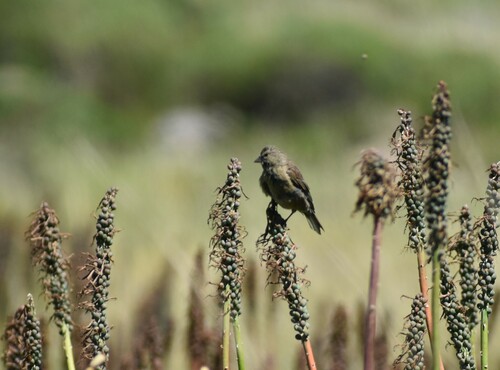 Drakensberg SiskinCrithagra symonsiThe Drakensberg siskin averages 13–14 cm in length.
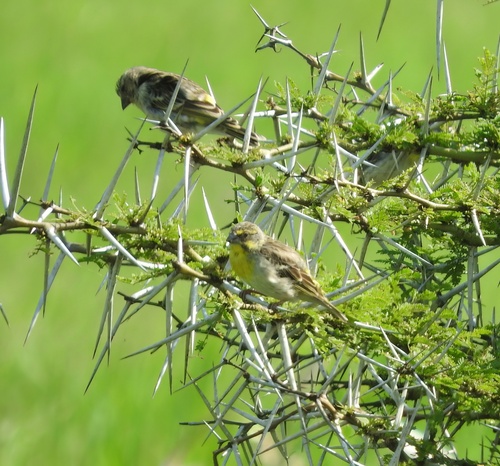 Lemon-breasted CanaryCrithagra citrinipectusAlthough their common name would indicate that each lemon-breasted canary indeed has a yellow throat/chest, this is not the case between males and females, making them easy to differentiate.
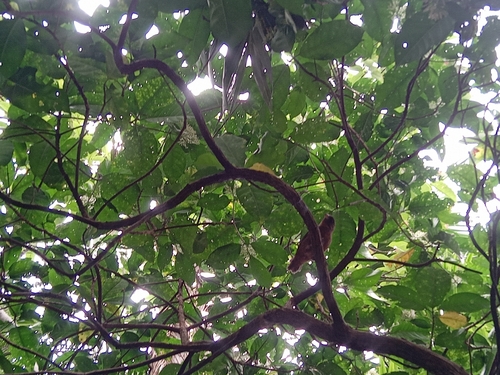 Principe SeedeaterCrithagra rufobrunneaThe Príncipe seedeater is a species of finch in the family Fringillidae.
Learn the Protea Canary in the BeakBrain App
Photo and call practice. Coming soon to iPhone and Android.
Play today's Daily BirdEvery photo and recording on this page is credited to its author under the licence shown. Spotted a problem with this page, or have a better photo? Contribute.