Learn what every symbol on the card means.Full credits and sources at beakbrain.com/symbols
 ForestCup nestTiny · 10 g

ID tip
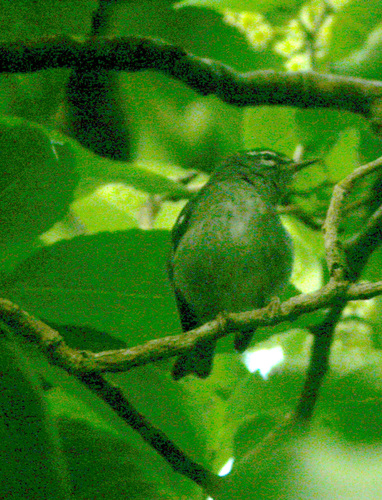
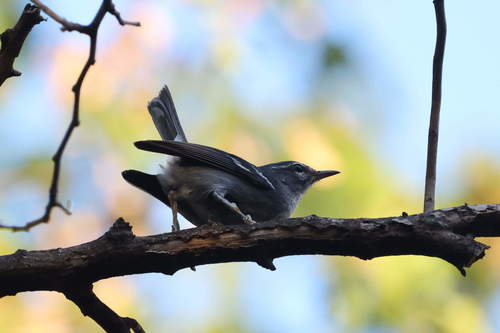
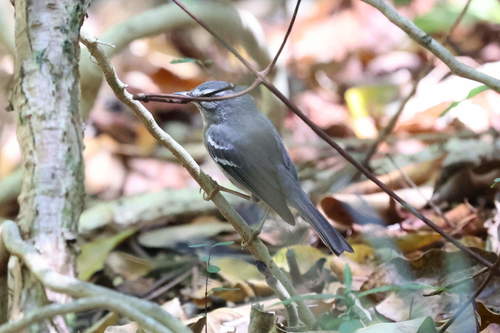
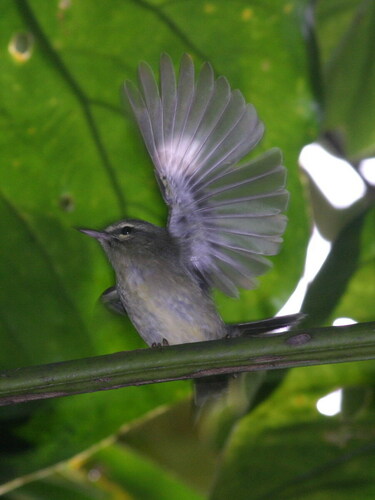
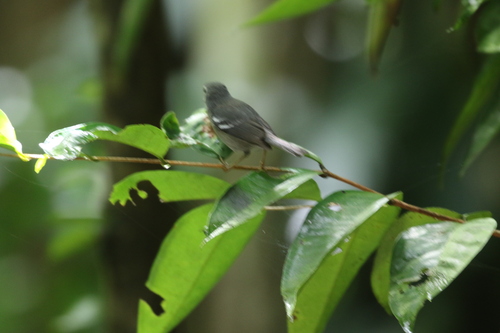
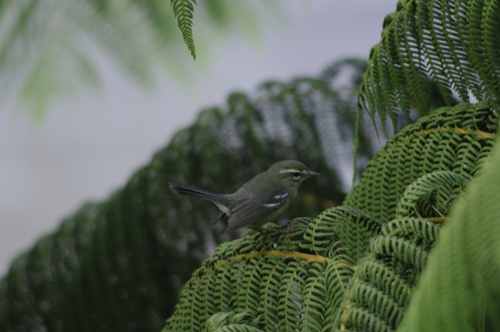
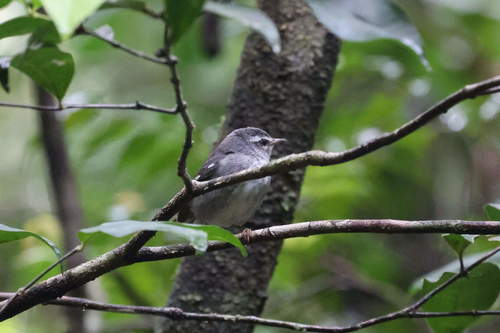
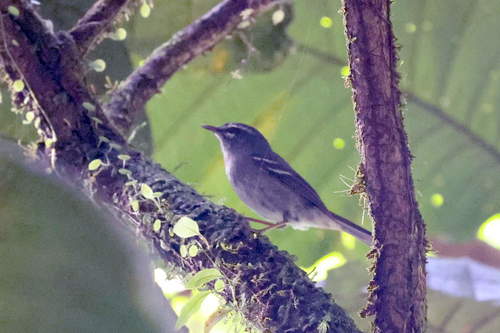
The plumbeous warbler is 12 to 14 cm (4.7 to 5.5 in) long and weighs 8.4 to 11.3 g (0.30 to 0.40 oz). The sexes have the same plumage. Adults have a mostly gray head with a white supercilium that is broken over the eye and a white arc below the eye. Their upperparts are gray. Their wings are mostly gray with wide white tips on the greater and median coverts that show as two white wing bars. Their tail is mostly gray with a whitish underside and white tips on the outer two pairs of feathers. Their underparts are mostly whitish with grayer flanks. Voice: The plumbeous warbler's song is a "short and simple but quite melodic...pa-pi-a or de-de-diu". Its calls are a "short chek" and a "loud rattle".
Text from Wikipedia, licensed CC BY-SA 4.0.
When to see the Plumbeous Warbler
One bar for each month. Filled bars are the 10 months with records; pale bars are months with none. The wide bar is April, the month with the most records.
Where to see the Plumbeous Warbler
The map shades 2 countries with regular records. Everything unshaded has no records. Countries are listed below the map.
About the Plumbeous Warbler
The plumbeous warbler is a species of passerine bird belonging to the family Parulidae, the New World warblers. This species is found only in Dominica and Guadeloupe in the Lesser Antilles. Its natural habitats are subtropical or tropical dry forest and subtropical or tropical moist lowland forest.
Text adapted from Wikipedia, licensed CC BY-SA 4.0.
Easily confused with
 American Yellow WarblerSetophaga aestivaOther than in male breeding plumage and body size, all warbler subspecies are very similar.
 Olive-capped WarblerSetophaga pityophilaThe olive-capped warbler is about 12.5 to 13 cm (4.9 to 5.1 in) long and weighs 7.2 to 8.7 g (0.25 to 0.31 oz).
 Arrowhead WarblerSetophaga pharetraThe arrowhead warbler is 12.5 to 13 cm (4.9 to 5.1 in) long and weighs 9.1 to 10.5 g (0.32 to 0.37 oz).
Side by side: Kirtland's Warbler vs Plumbeous Warbler · American Yellow Warbler vs Plumbeous Warbler
Learn the Plumbeous Warbler in the BeakBrain App
Photo and call practice. Coming soon to iPhone and Android.
Play today's Daily BirdEvery photo and recording on this page is credited to its author under the licence shown. Spotted a problem with this page, or have a better photo? Contribute.