Learn what every symbol on the card means.Full credits and sources at beakbrain.com/symbols
 ForestCup nestMedium · 105 g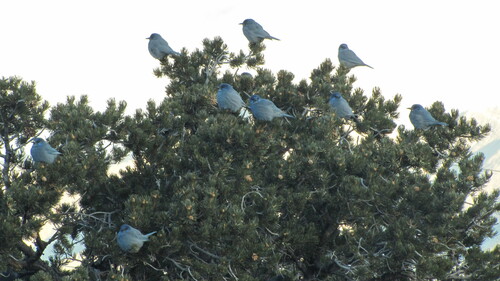
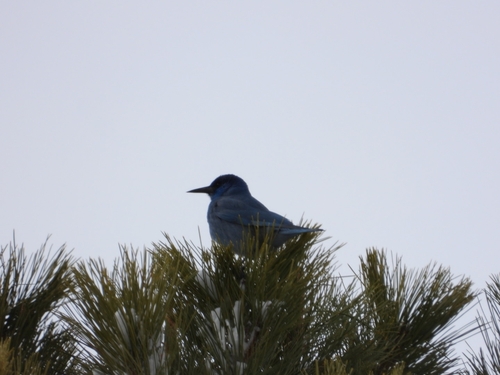
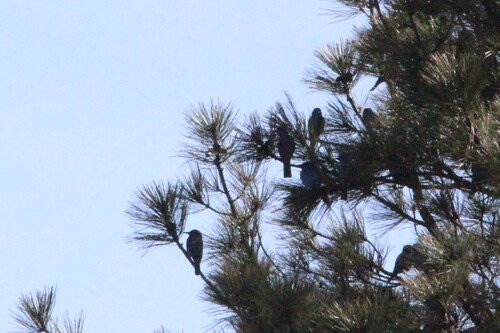
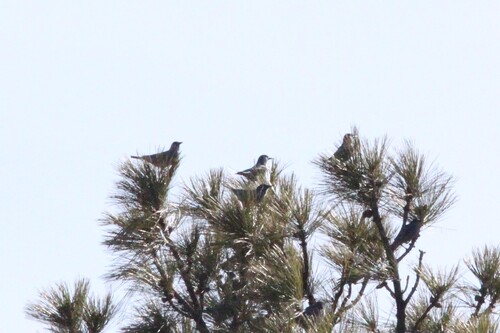


ID tip
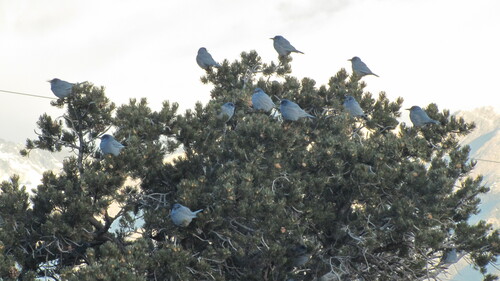
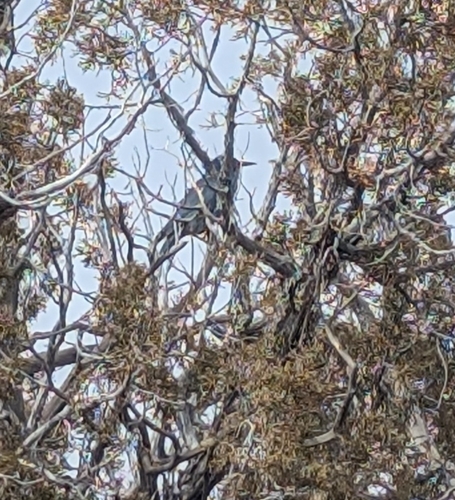
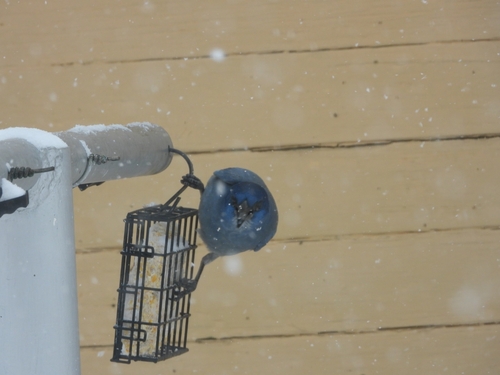
The pinyon jay is a bluish-grey coloured bird with deeper head colouring and whitish throat with black bill, legs and feet. Roughly intermediate between the blue jay and the Eurasian jay in size, its overall proportions are similar to Clark's nutcracker (Nucifraga columbiana) and this can be seen as convergent evolution, as both birds fill similar ecological niches. They were once known as "blue crows".
Text from Wikipedia, licensed CC BY-SA 4.0.
When to see the Pinyon Jay
One bar for each month, and every month is filled: this bird is recorded here in all twelve. The wide bar is May, the month with the most records.
Where to see the Pinyon Jay
The map shades 2 countries with regular records, and 1 more in a lighter tone where the bird turns up only as a stray. Everything unshaded has no records. Countries are listed below the map.
Recorded as a rare visitor in Canada.
About the Pinyon Jay
The pinyon jay is a species of jay, and is the only member of the genus Gymnorhinus. Native to Western North America, the species ranges from central Oregon to northern Baja California, and eastward as far as western Oklahoma, though wanderers are often sighted beyond this range. It is typically found within foothills, especially where pinyon pines occur.
Text adapted from Wikipedia, licensed CC BY-SA 4.0.
Easily confused with
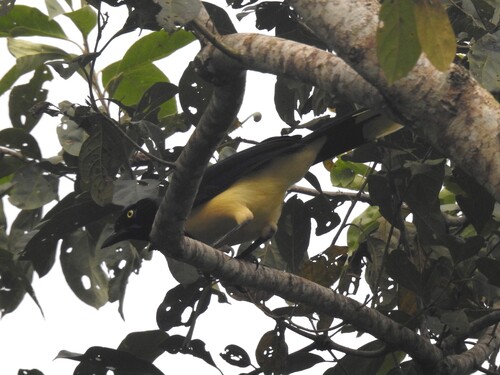 Black-chested JayCyanocorax affinisMeasuring 34 cm (13 in) long, this jay is easily recognized from its distinctive facial pattern and yellow eye.
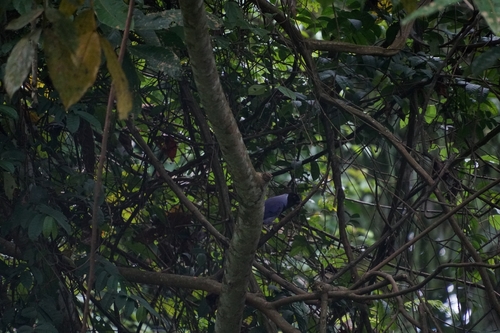 Violaceous JayCyanocorax violaceusThe violaceus jay is 33 to 37 cm (13 to 15 in) long and weighs about 260 g (9.2 oz).
 White-throated Magpie-JayCyanocorax formosusThe white-throated magpie-jay is between 43 and 56 cm (17–22 in) in length and weighs 205 to 213 g (7.2–7.5 oz).
Side by side: Pinyon Jay vs White-throated Magpie-Jay · Black-chested Jay vs Pinyon Jay · Pinyon Jay vs Violaceous Jay
Learn the Pinyon Jay in the BeakBrain App
Photo and call practice. Coming soon to iPhone and Android.
Play today's Daily BirdEvery photo and recording on this page is credited to its author under the licence shown. Spotted a problem with this page, or have a better photo? Contribute.