Learn what every symbol on the card means.Full credits and sources at beakbrain.com/symbols
 ShrublandCup nestSmall · 26 g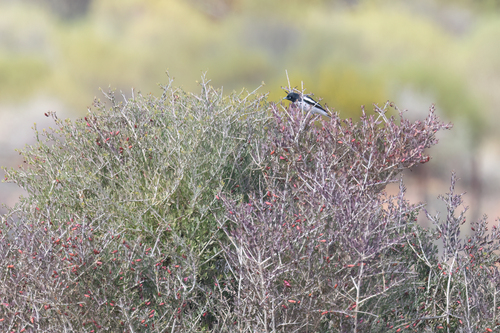


ID tip
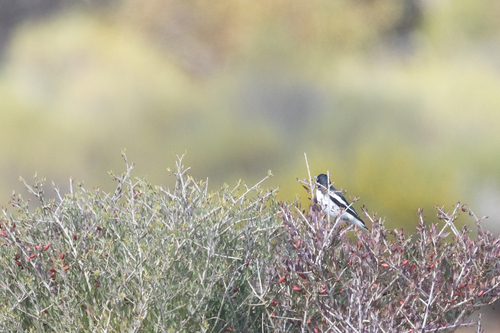
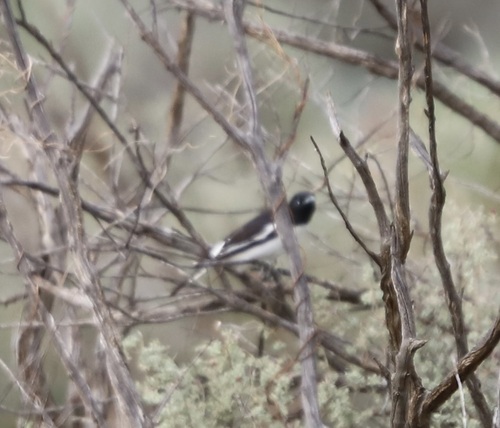
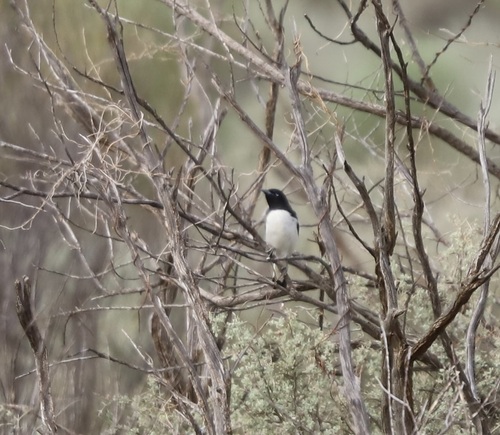
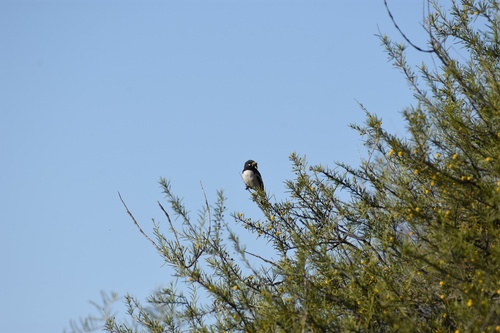
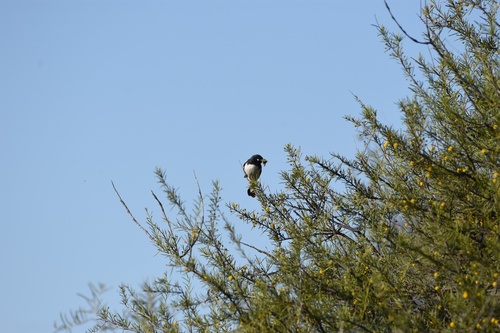
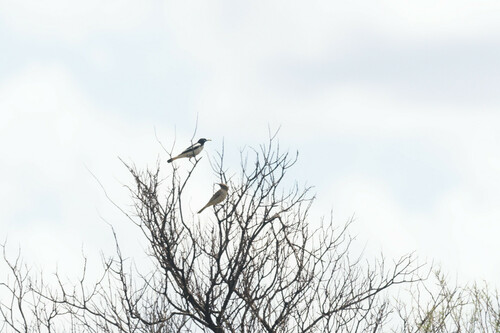
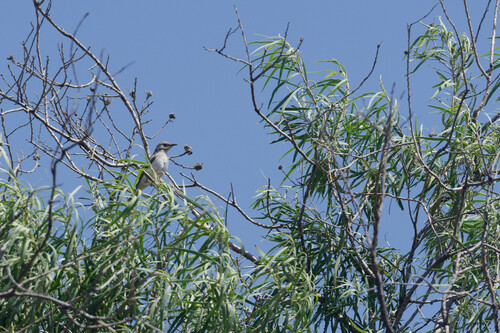
The pied honeyeater has a long curved bill and a small pale-blue patch of bare skin below the eye which is semicircular in males and arc-shaped in females and juveniles. Males are black and white, having a black head, neck and upper parts, a white lower rump and upper tail, black wings with a white stripe, and white underparts with a black tipped tail. Females are brown above, with a grey-white chin, a whitish breast streaked and spotted dark-brown, white underparts and white stripe along the edges of the secondary wing feathers. Adult weight is approximately 27 g (0.
Text from Wikipedia, licensed CC BY-SA 4.0.
When to see the Pied Honeyeater
One bar for each month. Filled bars are the 7 months with records; pale bars are months with none. The wide bar is August, the month with the most records.
Where to see the Pied Honeyeater
The map shades 1 country with regular records. Everything unshaded has no records. Countries are listed below the map.
About the Pied Honeyeater
The pied honeyeater is a species of bird in the family of honeyeaters Meliphagidae and the sole species in the genus Certhionyx. This species is also known as the black and white honeyeater or western pied honeyeater.
Text adapted from Wikipedia, licensed CC BY-SA 4.0.
Easily confused with
 Painted HoneyeaterGrantiella pictaWeighing around 20-25g, the painted honeyeater is a small bird that is approximately 16 cm in length, with a similar wingspan.
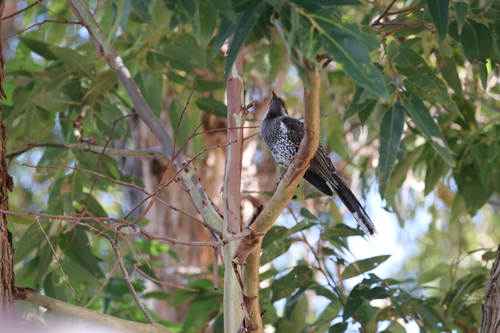 Western WattlebirdAnthochaera lunulataThe adult western wattlebird has dark grey-brown upper-parts with pale streaks and spots.
 Western SpinebillAcanthorhynchus superciliosusThe western spinebill is a small honeyeater with a slender, curved bill.
Side by side: Pied Honeyeater vs Western Spinebill · Painted Honeyeater vs Pied Honeyeater
Learn the Pied Honeyeater in the BeakBrain App
Photo and call practice. Coming soon to iPhone and Android.
Play today's Daily BirdEvery photo and recording on this page is credited to its author under the licence shown. Spotted a problem with this page, or have a better photo? Contribute.