Learn what every symbol on the card means.Full credits and sources at beakbrain.com/symbols
 GrasslandCup nestMedium · 128 g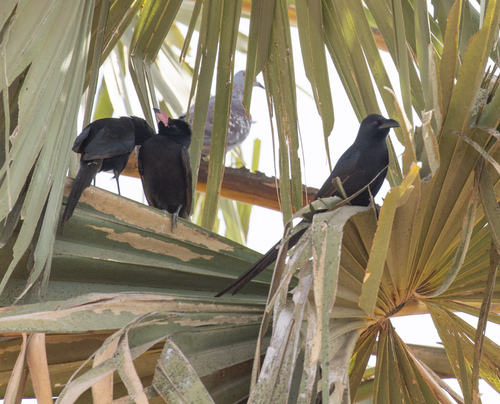


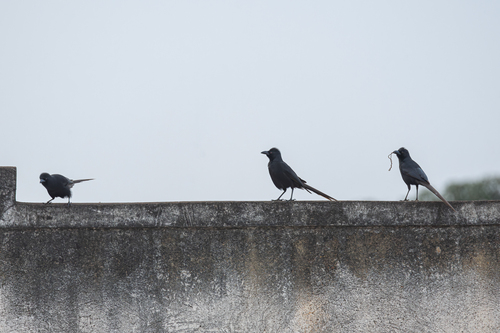
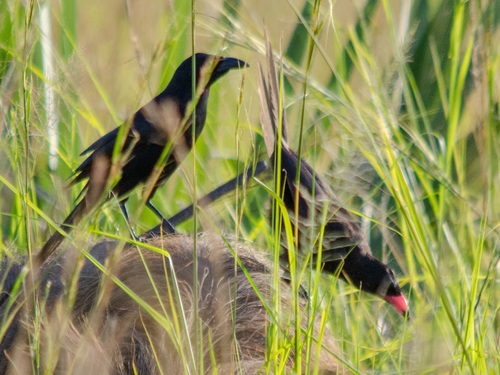
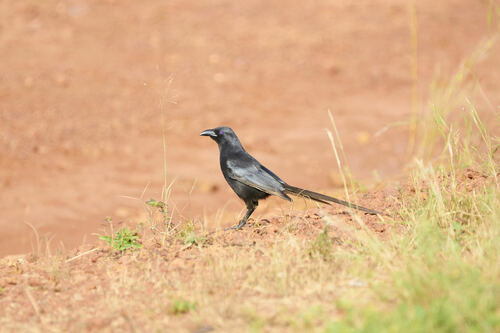
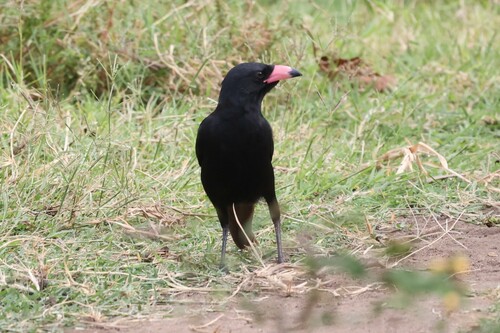
ID tip
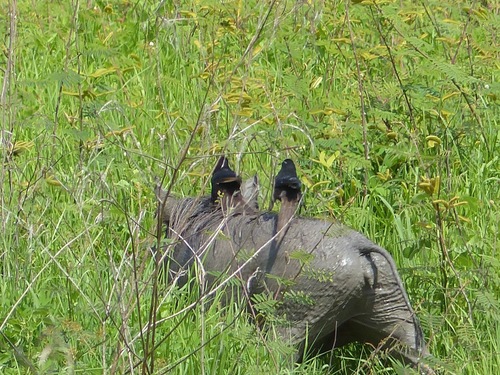
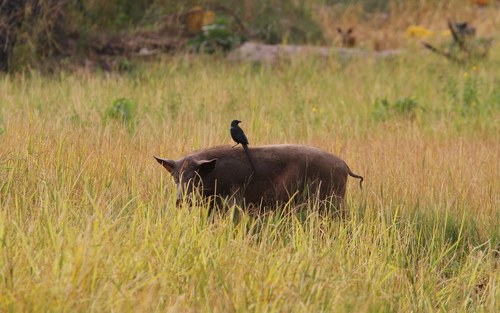
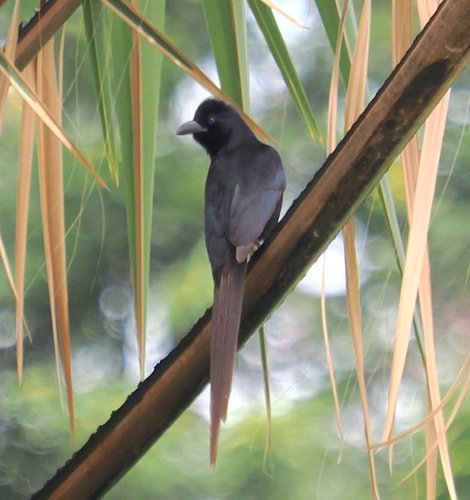
In size it is a little smaller and slimmer than the European magpie (Pica pica) though the bill is relatively thicker. It is 35–42 cm (14–17 in) in length and weighs 121–130 g (4.3–4.6 oz). The overall colouring is black with the feathers quite silky in texture and having a purplish gloss in good light. The base of the tail tends to be more brown in colour than the rest of the body. Unusual for a passerine it has 10 rather than 12 tail feathers. The nasal plumes are somewhat upturned on top of the bill but fully cover the nostrils.
Text from Wikipedia, licensed CC BY-SA 4.0.
When to see the Piapiac
One bar for each month, and every month is filled: this bird is recorded here in all twelve. The wide bar is March, the month with the most records.
Where to see the Piapiac
The map shades 20 countries with regular records, and 1 more in a lighter tone where the bird turns up only as a stray. Everything unshaded has no records. Countries are listed below the map.
Recorded as a rare visitor in Mauritania.
About the Piapiac
The piapiac is an African bird in the crow family, and is the only member of the genus Ptilostomus. It is most closely related to the Central Asian ground jays.
Text adapted from Wikipedia, licensed CC BY-SA 4.0.
Easily confused with
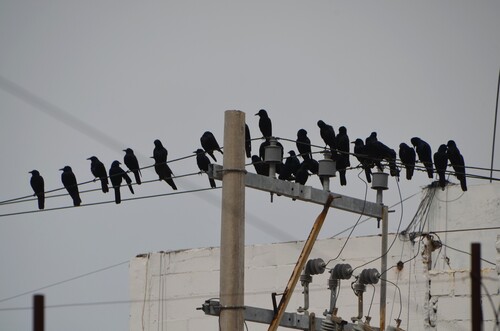 Sinaloa CrowCorvus sinaloaeThe Sinaloa crow is 35.5 to 38 cm (14 to 15 in) long; two individuals weighed 229 and 258 g (8.1 and 9.1 oz).
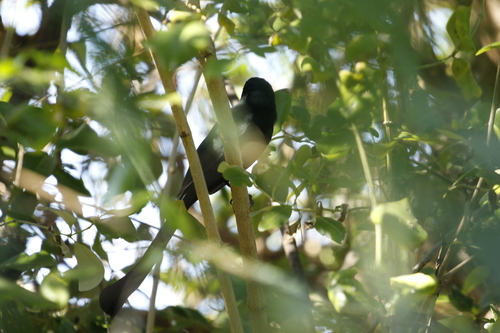 Racket-tailed TreepieCrypsirina temiaThe racket-tailed treepie is an Asian treepie, a member of the crow family, Corvidae.
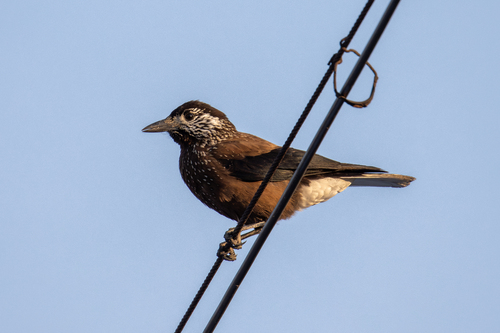 Southern NutcrackerNucifraga hemispilaThe southern nutcracker is similar in size to the northern nutcracker, about 33 cm long.
Side by side: Piapiac vs Southern Nutcracker · Piapiac vs Sinaloa Crow
Learn the Piapiac in the BeakBrain App
Photo and call practice. Coming soon to iPhone and Android.
Play today's Daily BirdEvery photo and recording on this page is credited to its author under the licence shown. Spotted a problem with this page, or have a better photo? Contribute.