Learn what every symbol on the card means.Full credits and sources at beakbrain.com/symbols
 ShrublandPlatform nestLarge · 382 g

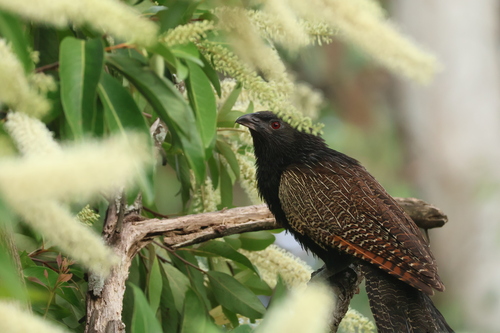
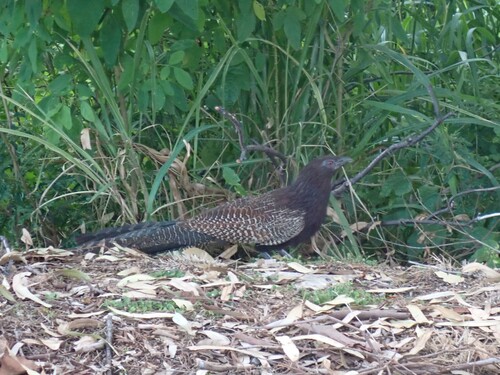
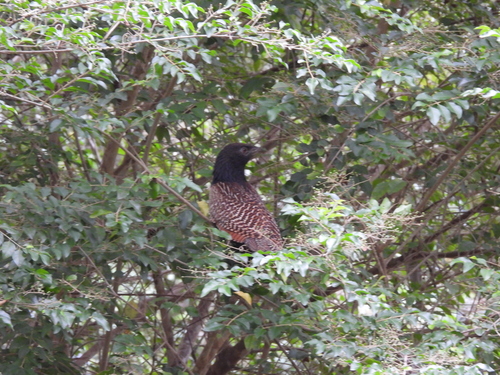
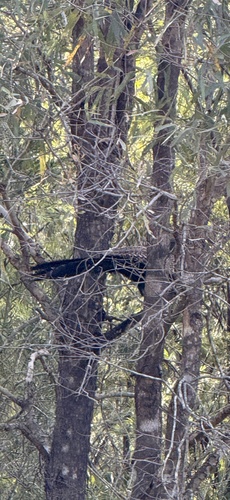
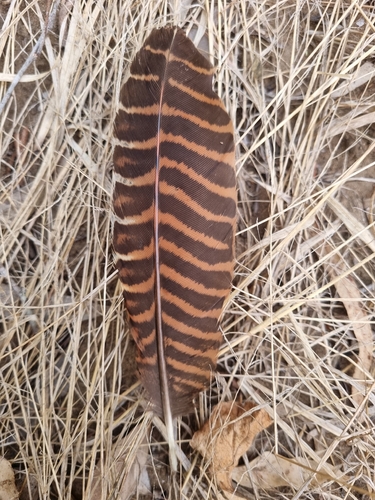
ID tip
50 to 70 cm (20 to 28 in) in length, the pheasant coucal is a large heavy-set bird adapted for living on the ground, reminiscent of a pheasant in shape. Birds in breeding plumage have black heads, necks, breasts and bellies, barred chestnut wings and long black, brown and cream barred tails. Outside the breeding season, their black head and underparts moult to a white-streaked chestnut colour. The pheasant coucal's summer voice is a low descending 'boop boop boop'. Its winter voice is a sharp hissing.
Text from Wikipedia, licensed CC BY-SA 4.0.
When to see the Pheasant Coucal
One bar for each month. Filled bars are the 10 months with records; pale bars are months with none. The wide bar is January, the month with the most records.
Where to see the Pheasant Coucal
The map shades 4 countries with regular records. Everything unshaded has no records. Countries are listed below the map.
About the Pheasant Coucal
The pheasant coucal is a species of cuckoo in the family Cuculidae. It is found in Australia, Timor and New Guinea. Its natural habitats are subtropical or tropical moist lowland forests and subtropical or tropical mangrove forests. It has adapted well to canefields in northern Australia. The pheasant coucal is unusual among Australian cuckoos in that it incubates and raises its own young instead of laying its eggs in the nest of another species.
Text adapted from Wikipedia, licensed CC BY-SA 4.0.
Easily confused with
 Lesser CoucalCentropus bengalensisThis slightly smaller-sized and shorter-billed coucal has a very long hind claw, the longest within the genus.
 White-browed CoucalCentropus superciliosusThe white-browed coucal is a medium-sized species growing to 36 to 42 cm (14 to 17 in) in length.
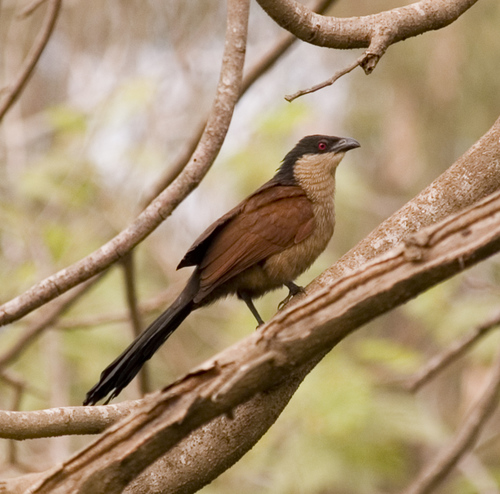 Senegal CoucalCentropus senegalensisThis is a medium-sized species at 39 cm (15 in) in length.
Side by side: Greater Coucal vs Pheasant Coucal · Pheasant Coucal vs White-browed Coucal · Channel-billed Cuckoo vs Pheasant Coucal · Lesser Coucal vs Pheasant Coucal · Pheasant Coucal vs Senegal Coucal
Learn the Pheasant Coucal in the BeakBrain App
Photo and call practice. Coming soon to iPhone and Android.
Play today's Daily BirdEvery photo and recording on this page is credited to its author under the licence shown. Spotted a problem with this page, or have a better photo? Contribute.