Learn what every symbol on the card means.Full credits and sources at beakbrain.com/symbols
 ForestCup nestTiny · 12 g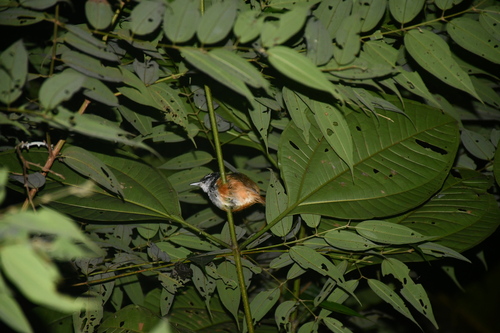
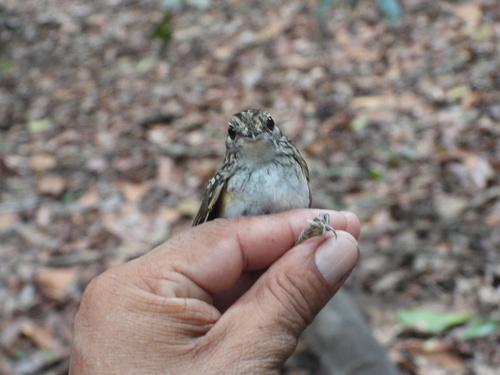
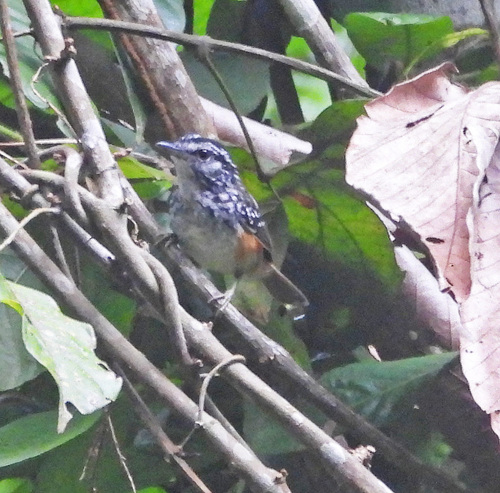
What the Peruvian Warbling Antbird sounds like


ID tip
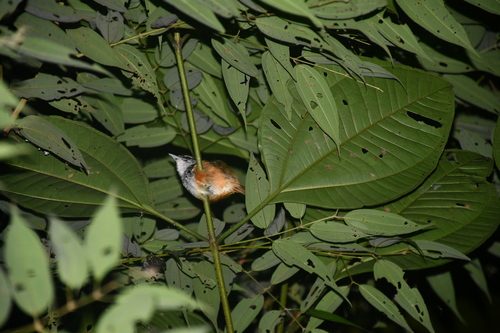
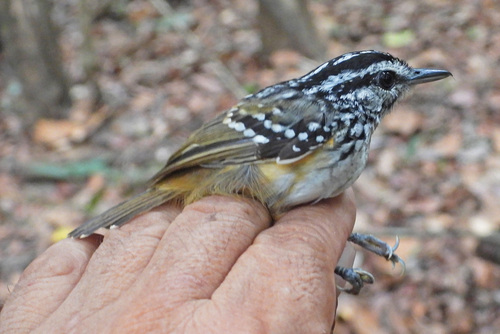
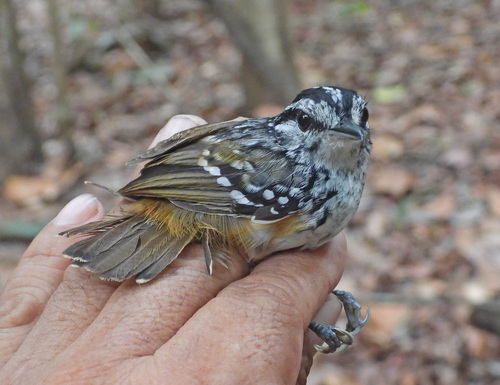
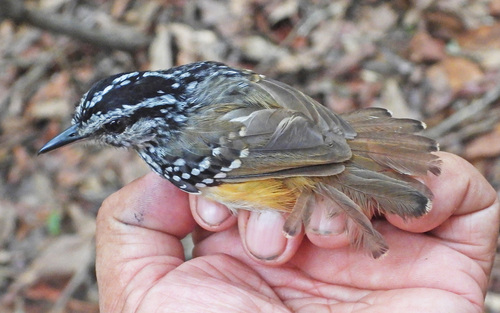
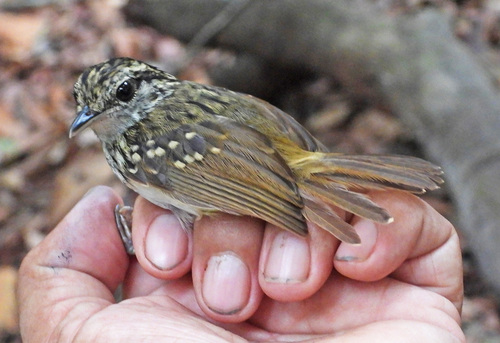
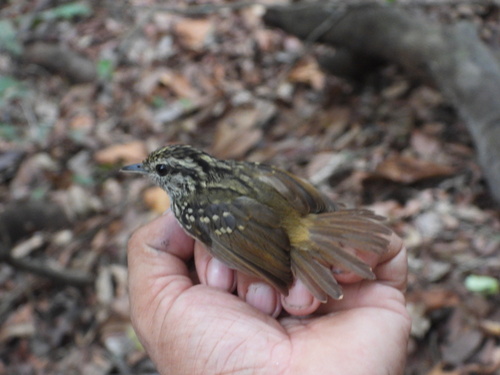
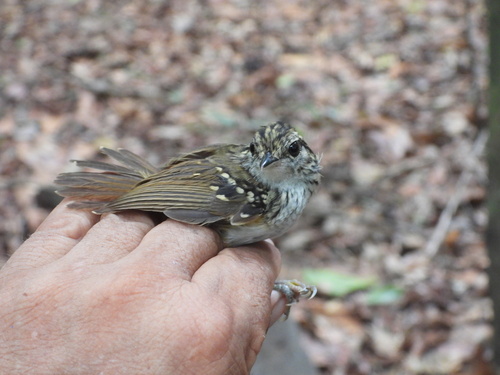
The Peruvian warbling antbird is 11 to 12 cm (4.3 to 4.7 in) long. Adult males of the nominate subspecies have a black crown with a white central streak and a white supercilium on an otherwise black and white speckled face. Their upperparts are grayish brown with a white patch between the scapulars and much black and white speckling. Their rump is rufous. Their flight feathers are brown with yellowish olive-brown edges and their wing coverts black with white tips. Their tail is brown with pale buff tips to the feathers. Their throat and breast are white with many dark spots. Voice: The male Peruvian warbling antbird's song is "not at all warbling...a raspy, almost snarling 'peér, peer-peer-peer-peer-pur-pur-pyur' with descending effect". Females reply with a "shorter, higher-pitched version" that may start during the male's song. Both sexes give "wur-cheeé or wur-cheeé-cheeé" calls.
Text from Wikipedia, licensed CC BY-SA 4.0.
When to see the Peruvian Warbling Antbird
One bar for each month, and every month is filled: this bird is recorded here in all twelve. The wide bar is October, the month with the most records.
Where to see the Peruvian Warbling Antbird
The map shades 5 countries with regular records. Everything unshaded has no records. Countries are listed below the map.
About the Peruvian Warbling Antbird
The Peruvian warbling antbird or Peruvian antwarbler, is a species of bird in subfamily Thamnophilinae of family Thamnophilidae, the "typical antbirds". It is found in Bolivia, Brazil, Colombia, Ecuador, and Peru.
Text adapted from Wikipedia, licensed CC BY-SA 4.0.
Easily confused with
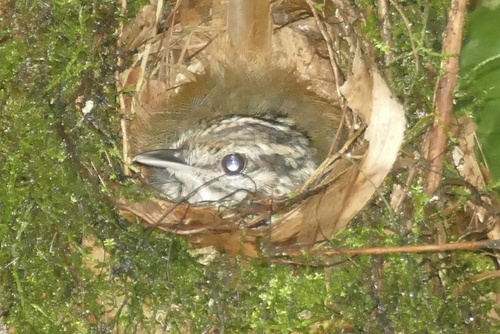 Guianan Warbling AntbirdHypocnemis cantatorThe Guianan warbling antbird is 11 to 12 cm (4.3 to 4.7 in) long and weighs 10 to 14 g (0.35 to 0.49 oz).
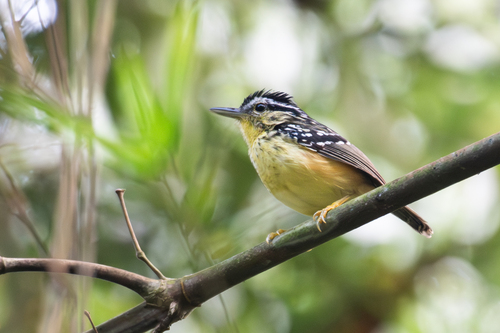 Yellow-breasted Warbling AntbirdHypocnemis subflavaThe yellow-breasted warbling antbird is about 12 cm (4.7 in) long and weighs about 14 g (0.49 oz).
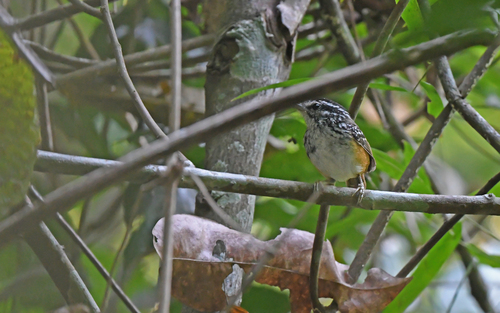 Spix's Warbling AntbirdHypocnemis striataSpix's warbling antbird is 11 to 12 cm (4.3 to 4.7 in) long and weighs 10 to 14 g (0.35 to 0.49 oz).
Side by side: Black-throated Antbird vs Peruvian Warbling Antbird · Guianan Warbling Antbird vs Peruvian Warbling Antbird · Peruvian Warbling Antbird vs Yellow-breasted Warbling Antbird
Learn the Peruvian Warbling Antbird in the BeakBrain App
Photo and call practice. Coming soon to iPhone and Android.
Play today's Daily BirdEvery photo and recording on this page is credited to its author under the licence shown. Spotted a problem with this page, or have a better photo? Contribute.