Learn what every symbol on the card means.Full credits and sources at beakbrain.com/symbols
 ForestCup nestTiny · 11 g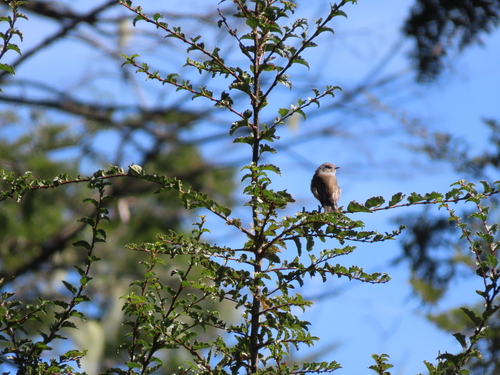
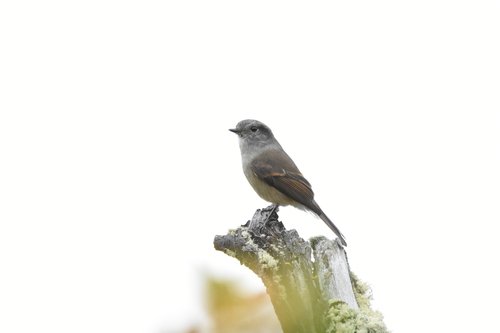
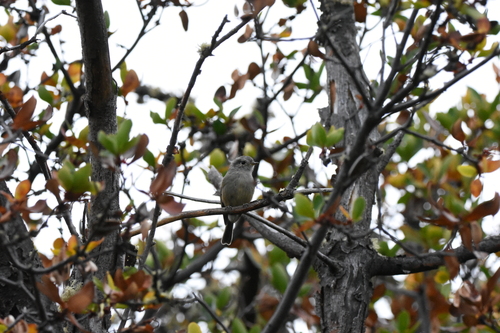
ID tip
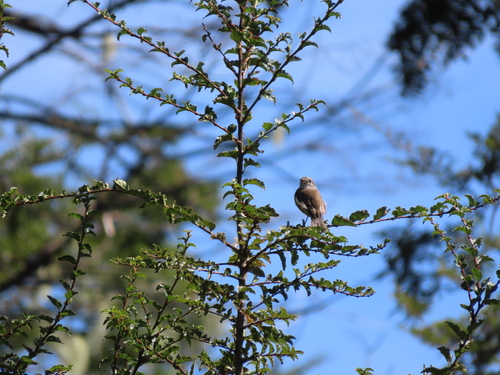
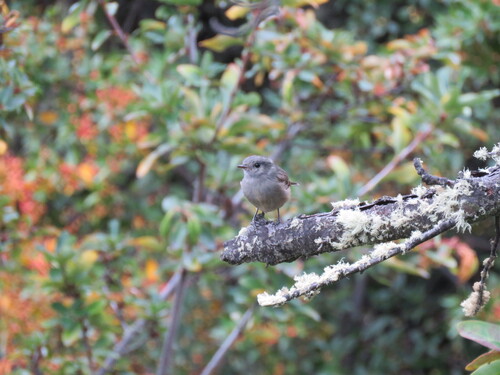
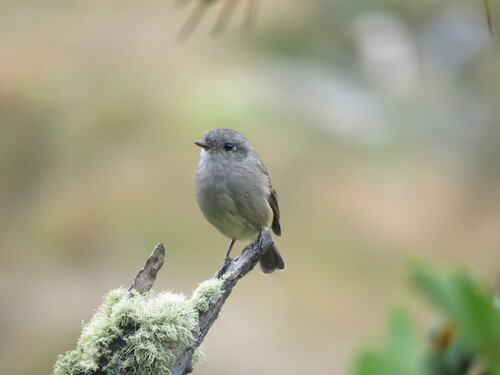
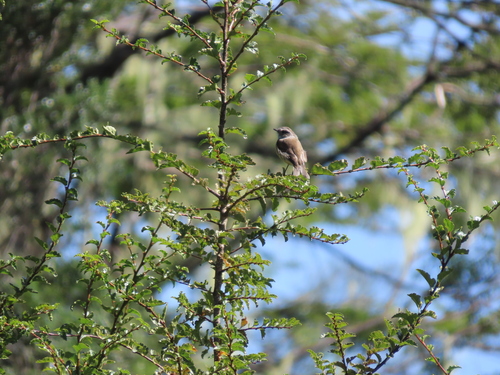
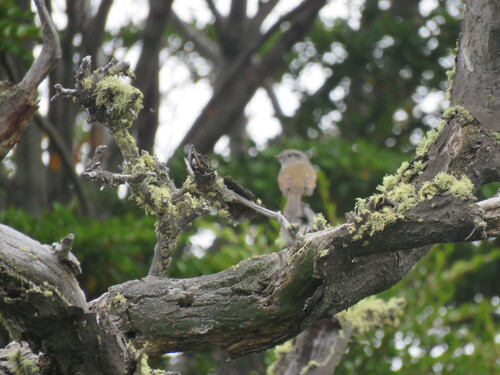
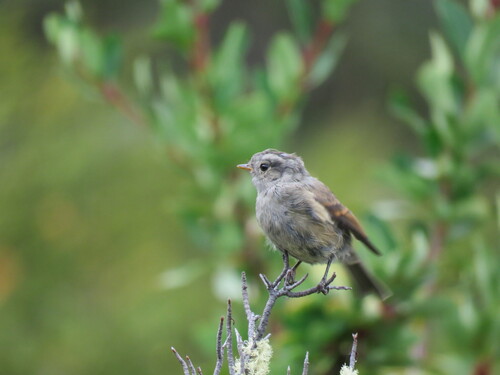
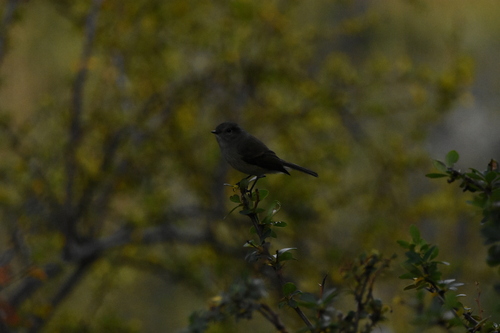
The Patagonian tyrant is 12 to 13 cm (4.7 to 5.1 in) long. The sexes have essentially the same plumage though females sometimes have a darker throat than males. Adults have a mostly gray head with a darker brownish gray crown and a blackish streak behind the eye. Their upperparts are olive-brown. Their wings are blackish brown with wide cinnamon edges on the coverts that show as two wing bars. Their tail is blackish brown. Their throat and underparts are grayish with a yellowish wash on the belly, flanks, and undertail coverts. They have a black iris, a black bill, and black legs and feet. Voice: The Patagonian tyrant's most frequently heard song is "a long, descending whistle, often repeated every three to four seconds", into which it sometimes mixes shorter whistles. It less often sings a "more complex vocalization containing three distinct phrases". Its calls are "variable, high-pitched, long and clear whistled notes" that are somewhat similar to the primary song.
Text from Wikipedia, licensed CC BY-SA 4.0.
When to see the Patagonian Tyrant
One bar for each month. Filled bars are the 6 months with records; pale bars are months with none. The wide bar is July, the month with the most records.
Where to see the Patagonian Tyrant
The map shades 2 countries with regular records. Everything unshaded has no records. Countries are listed below the map.
About the Patagonian Tyrant
The Patagonian tyrant is a species of bird in the family Tyrannidae, the tyrant flycatchers. It is found in Argentina and Chile.
Text adapted from Wikipedia, licensed CC BY-SA 4.0.
Easily confused with
 Grey-hooded AttilaAttila rufusThe grey-hooded attila is 20 to 21 cm (7.9 to 8.3 in) long and weighs 36.5 to 51.5 g (1.3 to 1.8 oz).
 Cuban PeweeContopus caribaeusThe Cuban pewee is 15 to 16.5 cm (5.9 to 6.5 in) long and weighs 8.5 to 13.5 g (0.30 to 0.48 oz).
 Grey MonjitaNengetus cinereusThe grey monjita is 21 to 25 cm (8.3 to 9.8 in) long and weighs 50 to 62 g (1.8 to 2.2 oz).
Side by side: Grey-hooded Attila vs Patagonian Tyrant · Grey Monjita vs Patagonian Tyrant · Cuban Pewee vs Patagonian Tyrant
Learn the Patagonian Tyrant in the BeakBrain App
Photo and call practice. Coming soon to iPhone and Android.
Play today's Daily BirdEvery photo and recording on this page is credited to its author under the licence shown. Spotted a problem with this page, or have a better photo? Contribute.