Learn what every symbol on the card means.Full credits and sources at beakbrain.com/symbols
 WoodlandCup nestTiny · 14 g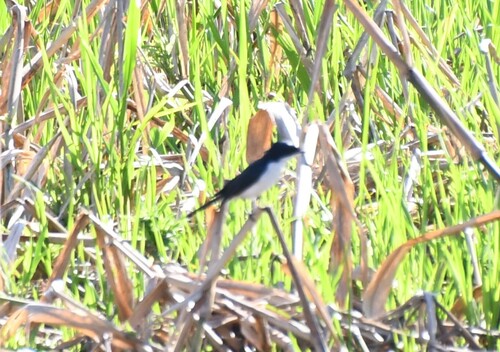
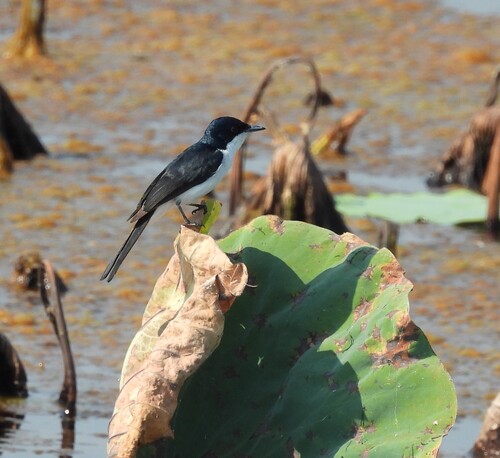
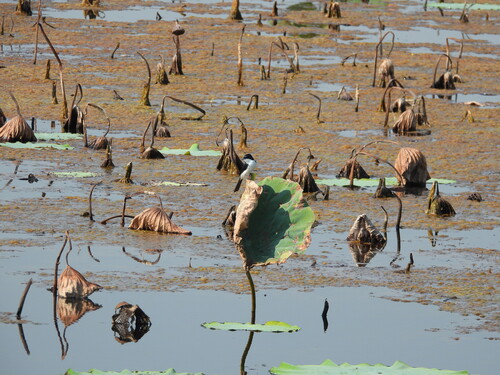
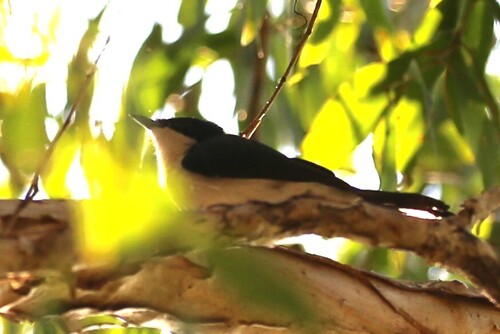
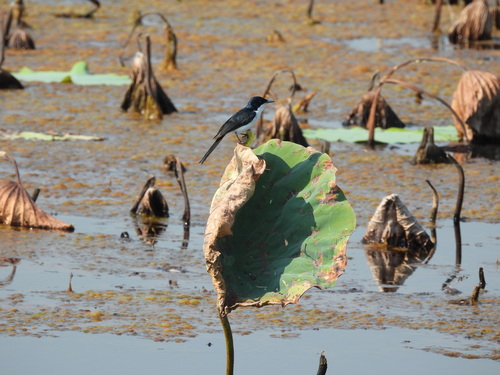
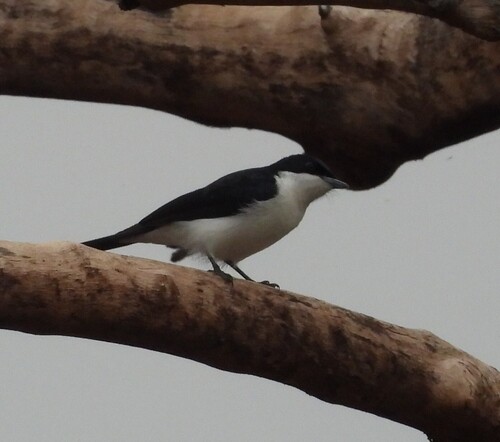
ID tip
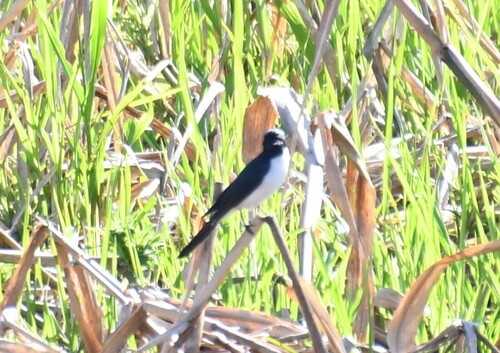
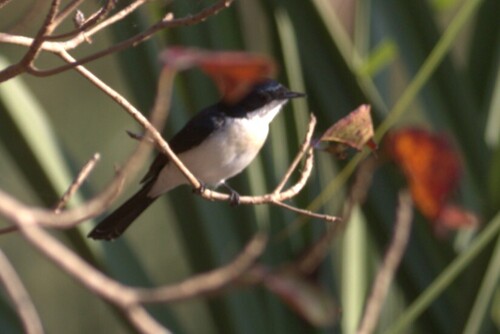
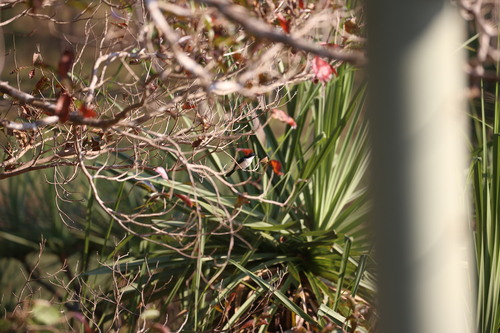
The paperbark flycatcher is broadly similar to the restless flycatcher, with entirely black upperparts from the crown and sides of the head, in contrast with entirely white underparts from the throat to the vent. It is a smaller bird, at only two-thirds the weight of its southern relative, and has a proportionately shorter and broader bill, with longer and stouter rictal bristles. There is no overlap in size between the species. The back and the crown of nana are the same glossy black, while inquieta has a slightly paler, slate-grey, back.
Text from Wikipedia, licensed CC BY-SA 4.0.
When to see the Paperbark Flycatcher
One bar for each month. Filled bars are the 8 months with records; pale bars are months with none. The wide bar is July, the month with the most records.
Where to see the Paperbark Flycatcher
The map shades 2 countries with regular records, and 1 more in a lighter tone where the bird turns up only as a stray. Everything unshaded has no records. Countries are listed below the map.
Recorded as a rare visitor in Indonesia.
About the Paperbark Flycatcher
The paperbark flycatcher, also known as the little restless flycatcher, is a passerine bird in the family Monarchidae. It occurs in tropical woodland and riverine habitats of northern Australia and southern New Guinea. Previously, some authorities lumped the paperbark flycatcher as a distinctive subspecies of the restless flycatcher of southern and eastern Australia, with which it forms a superspecies.
Text adapted from Wikipedia, licensed CC BY-SA 4.0.
Easily confused with
 Shining FlycatcherMyiagra alectoA long-tailed, slender songbird with fine bill.
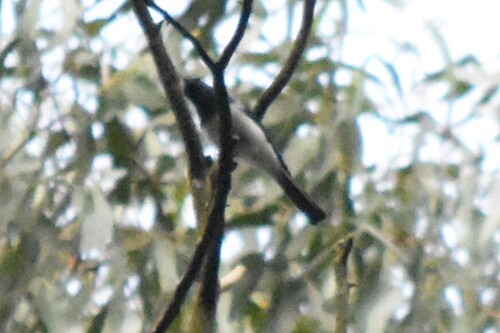 Satin FlycatcherMyiagra cyanoleucaThe satin flycatcher is a small bird, around 17 cm tall, and weighing around 17g.
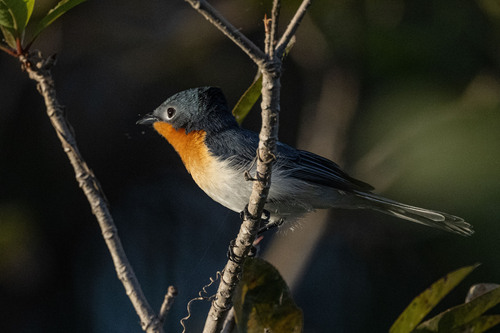 Broad-billed FlycatcherMyiagra ruficollisIn northern Australia, the broad-billed flycatcher is commonly found in moist forests and scrub surrounding permanent and seasonal fresh water areas such as billabongs and wet season marshes.
Learn the Paperbark Flycatcher in the BeakBrain App
Photo and call practice. Coming soon to iPhone and Android.
Play today's Daily BirdEvery photo and recording on this page is credited to its author under the licence shown. Spotted a problem with this page, or have a better photo? Contribute.