Learn what every symbol on the card means.Full credits and sources at beakbrain.com/symbols
 ForestCavity nestLarge · 841 g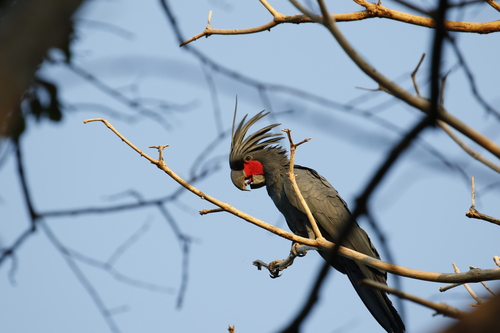
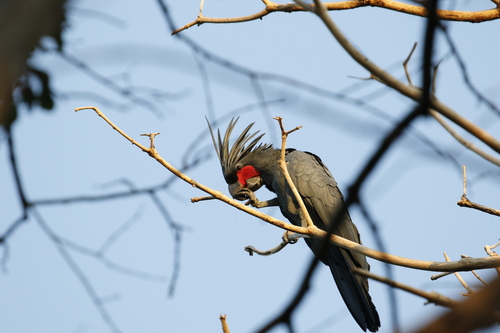
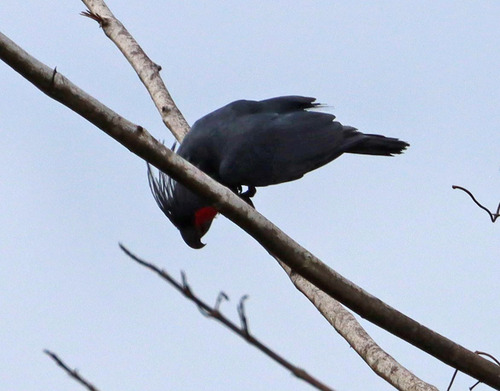
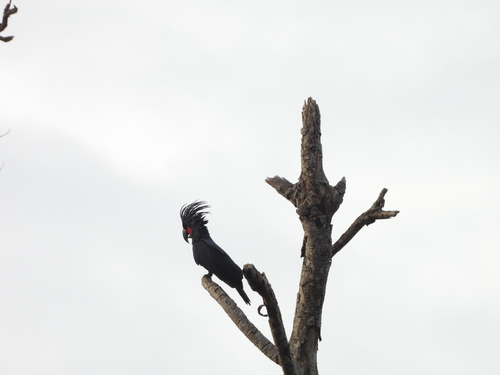
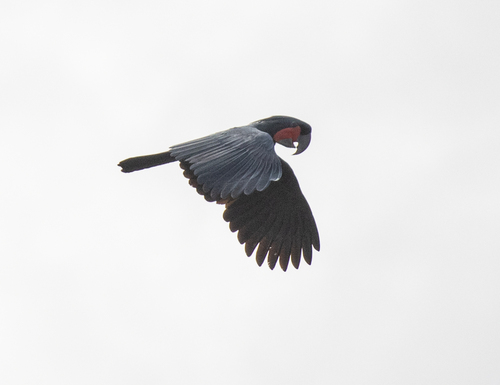
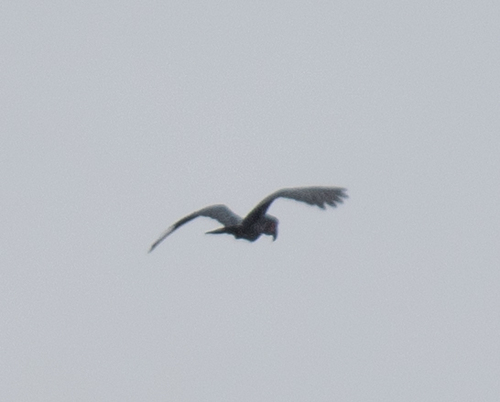


ID tip
The palm cockatoo is 55 to 60 cm (22 to 24 in) in length and weighs 910–1,200 g (2.01–2.65 lb). It may be the largest cockatoo species and largest parrot in Australia, although large races of yellow-tailed black cockatoos and sulphur-crested cockatoos broadly overlap in size. It is a distinctive bird with a large crest and has one of the largest bills of any parrot (only the hyacinth macaw's is larger). This powerful bill enables palm cockatoos not only to eat very hard nuts and seeds, but also enables males to break off thick (about 1 in (2. Voice: The vocalizations of palm cockatoos are similar to those of most wild parrots, but they have also been shown to produce a variety of additional syllables in display and exchange with neighbouring individuals. These additional syllables are mainly produced by males and are often combined to form long, complex sequences. In a population in the Iron Range, 30 different syllables were distinguished.
Text from Wikipedia, licensed CC BY-SA 4.0.
When to see the Palm Cockatoo
One bar for each month. Filled bars are the 10 months with records; pale bars are months with none. The wide bar is July, the month with the most records.
Where to see the Palm Cockatoo
The map shades 6 countries with regular records, and 1 more in a lighter tone where the bird turns up only as a stray. Everything unshaded has no records. Countries are listed below the map.
Recorded as a rare visitor in Thailand.
About the Palm Cockatoo
The palm cockatoo, also known as the goliath cockatoo or great black cockatoo, is a large, smoky-grey/black parrot of the cockatoo family native to New Guinea, the Aru Islands and the Cape York Peninsula in Queensland, Australia. It has a crest of long feathers atop its head, with a very large and strong, sharply-hooked black beak, and prominent bright-red cheek patches.
Text adapted from Wikipedia, licensed CC BY-SA 4.0.
Easily confused with
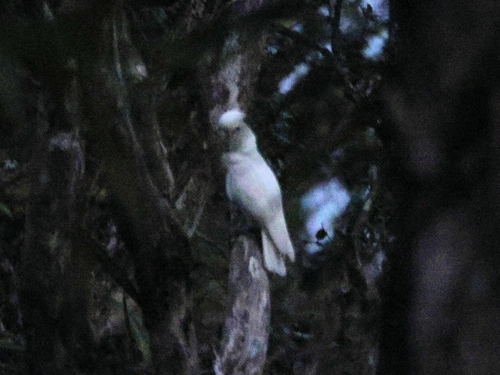 Tanimbar CorellaCacatua goffinianaTanimbar corellas weigh, on average, about 250 g (9 oz) for females and 300 g (11 oz) for males.
 Western CorellaCacatua pastinatorCacatua pastinator is a white cockatoo with the upper wing entirely white and under surface of the wing pale yellow.
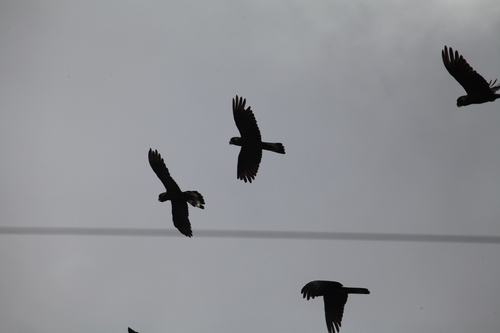 Baudin's Black CockatooZanda baudiniiBaudin's black cockatoo is about 56 cm (22 in) long.
Side by side: Palm Cockatoo vs Tanimbar Corella
Learn the Palm Cockatoo in the BeakBrain App
Photo and call practice. Coming soon to iPhone and Android.
Play today's Daily BirdEvery photo and recording on this page is credited to its author under the licence shown. Spotted a problem with this page, or have a better photo? Contribute.