Learn what every symbol on the card means.Full credits and sources at beakbrain.com/symbols
 ForestCavity nestTiny · 12 g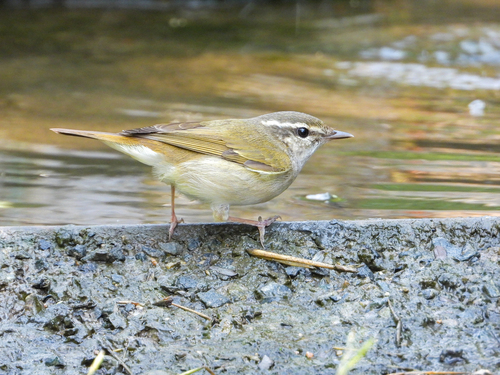


ID tip
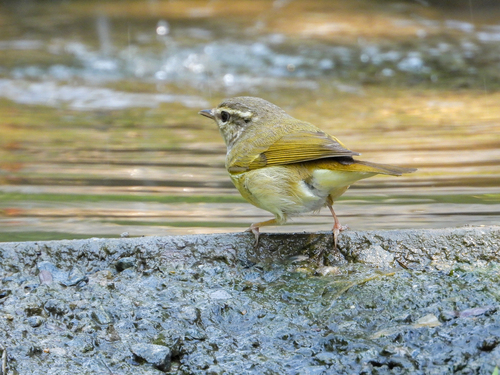
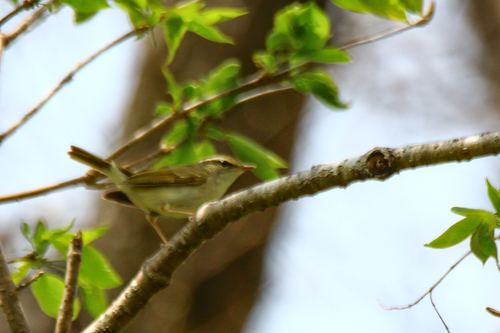
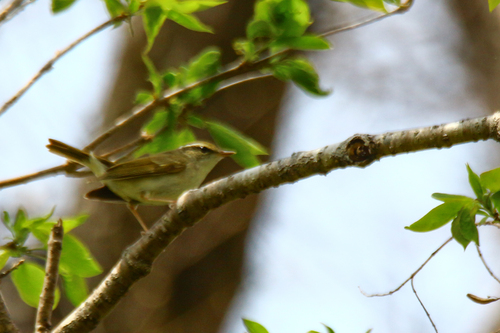
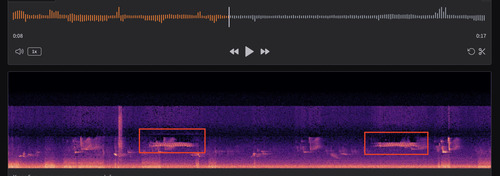
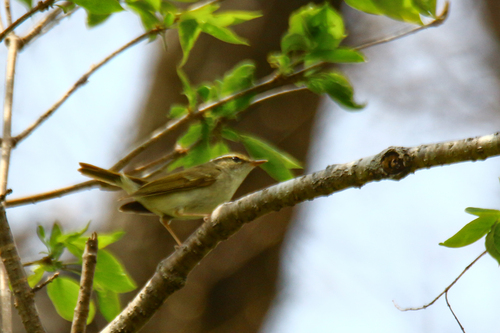
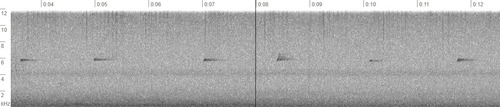
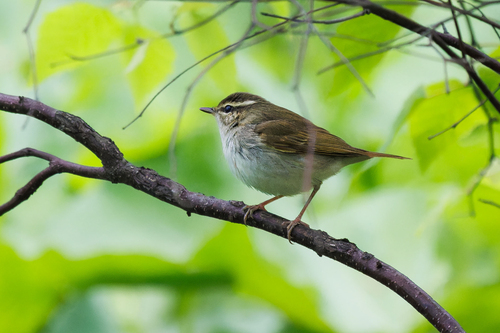
It is 12 cm in length with brownish upperparts and a contrasting greyish-brown crown and nape. The whitish supercilium contrasts strongly, not reaching the forehead but extending well behind the eyes. Its eyeline is dark brown and wider behind the eye. Cheeks mottled pale brown and throat whitish. White undertail coverts contrast with paler olive-brown rump and uppertail coverts, lacks greenish tinge. Breast and belly whitish, washed pale brown. Voice: Song, tiriririririririri repeating.
Text from Wikipedia, licensed CC BY-SA 4.0.
When to see the Pale-legged Leaf Warbler
One bar for each month. Filled bars are the 9 months with records; pale bars are months with none. The wide bar is April, the month with the most records.
Where to see the Pale-legged Leaf Warbler
The map shades 15 countries with regular records, and 2 more in a lighter tone where the bird turns up only as a stray. Everything unshaded has no records. Countries are listed below the map.
Recorded as a rare visitor in United Kingdom, India.
About the Pale-legged Leaf Warbler
The pale-legged leaf warbler is a species of Old World warbler in the family Phylloscopidae. The species was first described by Robert Swinhoe in 1860. It is found in Manchuria; it winters in Southeast Asia. Its natural habitat is temperate forests.
Text adapted from Wikipedia, licensed CC BY-SA 4.0.
Easily confused with
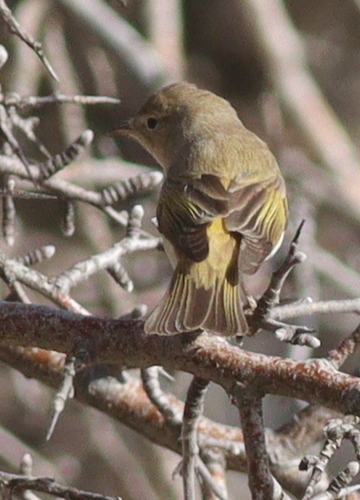 Eastern Bonelli's WarblerPhylloscopus orientalisThe eastern Bonelli's warbler, sometimes known as the Balkan warbler, is a warbler in the leaf warbler genus Phylloscopus.
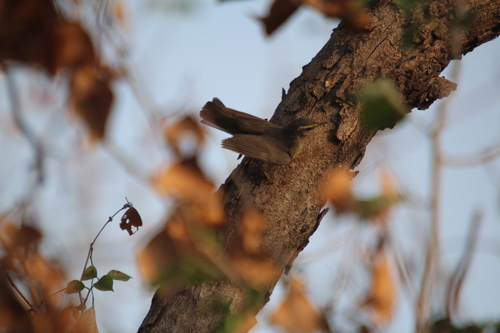 Sulphur-bellied WarblerPhylloscopus griseolusThe sulphur-bellied warbler is a species of leaf-warbler found in the Palearctic region.
 Radde's WarblerPhylloscopus schwarziThis is a warbler similar in size to a willow warbler.
Side by side: Pale-legged Leaf Warbler vs Radde's Warbler
Learn the Pale-legged Leaf Warbler in the BeakBrain App
Photo and call practice. Coming soon to iPhone and Android.
Play today's Daily BirdEvery photo and recording on this page is credited to its author under the licence shown. Spotted a problem with this page, or have a better photo? Contribute.