Learn what every symbol on the card means.Full credits and sources at beakbrain.com/symbols
 ForestCavity nestSmall · 45 g


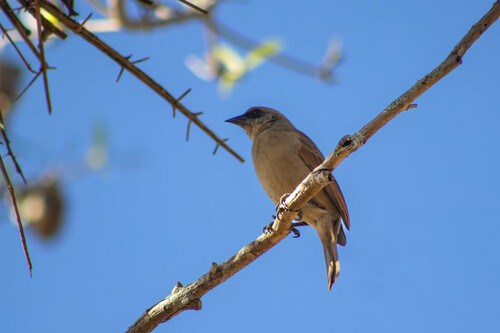
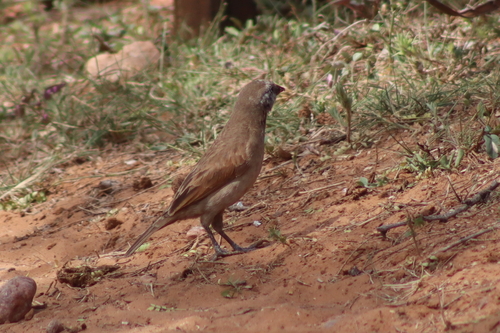
ID tip
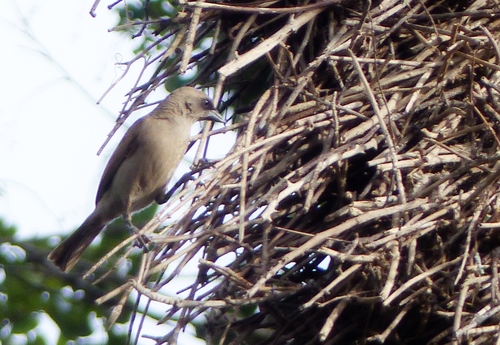
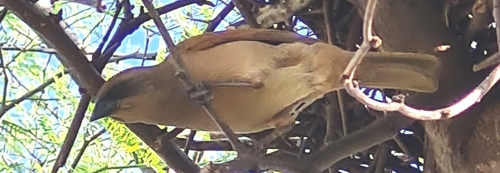
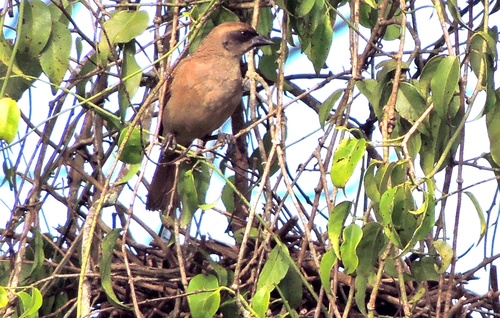
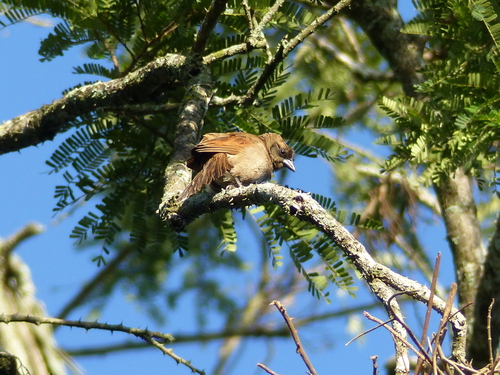
The pale baywing is 19 cm (7 in) long. Males weigh an average of about 40 g (1.4 oz). The sexes have the same plumage. Adults have a mostly pale sandy brown head and body with a paler rump. Their upperwing is blackish brown with wide rufous-cinnamon edges whose color dominates the closed wing. Their tail is dusky. They have a dark brown iris, a black bill, and black legs and feet. Voice: The pale baywing's song is "a slow, hesitant sequence of descending whistles mixed with calls". Possibly both sexes sing, and the species does sing in groups. It also makes raspy or chattery calls and a "kwoink" contact call.
Text from Wikipedia, licensed CC BY-SA 4.0.
When to see the Pale Baywing
One bar for each month, and every month is filled: this bird is recorded here in all twelve. The wide bar is March, the month with the most records.
Where to see the Pale Baywing
The map shades 1 country with regular records. Everything unshaded has no records. Countries are listed below the map.
About the Pale Baywing
The pale baywing is a species of bird in the family Icteridae, the oropendolas, New World orioles, and New World blackbirds. It is endemic to Brazil.
Text adapted from Wikipedia, licensed CC BY-SA 4.0.
Easily confused with

Learn the Pale Baywing in the BeakBrain App
Photo and call practice. Coming soon to iPhone and Android.
Play today's Daily BirdEvery photo and recording on this page is credited to its author under the licence shown. Spotted a problem with this page, or have a better photo? Contribute.