Learn what every symbol on the card means.Full credits and sources at beakbrain.com/symbols
 Urban218 g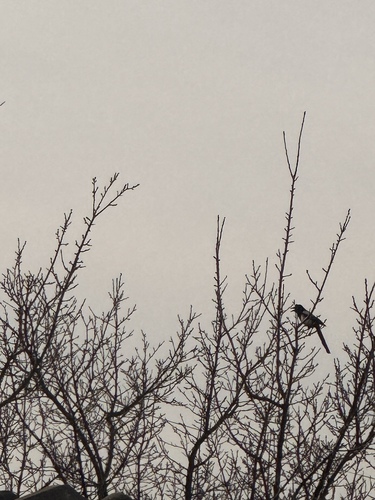
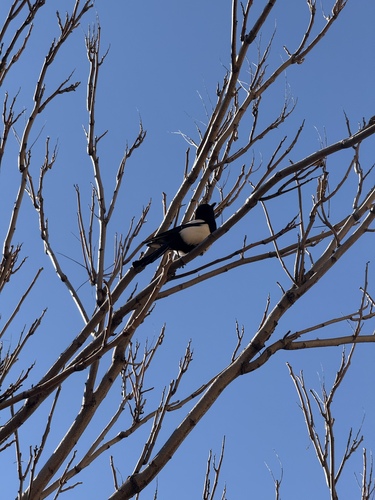
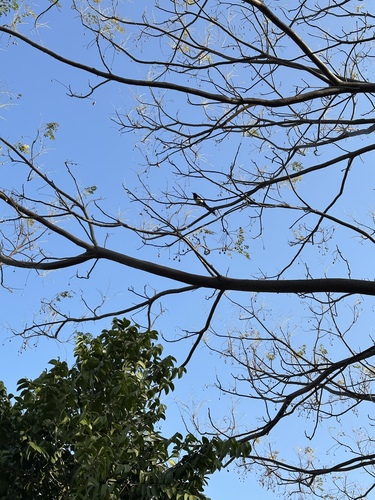
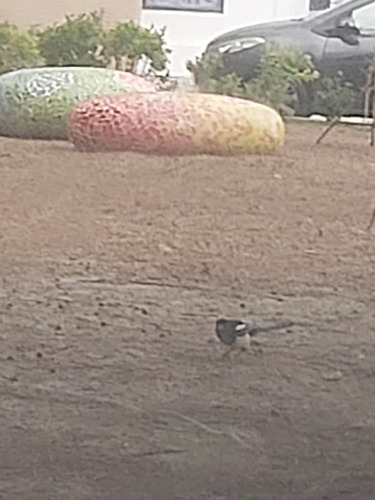


ID tip
It is 45 cm long. Compared to the Eurasian magpie, it is slightly smaller, with a proportionally shorter tail and longer bill and tarsi (lower legs), and darker with less white in the plumage. The back, tail, and particularly the remiges show (according to source) either bluer, less green iridescence compared to Eurasian magpie, or conversely, more green. The rump plumage is mostly black, with narrow, often greyish-white band, which connects the white shoulder patches as in its relatives. The Oriental magpie has the same call as the Eurasian magpie, though somewhat softer.
Text from Wikipedia, licensed CC BY-SA 4.0.
When to see the Oriental Magpie
One bar for each month. Filled bars are the 11 months with records; pale bars are months with none. The wide bar is December, the month with the most records.
Where to see the Oriental Magpie
The map shades 12 countries with regular records. Everything unshaded has no records. Countries are listed below the map.
About the Oriental Magpie
The Oriental magpie is a species of magpie found from southeastern Russia to eastern China, Korea, Taiwan, and northern Indochina and Myanmar. It is also naturalised in Japan. Other names include Chinese magpie and Asian magpie. The scientific name serica means "silky [texture]" or "Chinese"; this is the original spelling, though sometimes erroneously "corrected" to sericea.
Text adapted from Wikipedia, licensed CC BY-SA 4.0.
Easily confused with
 Yellow-billed MagpiePica nuttalliiIt is a medium-sized corvid, at 43–54 centimeters (17–21 in) long averaging slightly smaller than the black-billed magpie's 45–60 cm (18–24 in) but overlapping with it.
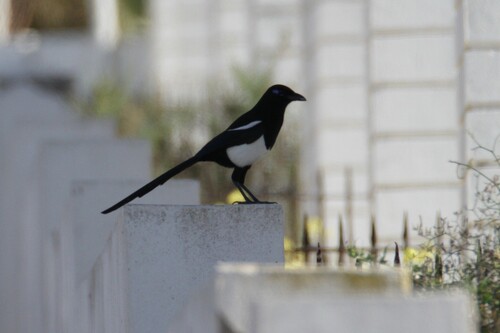 Maghreb MagpiePica mauritanicaThe Maghreb magpie is around 48 cm long, similar in plumage to the widespread Eurasian magpie, but with the distinct patch of vivid blue bare skin behind the eye and on the lower eye lid.
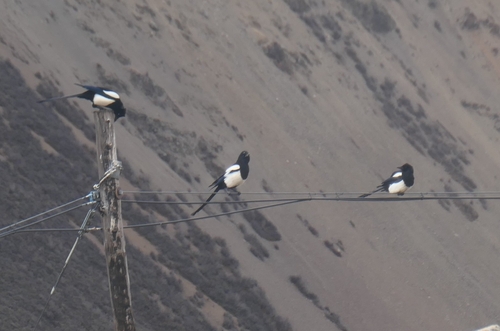 Black-rumped MagpiePica bottanensisThe black-rumped magpie is black-and-white, with its namesake black rump, brighter plumage, stouter bill, and shorter tail being the main distinctive features from the closely related Oriental and Eurasian magpies.
Side by side: Eurasian Magpie vs Oriental Magpie · Black-billed Magpie vs Oriental Magpie · Oriental Magpie vs Yellow-billed Magpie · Maghreb Magpie vs Oriental Magpie
Learn the Oriental Magpie in the BeakBrain App
Photo and call practice. Coming soon to iPhone and Android.
Play today's Daily BirdEvery photo and recording on this page is credited to its author under the licence shown. Spotted a problem with this page, or have a better photo? Contribute.