Learn what every symbol on the card means.Full credits and sources at beakbrain.com/symbols
 WoodlandCavity nestMedium · 143 g


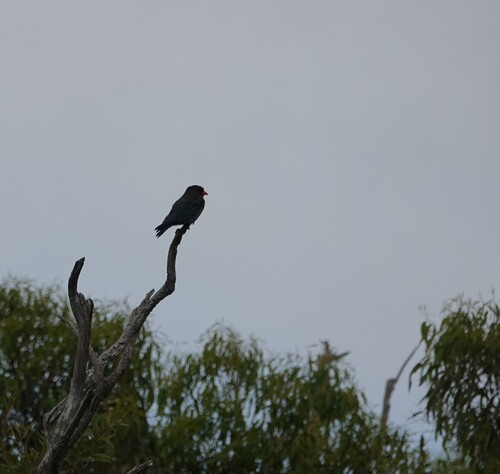
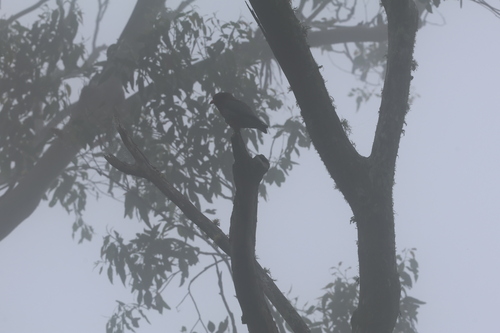
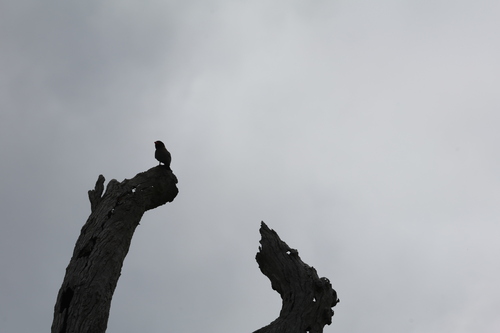

ID tip
The oriental dollarbird has a length of up to 30 cm. It is dark brown but this is heavily washed with a bluish-green sheen on the back and wing coverts. Its belly and undertail coverts are light coloured, and it has glossy bright blue colouring on its throat and undertail. Its flight feathers are a darker blue. Its bill is short and wide and in mature animals is coloured orange-red with a black tip. It has very light blue patches on the outer parts of its wings which are highly visible in flight and for which it is named.
Text from Wikipedia, licensed CC BY-SA 4.0.
When to see the Oriental Dollarbird
One bar for each month. Filled bars are the 9 months with records; pale bars are months with none. The wide bar is January, the month with the most records.
Where to see the Oriental Dollarbird
The map shades 29 countries with regular records, and 1 more in a lighter tone where the bird turns up only as a stray. Everything unshaded has no records. Countries are listed below the map.
Recorded as a rare visitor in New Zealand.
About the Oriental Dollarbird
The Oriental dollarbird is a bird of the roller family, so named because of the distinctive pale blue or white, coin-shaped spots on its wings. It can be found from Australia to Korea, Japan and India.
Text adapted from Wikipedia, licensed CC BY-SA 4.0.
Easily confused with
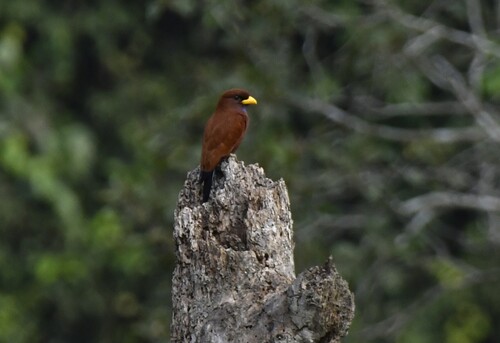
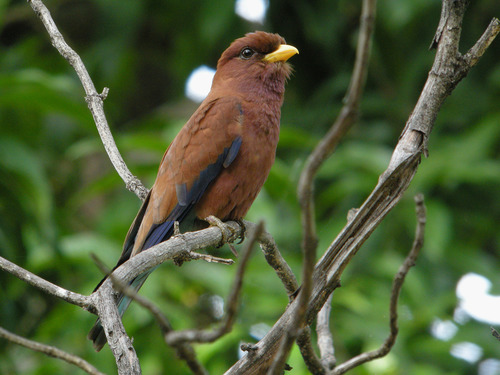 Broad-billed RollerEurystomus glaucurusThe broad-billed roller is 29–30 cm in length.
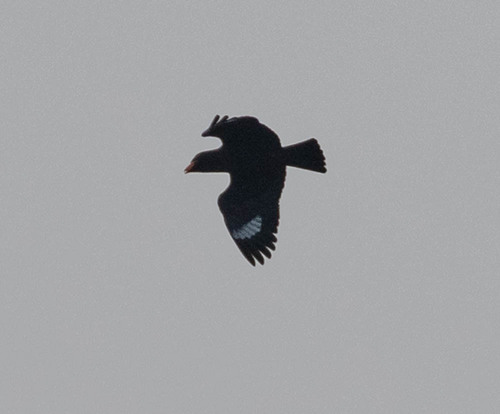
 Blue-throated RollerEurystomus gularisThe blue-throated roller is a dumpy, large-headed, thick-necked bird that frequents the tops of trees.
 Azure DollarbirdEurystomus azureusThe azure dollarbird also known as the azure roller, purple dollarbird or purple roller, is a species of bird in the family Coraciidae.
Side by side: Broad-billed Roller vs Oriental Dollarbird
Learn the Oriental Dollarbird in the BeakBrain App
Photo and call practice. Coming soon to iPhone and Android.
Play today's Daily BirdEvery photo and recording on this page is credited to its author under the licence shown. Spotted a problem with this page, or have a better photo? Contribute.