Learn what every symbol on the card means.Full credits and sources at beakbrain.com/symbols
 WetlandDomed nestSmall · 23 g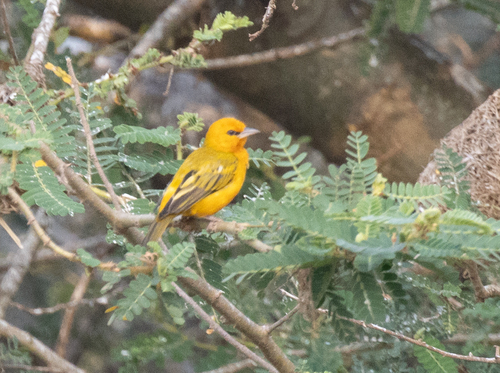
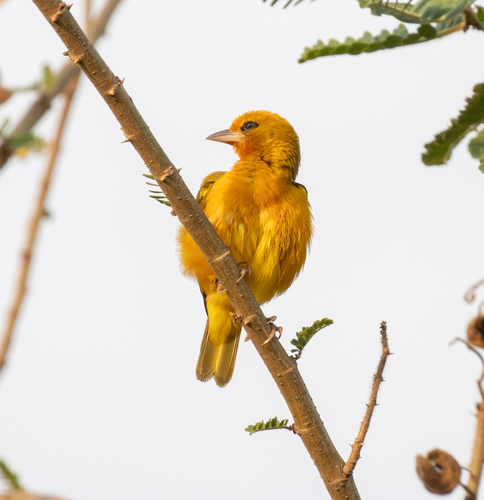
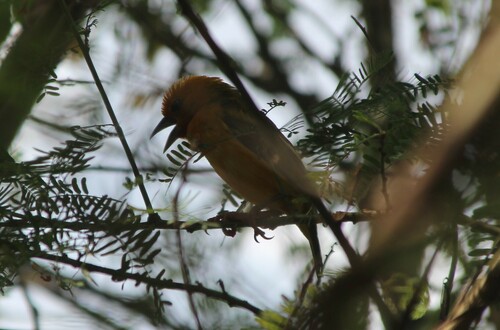
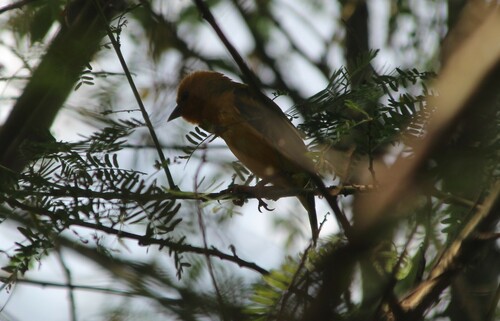
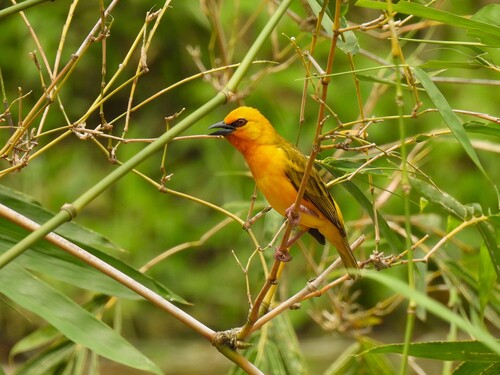
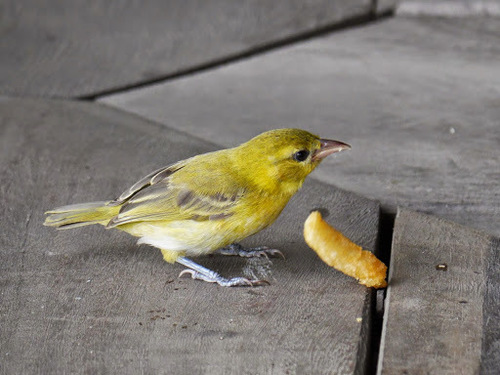
ID tip
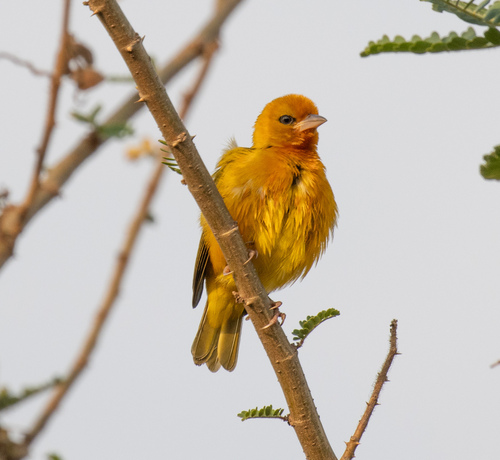
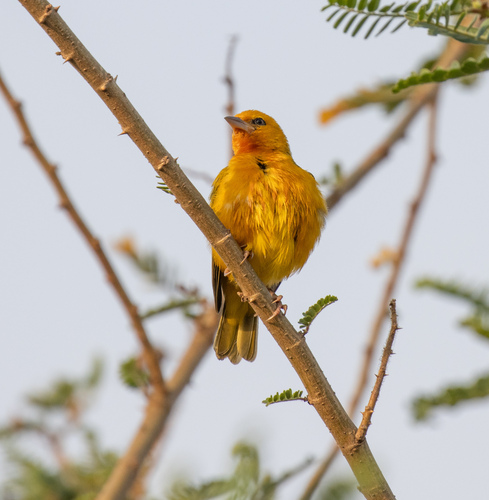
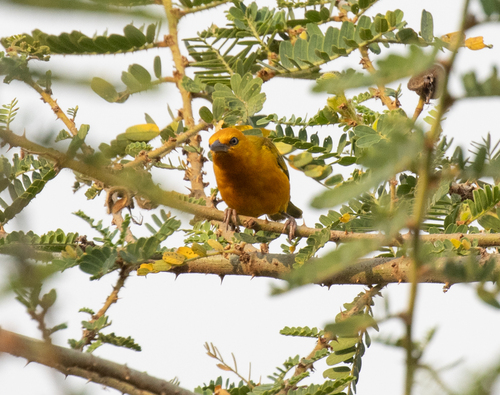
The orange weaver can reach a length of about 12.5 centimetres (4.9 in), including the tail. These birds exhibit sexual dimorphism, and plumage also varies seasonally. During breeding or "nuptial" season, the male has a black beak, a small patch of black skin in front and behind the eyes (making the eyes look oval in shape), and brown wings. The rest of the plumage is a brilliant red to orange in color. Bill is pale and slender, while eyes are reddish-brown or pale grey.
Text from Wikipedia, licensed CC BY-SA 4.0.
When to see the Orange Weaver
One bar for each month. Filled bars are the 11 months with records; pale bars are months with none. The wide bar is November, the month with the most records.
Where to see the Orange Weaver
The map shades 13 countries with regular records, and 2 more in a lighter tone where the bird turns up only as a stray. Everything unshaded has no records. Countries are listed below the map.
Recorded as a rare visitor in Sierra Leone, Togo.
About the Orange Weaver
The orange weaver is a species of bird in the weaver family, Ploceidae. It is sparsely distributed across African tropical rainforest.
Text adapted from Wikipedia, licensed CC BY-SA 4.0.
Easily confused with
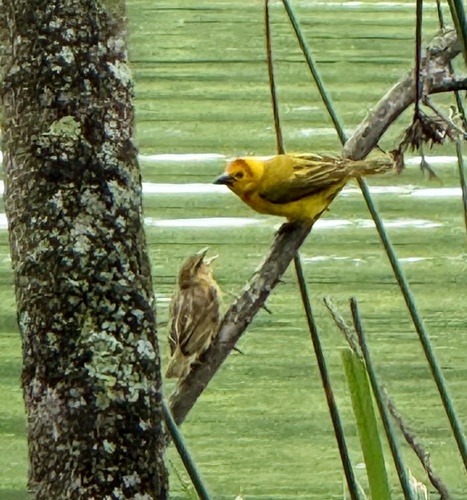 Taveta WeaverPloceus castaneicepsThe male Taveta weaver is a vibrant golden yellow color; this color is duller on its back.
Taveta WeaverPloceus castaneicepsThe male Taveta weaver is a vibrant golden yellow color; this color is duller on its back.
Taveta WeaverPloceus castaneicepsThe male Taveta weaver is a vibrant golden yellow color; this color is duller on its back.
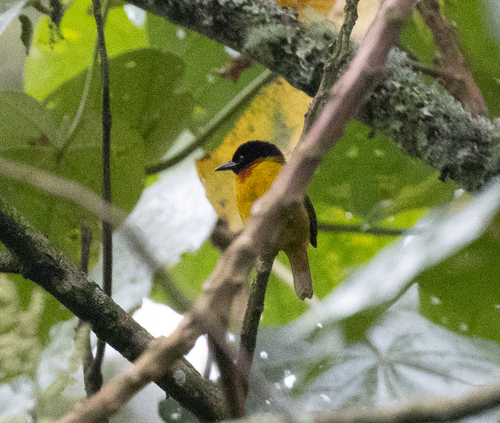 Strange WeaverPloceus alienusThe strange weaver is a species of bird in the family Ploceidae.
Learn the Orange Weaver in the BeakBrain App
Photo and call practice. Coming soon to iPhone and Android.
Play today's Daily BirdEvery photo and recording on this page is credited to its author under the licence shown. Spotted a problem with this page, or have a better photo? Contribute.