Learn what every symbol on the card means.Full credits and sources at beakbrain.com/symbols
 ForestCup nestTiny · 11 g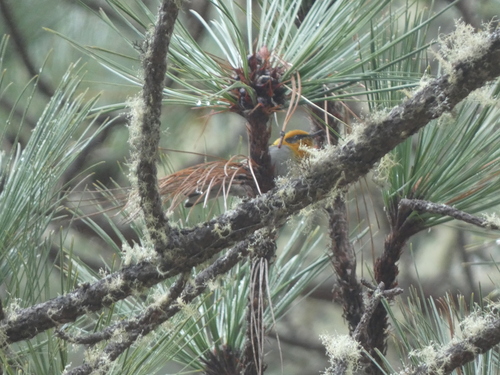


What the Olive Warbler sounds like

ID tip
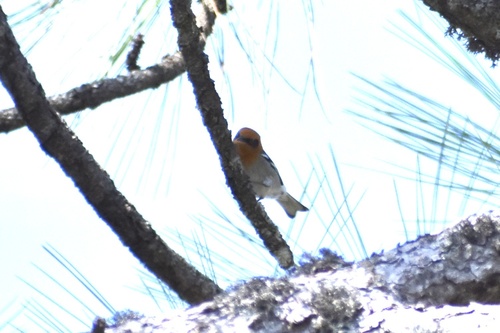
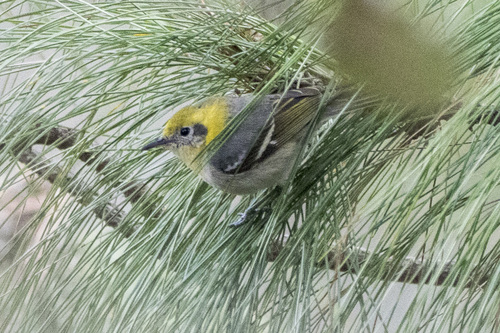
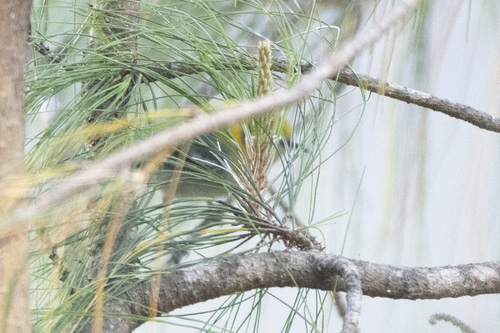
The olive warbler is a medium-sized warbler, 13 to 14 cm (5.1–5.5 in) in length and weighing 9.5 to 12 g (0.34–0.42 oz). It shows clinal variation in size, with more northern populations being larger than southern ones, a phenomenon known as Bergmann's rule. The olive warbler is a long-winged bird. The plumage of the male is mostly grey body with some olive-green on the wings and two white wing bars. The male's head and breast are "tawny-orange", and there is a black patch through the eye. In the female and juvenile, the orange is replaced by yellow, and the black mask is more diffuse.
Text from Wikipedia, licensed CC BY-SA 4.0.
When to see the Olive Warbler
One bar for each month, and every month is filled: this bird is recorded here in all twelve. The wide bar is May, the month with the most records.
Where to see the Olive Warbler
The map shades 6 countries with regular records. Everything unshaded has no records. Countries are listed below the map.
About the Olive Warbler
The olive warbler is a small passerine bird. It is the only member of the genus Peucedramus and the family Peucedramidae.
Text adapted from Wikipedia, licensed CC BY-SA 4.0.
Learn the Olive Warbler in the BeakBrain App
Photo and call practice. Coming soon to iPhone and Android.
Play today's Daily BirdEvery photo and recording on this page is credited to its author under the licence shown. Spotted a problem with this page, or have a better photo? Contribute.