Learn what every symbol on the card means.Full credits and sources at beakbrain.com/symbols
 ForestDomed nestSmall · 37 g


ID tip
The olive finch has olive green plumage with a chestnut crown and nape. The face and throat are dark gray, and the wings and tail are darker in color than the rest. The tail is more rounded compared to other Arremon species. A juvenile olive finch presents similarly to adults but with a duller crown, olive throat and face, and uneven plumage coloration. More specific information on the bird's molt and its timing is not available for this species. It has a brown or dark brown iris, black or dark gray bill, and black tarsi and toes. The olive finch has a length of 15.5-16.
Text from Wikipedia, licensed CC BY-SA 4.0.
When to see the Olive Finch
One bar for each month, and every month is filled: this bird is recorded here in all twelve. The wide bar is December, the month with the most records.
Where to see the Olive Finch
The map shades 3 countries with regular records. Everything unshaded has no records. Countries are listed below the map.
About the Olive Finch
The olive finch is a species of bird in the family Passerellidae. Until recently, it was placed in the genus Lysurus.
Text adapted from Wikipedia, licensed CC BY-SA 4.0.
Easily confused with
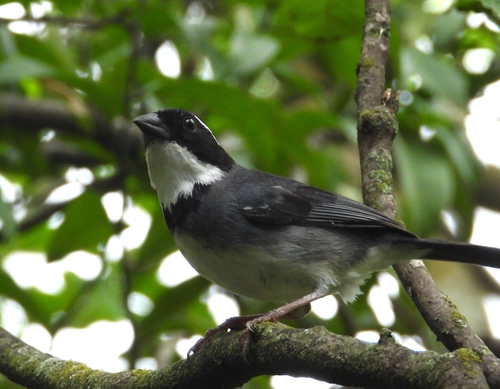 Black-capped SparrowArremon abeilleiThe black-capped sparrow is about 15 cm (5.9 in) long and weighs about 26 g (0.92 oz).
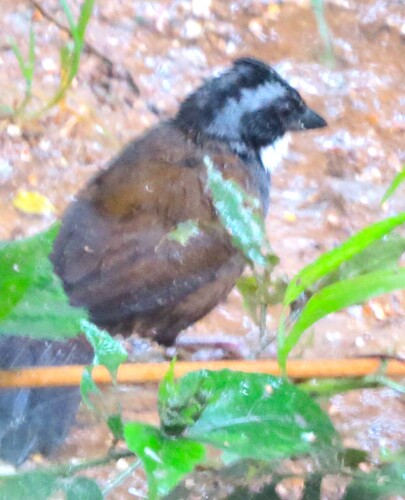 Sierra Nevada BrushfinchArremon basilicusThe Sierra Nevada brushfinch is about 19 cm (7.5 in) long.
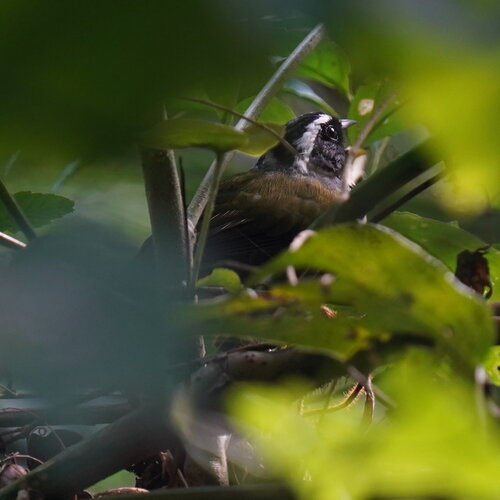 Half-collared SparrowArremon semitorquatusThe half-collared sparrow is about 15 cm (5.9 in) long and weighs 22 to 28 g (0.78 to 0.99 oz).
Side by side: Black-capped Sparrow vs Olive Finch · Olive Finch vs Sierra Nevada Brushfinch · Half-collared Sparrow vs Olive Finch
Learn the Olive Finch in the BeakBrain App
Photo and call practice. Coming soon to iPhone and Android.
Play today's Daily BirdEvery photo and recording on this page is credited to its author under the licence shown. Spotted a problem with this page, or have a better photo? Contribute.