Learn what every symbol on the card means.Full credits and sources at beakbrain.com/symbols
 MarinePlatform nestHuge · 4.2 kg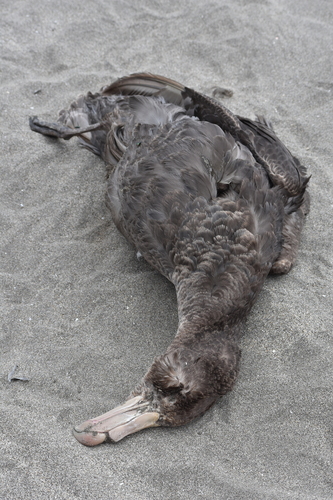
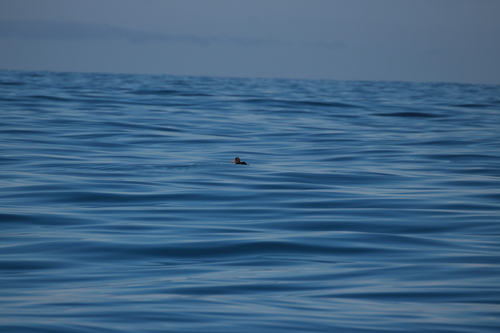
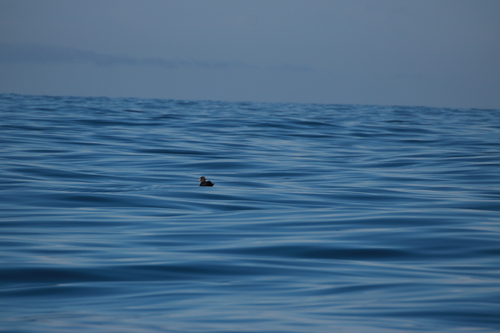
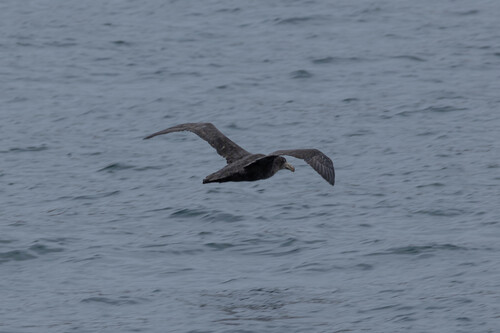
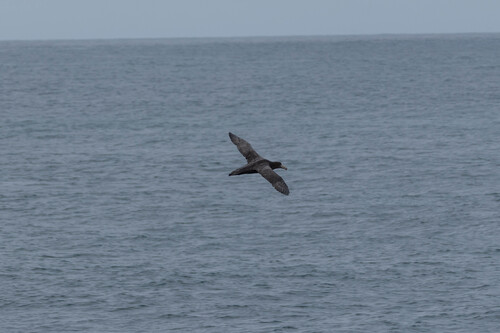


ID tip
The northern giant petrel averages 90 cm (35 in) in length, with a range of 80 to 95 cm (31 to 37 in), possessing a wingspan of 150 to 210 cm (59 to 83 in). Size is somewhat variable and this species is broadly the same size as its southern sister species. The largest-bodied colony is in the South Georgia Islands, where 56 males averaged 4.9 kg (11 lb) and 43 females average 3.72 kg (8.2 lb). The smallest-bodied are on the Chatham Islands, where 19 males averaged 3.66 kg (8.1 lb) and 21 females averaged 2.83 kg (6.2 lb). Overall, weight for the species can range from 2.5 to 5.8 kg (5.5 to 12.
Text from Wikipedia, licensed CC BY-SA 4.0.
When to see the Northern Giant Petrel
One bar for each month. Filled bars are the 10 months with records; pale bars are months with none. The wide bar is November, the month with the most records.
Where to see the Northern Giant Petrel
The map shades 9 countries with regular records, and 3 more in a lighter tone where the bird turns up only as a stray. Everything unshaded has no records. Countries are listed below the map.
Recorded as a rare visitor in United Kingdom, Brazil, Réunion.
About the Northern Giant Petrel
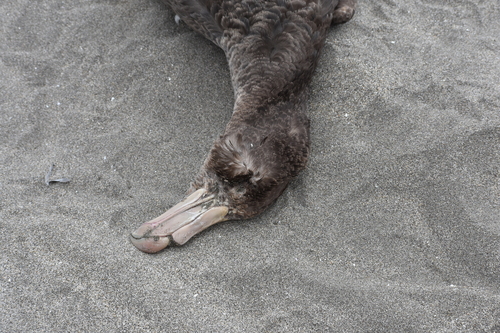
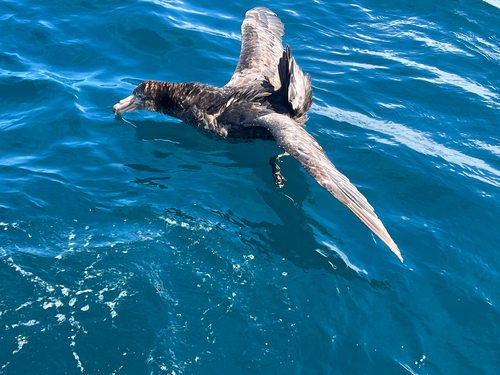
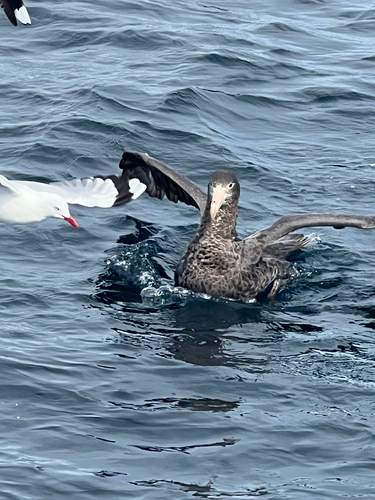
The northern giant petrel, also known as Hall's giant petrel, is a large, predatory seabird of the southern oceans. Its range overlaps broadly with the range of the related southern giant petrel, albeit slightly further to the north.
Text adapted from Wikipedia, licensed CC BY-SA 4.0.
Easily confused with

Side by side: Northern Giant Petrel vs Southern Giant Petrel
Learn the Northern Giant Petrel in the BeakBrain App
Photo and call practice. Coming soon to iPhone and Android.
Play today's Daily BirdEvery photo and recording on this page is credited to its author under the licence shown. Spotted a problem with this page, or have a better photo? Contribute.