Learn what every symbol on the card means.Full credits and sources at beakbrain.com/symbols
 GrasslandScrapeLarge · 745 g


ID tip
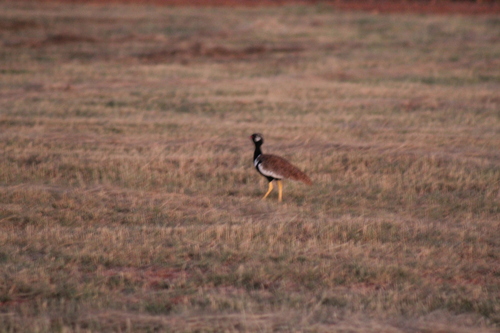
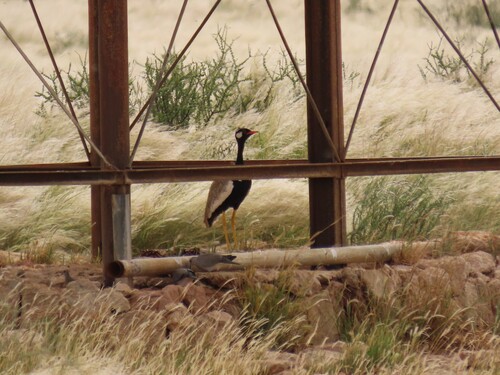
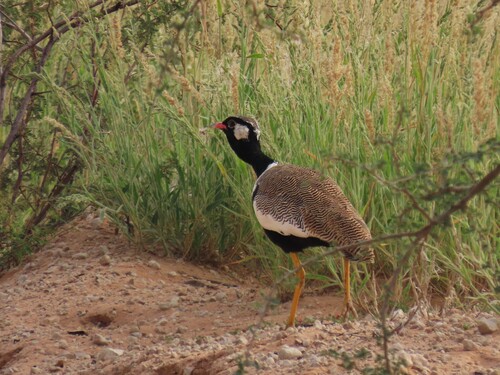
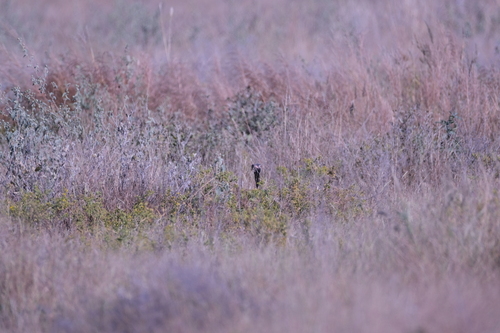
The male's plumage has regularly-arranged black and white barring on the back and wings, the head, neck and underparts being black. The female has the head, neck, breast and upper parts barred or chequered in black and buff, the belly being black. The primary feathers are largely white, which distinguishes this species from the southern black korhaan where they are black. Both the female and the male have red beaks and bright yellow legs.
Text from Wikipedia, licensed CC BY-SA 4.0.
When to see the Northern Black Korhaan
One bar for each month, and every month is filled: this bird is recorded here in all twelve. The wide bar is December, the month with the most records.
Where to see the Northern Black Korhaan
The map shades 4 countries with regular records. Everything unshaded has no records. Countries are listed below the map.
About the Northern Black Korhaan
The northern black korhaan, also known as the white-quilled bustard, is a species of bird in the bustard family, Otididae. It is widely distributed across Southern Africa. Its habitat is primarily open grassland and scrub.
Text adapted from Wikipedia, licensed CC BY-SA 4.0.
Easily confused with

Side by side: Little Bustard vs Northern Black Korhaan · Great Bustard vs Northern Black Korhaan · Northern Black Korhaan vs Southern Black Korhaan
Learn the Northern Black Korhaan in the BeakBrain App
Photo and call practice. Coming soon to iPhone and Android.
Play today's Daily BirdEvery photo and recording on this page is credited to its author under the licence shown. Spotted a problem with this page, or have a better photo? Contribute.