Learn what every symbol on the card means.Full credits and sources at beakbrain.com/symbols
 ForestCup nestSmall · 40 g


ID tip
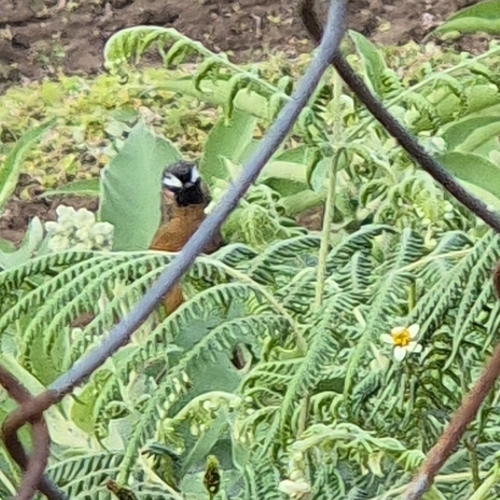
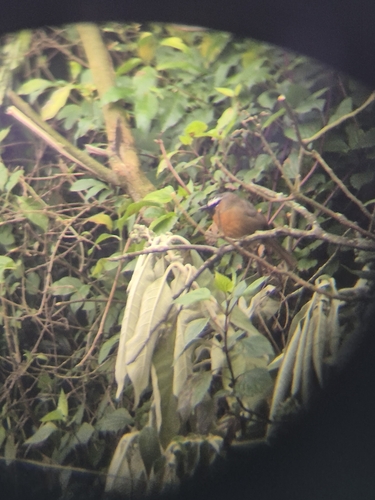
This laughingthrush is about 24 cm long with a rufous underside and a dark olive grey upper body. The crown is slaty brown and there is a jagged and broad white supercilium margined with black. The throat, lores and a streak behind the eye are black. The tail is olive brown. The iris is reddish brown and the legs and bill are black. The upper breast is grey in the Banasura laughingthrush which can appear somewhat like fairbanki although the throat of the latter is grey and the two do not overlap in range.
Text from Wikipedia, licensed CC BY-SA 4.0.
When to see the Nilgiri Laughingthrush
One bar for each month. Filled bars are the 9 months with records; pale bars are months with none. The wide bar is February, the month with the most records.
Where to see the Nilgiri Laughingthrush
The map shades 1 country with regular records, and 1 more in a lighter tone where the bird turns up only as a stray. Everything unshaded has no records. Countries are listed below the map.
Recorded as a rare visitor in Malaysia.
About the Nilgiri Laughingthrush
The Nilgiri laughingthrush is a species of laughingthrush endemic to the high elevation areas of the Nilgiris and adjoining hill ranges in Peninsular India. The mostly rufous underparts, olive brown upperparts, a prominent white eyebrow and a black throat make it unmistakable. It is easily detected by its loud series of nasal call notes and can be hard to spot when it is hidden away inside a patch of dense vegetation. The species has a confusing taxonomic history, leading to a range of names.
Text adapted from Wikipedia, licensed CC BY-SA 4.0.
Easily confused with
 Palani LaughingthrushMontecincla fairbankiThis species has a dark grey-brown crown and narrow dark grey eyestripe with a broad white supercilium above it.
Learn the Nilgiri Laughingthrush in the BeakBrain App
Photo and call practice. Coming soon to iPhone and Android.
Play today's Daily BirdEvery photo and recording on this page is credited to its author under the licence shown. Spotted a problem with this page, or have a better photo? Contribute.